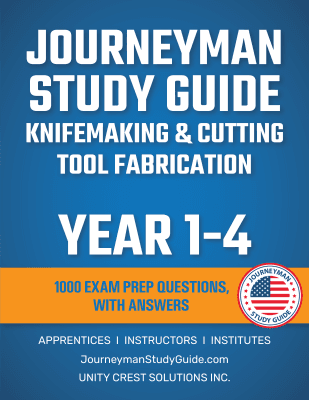
Questions, Answers, & Explanations
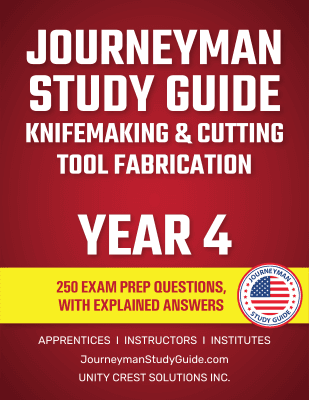
Get clear explanations behind every answer, perfect for deeper learning and more thorough exam preparation.

What is Knifemaking & Cutting Tool Fabrication?
Knifemaking and cutting tool fabrication is a specialized trade that combines traditional craftsmanship with modern manufacturing techniques. Technicians in this field create precision tools ranging from kitchen knives and hunting blades to industrial cutting instruments used in automotive, aerospace, and construction. Unlike mass-produced products, this trade emphasizes skill, accuracy, and knowledge of metallurgy to produce tools that are both functional and durable.
In the U.S., knifemaking and cutting tool fabrication is a respected profession, supported by industries that rely heavily on precision cutting. From hand-forged artisan blades to advanced CNC-manufactured tooling, this trade bridges heritage craftsmanship with state-of-the-art technology.
Key Responsibilities
As a Knifemaking & Cutting Tool Fabrication Technician, your work may involve:
Skills and Traits for Success
To succeed in this trade, technicians should demonstrate:
Industries Where Technicians Thrive
Knifemaking and cutting tool fabrication professionals are valued across multiple American industries:
Education and Training Opportunities
Training in this field can begin with hands-on apprenticeships or through specialized programs. Notable opportunities in the U.S. include:
Why Choose This Career?
Get Ready for Your Career in Knifemaking & Cutting Tool Fabrication!
Preparing for success requires both technical skills and exam readiness. Our Question & Answer guides provide straightforward practice with four logical options per question, perfect for self-assessment. If you want to deepen your understanding, our Question, Answer, & Explanation products offer short explanations that clarify key concepts. For hands-on preparation, our Online Tests simulate real exam conditions, complete with scoring and averages to help build confidence.
All study materials are digital-only PDFs, delivered instantly after purchase. You can preview our Q&A and Q&A with Explanation products before buying. While Online Tests don’t include previews, they’re designed to be intuitive and practical for exam practice.
Take the next step toward becoming a certified professional in knifemaking and cutting tool fabrication. Equip yourself with the knowledge and confidence to succeed.
What to Expect on the Certification Exam
The Knifemaking & Cutting Tool Fabrication certification exam evaluates a technician’s knowledge of metallurgy, heat treatment, tool design, and safety practices. This exam is designed to confirm that candidates can apply both traditional craft skills and modern fabrication methods in professional settings. Passing demonstrates competency in tool creation, maintenance, and testing — skills valued by industries ranging from custom blade production to large-scale manufacturing.
In the U.S., certification pathways may be supported by organizations like the American Bladesmith Society (ABS), trade programs at schools such as the New England School of Metalwork (Maine), and training standards tied to industry partners in the automotive and aerospace sectors. Employers like Dexter-Russell (Massachusetts), Benchmade (Oregon), and Buck Knives (Idaho) recognize certification as proof of readiness to work in precision-driven environments.
Exam Format
Certification exams for knifemaking and tool fabrication usually include both theoretical and practical components:
Some programs also require candidates to fabricate a blade or cutting tool within set parameters. The American Bladesmith Society Journeyman Smith test, for example, requires forging a blade that can cut rope, chop wood, and flex without breaking.
Key Topics Covered
Passing Requirements
Most certification programs set the passing threshold around 70% or higher for written exams, along with successful demonstration of practical skills. For example, in ABS testing, candidates must not only pass the written portion but also complete a rigorous performance test to earn recognition as a Journeyman Smith.
Tips for Preparing Effectively
Why Certification Matters
Achieving certification in Knifemaking & Cutting Tool Fabrication not only validates technical skill but also demonstrates professionalism to potential employers and clients. In industries where safety, precision, and reliability are paramount, certification sets you apart as a capable, trusted technician. Whether your goal is to join a respected manufacturer, run a small artisan shop, or supply cutting tools to aerospace companies, passing the certification exam is a key milestone.
Prepare with Confidence
Your certification success begins with the right preparation tools. With our Q&A guides, Q&A with Explanation products, and interactive Online Tests, you’ll have everything you need to practice effectively, strengthen weak areas, and build confidence. All materials are digital-only PDFs, available instantly after purchase. You can preview Q&A and Q&A with Explanation formats before buying, while Online Tests provide straightforward, interactive practice with no preview required.
Take the next step in your career and ensure you’re fully prepared to pass your certification exam in knifemaking and cutting tool fabrication.
What Types of Questions Are on the Certification Exam?
The Knifemaking & Cutting Tool Fabrication certification exam is designed to test both your technical knowledge and practical application of skills. Candidates are expected to demonstrate a strong understanding of metallurgy, design, fabrication techniques, and safety practices. Exam questions are structured to reflect real-world scenarios that a journeyman in this trade may encounter in professional workshops, manufacturing facilities, or artisan blade shops.
Organizations such as the American Bladesmith Society (ABS) and technical schools like the New England School of Metalwork (Maine) shape testing standards to ensure certified technicians are ready to meet industry expectations. U.S. manufacturers including Dexter-Russell (Massachusetts) and Benchmade (Oregon) often recognize certification as a benchmark for craftsmanship and precision.
Common Question Formats
Sample Questions
Which quenching medium is most likely to produce a hardened but brittle blade in high-carbon steel?
Answer: D) Brine
What is the primary purpose of tempering a blade after hardening?
Answer: B) To relieve stresses and improve toughness
Which blade grind is most commonly used for chef’s knives manufactured in U.S. culinary tool companies like Dexter-Russell?
Answer: B) Flat Grind
Which OSHA-recommended safety gear is essential when working with a belt grinder in a tool fabrication shop?
Answer: B) Respirator and face shield
Tips for Answering Exam Questions
Practice Questions for Better Preparation
Structured practice is one of the most effective ways to build confidence before the exam. Our Q&A products provide straightforward multiple-choice questions with four options, helping you self-assess and track progress. For those who want deeper learning, our Q&A with Explanation guides include short explanations (1–3 sentences) that clarify why the correct answer is right — a powerful way to strengthen weak areas.
If you want to fully simulate the testing environment, our Online Tests replicate exam conditions with real-time scoring and averages. This interactive approach mirrors what you’ll face on test day, helping reduce anxiety and sharpen time management.
Why Practicing Matters
Success on the certification exam is about more than memorizing facts — it’s about applying knowledge under pressure. Just as an apprentice bladesmith gains skill through repetition, exam preparation requires consistent practice. By working through question sets that mirror the actual exam, you’ll strengthen recall, improve decision-making speed, and build the confidence to perform at your best.
Prepare for Your Certification Today!
Passing the Knifemaking & Cutting Tool Fabrication certification exam is a vital step toward a rewarding career. Whether you aim to join a major manufacturer like Benchmade or start your own artisan shop, the right preparation will help you succeed. Our Q&A guides, Q&A with Explanation materials, and Online Tests give you everything you need to sharpen your knowledge and approach test day with confidence.
All products are delivered instantly as digital-only PDFs. You can preview our Q&A and Q&A with Explanation guides before purchasing, while Online Tests are designed to be straightforward and intuitive.
Morning: Preparing for the Day
A typical day for a Knifemaking & Cutting Tool Fabrication Technician begins early with preparation and organization. The first step often involves reviewing work orders or custom requests, whether from a culinary brand like Dexter-Russell (Massachusetts) or an outdoor equipment company like Buck Knives (Idaho). These orders determine what type of blades, cutting tools, or prototypes need to be fabricated.
Technicians begin by inspecting their forges, grinders, and CNC machines to ensure they are properly calibrated and safe to use. Steel stock, tool steel bars, or stainless blanks are measured and selected based on the specifications of the order. Safety gear such as respirators, gloves, and protective eyewear—required by OSHA standards—is also prepared before the forging or machining process begins.
Design preparation follows, often using CAD software or manual blueprints. Schools like the New England School of Metalwork (Maine) and Pine Technical & Community College (Minnesota) train students to transition from digital designs to practical shop work, a skill that many technicians carry into their daily routine.
Midday: Forging, Grinding, and Shaping
By midday, technicians are deep into the fabrication process. For those working in artisan shops, this may involve heating steel in a forge and hammering it into rough blade shapes, following techniques standardized by the American Bladesmith Society (ABS). In larger manufacturing facilities, technicians may program CNC machines to cut and grind tool blanks with industrial precision.
Common tasks include:
Collaboration is also a midday activity. In some workplaces, technicians meet with engineers or quality control teams, especially in industrial environments like Kennametal (Pennsylvania) or aerospace machining facilities, where tolerances are extremely tight.
Afternoon: Finishing, Testing, and Quality Control
The later part of the day focuses on finishing work and ensuring every product meets performance standards. Handles are fitted, fastened, or shaped for knives, while cutting tools may undergo surface treatments to increase durability. Finishing can include sanding, polishing, etching, or applying protective coatings.
Testing is a crucial step. Knives may be evaluated for sharpness, balance, and durability, while industrial cutting tools undergo hardness testing with Rockwell scales. At times, technicians perform cutting demonstrations to confirm edge retention. U.S. culinary companies like Lamson (Massachusetts) emphasize quality testing as a key part of their process before tools reach kitchens across the country.
Documentation and labeling are also part of the afternoon routine. Orders may be packed for shipment to retailers, restaurants, or industrial partners. For unionized shops, such as those supported by the International Association of Machinists and Aerospace Workers (IAMAW), proper record-keeping ensures compliance with labor and safety standards.
Typical Work Environments
Knifemaking and cutting tool fabrication technicians in the U.S. work across diverse industries:
Challenges and Rewards
Challenges
Rewards
A Career Built on Craft and Precision
Every day in knifemaking and cutting tool fabrication blends tradition with modern industry. Whether shaping blades for a culinary giant like Lamson, crafting outdoor tools for Benchmade, or fabricating industrial cutters for Kennametal, technicians play a vital role in keeping America’s industries sharp and efficient.
To prepare for this career path, candidates can rely on our Q&A guides for focused practice, Q&A with Explanation materials for deeper understanding, and Online Tests to simulate exam conditions. All materials are digital PDFs, instantly available to help technicians build the knowledge and confidence needed to succeed.
Earning Potential
The earning potential for technicians in knifemaking and cutting tool fabrication varies depending on skill level, industry, and specialization. Salaries also reflect whether a technician works in a small artisan shop, a large-scale manufacturing facility, or in industrial tool production.
Regional Salary Differences
Salaries in this trade often reflect regional demand and industry concentration:
Career Growth Opportunities
The trade offers diverse career paths, allowing technicians to specialize in areas that fit their interests and skills:
The Benefits of Certification
Certification plays an important role in advancing a career in knifemaking and tool fabrication. Employers value certifications because they represent technical proficiency, safety awareness, and professional credibility.
Success Stories
Advance Your Career in Knifemaking & Cutting Tool Fabrication Today!
Certification is the key to unlocking new career opportunities in this specialized trade. Whether you want to rise through the ranks at a major U.S. manufacturer or establish your own shop, preparation is essential. Our Q&A guides provide structured practice, our Q&A with Explanation products help deepen understanding, and our Online Tests simulate real exam conditions to build confidence.
All products are digital-only PDFs delivered instantly after purchase. Previews are available for Q&A and Q&A with Explanation, while Online Tests provide an interactive, exam-like experience.
General Wage Ranges
Wages for Knifemaking & Cutting Tool Fabrication Technicians vary depending on experience, industry, and specialization. The trade includes opportunities in artisan workshops, large-scale manufacturing, and industrial tool production, with salaries reflecting skill and responsibility.
Regional Salary Differences
Salary levels in this trade often reflect geographic concentrations of manufacturing and craftsmanship:
Factors That Impact Wages
Several factors directly influence how much a technician can earn in knifemaking and cutting tool fabrication:
Earnings by Industry
Wages also vary by the sector in which technicians work:
Opportunities for Wage Growth
Wages increase as technicians develop specialized skills, pursue higher certifications, and gain experience in advanced applications.
Boost Your Earning Potential in Knifemaking & Cutting Tool Fabrication!
Your wage growth in this trade depends on skill development, certification, and preparation. Our Q&A guides provide straightforward multiple-choice practice, while Q&A with Explanation products offer deeper learning through short explanations. For those looking to simulate exam conditions, our Online Tests deliver interactive practice with real-time scoring and averages.
All materials are digital-only PDFs, available instantly after purchase. Previews are included for Q&A and Q&A with Explanation products, while Online Tests are designed to be intuitive and practical for exam preparation.
Essential Tools for Technicians
Success in knifemaking and cutting tool fabrication requires a combination of traditional blacksmithing tools and modern machining equipment. Technicians often work in both artisan workshops and large-scale manufacturing environments, and the right toolkit is essential for efficiency, precision, and safety.
Recommended Learning Resources
Technicians benefit from industry-standard resources and educational programs across the U.S. that build both theoretical and practical expertise:
Suppliers and Material Resources
Reliable suppliers are critical for sourcing steel, handle materials, abrasives, and shop equipment. Many American companies provide the raw materials and tools needed for professional fabrication:
Tips for Building Your Toolkit on a Budget
Knifemaking requires investment, but many technicians start with limited budgets and expand as they gain experience.
Why the Right Tools Matter
In knifemaking and cutting tool fabrication, precision and safety depend on the quality of your equipment. A properly heat-treated blade or a correctly ground cutting tool not only reflects the maker’s skill but also ensures the product performs as intended. Companies like Dexter-Russell (Massachusetts) emphasize industry-standard processes and equipment to maintain their reputation in culinary manufacturing. Similarly, industrial giants like Kennametal rely on precise tooling made possible by advanced CNC machinery and rigorous quality checks.
Investing in the right tools also enhances career mobility. Technicians equipped with industry-standard machinery and skills are more competitive in the job market and are often considered for higher-paying roles in aerospace machining, culinary tool production, or outdoor equipment fabrication.
Equip Yourself for Success
Having the right toolkit is just the beginning. Preparing for certification exams ensures you can demonstrate both practical and theoretical expertise. Our Q&A guides give you focused practice on exam material, while our Q&A with Explanation products help you understand the reasoning behind correct answers. To sharpen your test-taking skills, our Online Tests replicate exam conditions, complete with real-time scoring and averages.
All products are delivered as digital-only PDFs with instant access after purchase. Previews are available for Q&A and Q&A with Explanation, while Online Tests are straightforward, interactive, and designed to help you succeed.
Where to Learn Knifemaking & Cutting Tool Fabrication
In the United States, knifemaking and cutting tool fabrication can be learned through a mix of formal education, trade schools, workshops, and apprenticeships. Unlike some trades that rely solely on classroom learning, this field requires extensive hands-on practice. Many programs combine classroom-based instruction in metallurgy and safety with practical training in forging, grinding, and machining.
Key institutions and organizations in the U.S. offering training include:
Types of Education Programs
Aspiring knifemaking and tool fabrication technicians can choose from a variety of program structures:
What to Expect in a Training Program
Programs in this field typically combine theory with extensive practice, preparing students for the demands of certification exams and shop work. Training often covers:
Hands-on work is central to every program. Students spend significant hours in the forge, workshop, or lab, ensuring they leave with practical skills and not just theoretical knowledge.
How to Choose the Right Program
Selecting the right education program depends on career goals. Consider the following:
Featured Institutions & Organizations
Several U.S. institutions stand out as leaders in training future knifemakers and tool fabricators:
Preparing for Certification with Study Materials
While training programs build practical skills, exam success requires structured study. Our Q&A guides help review essential material in a straightforward question-and-answer format. For deeper understanding, our Q&A with Explanation products include short, clear explanations for each answer. To practice under real exam conditions, our Online Tests simulate certification scenarios with instant scoring and averages.
All products are delivered instantly as digital-only PDFs. Previews are available for Q&A and Q&A with Explanation, while Online Tests offer a simple, interactive preparation experience.
Ready to Advance Your Skills?
Whether you aim to join a leading manufacturer like Dexter-Russell (Massachusetts), Benchmade (Oregon), or start your own artisan shop, the right education program can set the foundation for success. Combine classroom learning, shop training, and exam preparation with our study resources to take the next step in your career.
Why Join a Union or Connect with Employers?
Unions and established employers play a major role in supporting technicians in knifemaking and cutting tool fabrication. For workers, unions provide higher wages, benefits, and job security. For employers, hiring certified professionals ensures consistent quality in industries where safety and performance are critical. In the United States, unions such as the International Association of Machinists and Aerospace Workers (IAMAW) and the United Steelworkers (USW) represent thousands of skilled tradespeople, including those in toolmaking and precision metal fabrication.
With the growing demand for high-quality cutting tools across industries like aerospace, automotive, culinary manufacturing, and outdoor equipment, connecting with the right employers is essential for a stable and rewarding career.
Benefits of Joining a Union
Union membership provides technicians with both financial and professional advantages:
Top Unions for Cutting Tool Fabrication Technicians
Several unions across the U.S. represent workers in industries connected to knifemaking and cutting tool fabrication:
Union membership also opens doors to apprenticeships and employer partnerships, helping workers gain hands-on experience while earning competitive wages.
Connecting with Employers
Working with respected employers ensures both financial stability and the chance to advance in the trade. Leading U.S. companies employ knifemaking and cutting tool fabrication technicians in culinary, industrial, and outdoor markets:
Independent workshops and smaller artisan employers also provide opportunities for technicians to gain direct experience in custom knifemaking, often with pathways to start their own businesses.
Tips for Finding Work
Breaking into the industry or advancing to higher-level positions requires both networking and preparation. Candidates should:
Why Employers Value Certification
Employers across the U.S. view certification as proof that a technician has mastered essential skills. Whether it’s quality assurance at Kennametal, production management at Dexter-Russell, or tactical knife development at Benchmade, certified technicians are in demand because they bring both technical expertise and credibility to the workplace.
Build Your Future with Unions and Employers
A successful career in knifemaking and cutting tool fabrication requires both skill and strong professional connections. Joining unions ensures better pay and protections, while connecting with leading employers opens doors to stable and rewarding careers. Preparing for certification is the first step toward earning these opportunities.
Our Q&A guides help you test your knowledge, our Q&A with Explanation products build deeper understanding, and our Online Tests simulate real exam conditions to ensure confidence on test day. All materials are available as digital-only PDFs, with previews for Q&A and Q&A with Explanation, and interactive Online Tests designed to mirror certification conditions.
How to Stay Ahead in the Industry
Knifemaking and cutting tool fabrication is a field deeply rooted in tradition yet constantly shaped by innovation. From artisan bladesmiths to industrial tool manufacturers, staying ahead requires ongoing skill development, awareness of industry trends, and connections with professional organizations. In the U.S., demand continues to grow across culinary, outdoor, defense, and industrial sectors, meaning those who adapt to new technologies and market demands will thrive.
Emerging Trends in Knifemaking & Tool Fabrication
Best Practices for Professional Growth
Challenges and Opportunities
Challenges
Opportunities
Sustainability in Practice
Sustainability not only protects the environment but also appeals to customers and employers who value responsible practices.
Why Staying Ahead Matters
The future of knifemaking and cutting tool fabrication in the U.S. depends on balancing heritage with innovation. Professionals who pursue ongoing education, earn certifications, and adopt sustainable practices position themselves for long-term success. Whether forging custom hunting knives in Idaho, machining aerospace cutters in Pennsylvania, or producing chef’s knives in Massachusetts, technicians who adapt will find rewarding careers.
Stay Competitive in Knifemaking & Cutting Tool Fabrication!
Preparation is key to building a successful future in this trade. Our Q&A guides provide essential practice, while our Q&A with Explanation products deepen your understanding of key concepts. For those ready to simulate exam conditions, our Online Tests deliver interactive practice with real-time scoring and averages.
All products are available as digital-only PDFs, with previews for Q&A and Q&A with Explanation, and straightforward Online Tests designed to help you succeed.
Get clear explanations behind every answer, perfect for deeper learning and more thorough exam preparation.
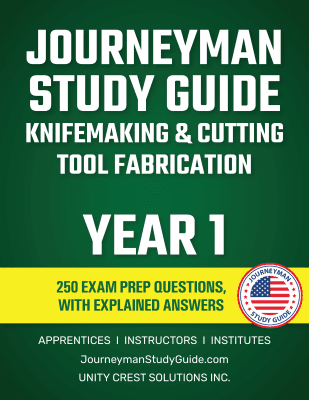
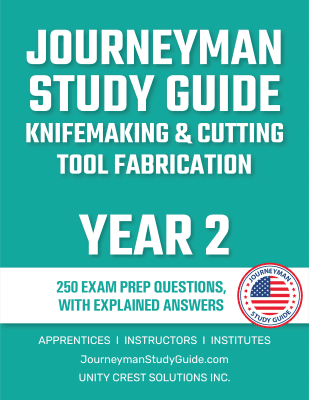
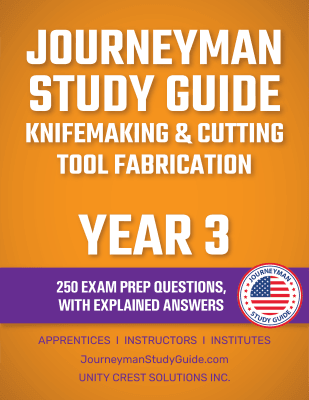
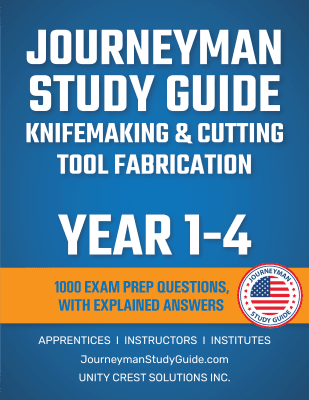
Quick and easy practice to test your knowledge anytime, anywhere—ideal for simple, on-the-go preparation.