Site Updates in Progress: Things might look different as we work on enhancing your experience.

Journeyman
    • FAQ
    • Students FAQ
    • Instructors FAQ
    • Schools & Institutions FAQ
    • Help Articles
    • What is a Journeyman
    • Steps to Becoming a Journeyman
    • Preparing for the Journeyman Exam
    • What to Expect on Exam Day
    • Journeyman Pay: What to Expect
    • Immigrants Becoming Journeymen
    • Challenging the Exam Without an Apprenticeship
    • What Trade is Right for Me
    • Navigating the Job Market
    • Journeyman and Master Tradespeople
    • State-by-State Licensing
    • What are Apprenticeships
    • Continuing Education for Journeymen
    • Women in the Trades
    • Trades vs College
    • FAQ About the Journeyman Process
    • Products & Services
    • Custom Tests and Training
    • Marketing and More
    • Meet the Creators
    • Kris McFarlane
    • Bobby Bedi
    • Unity Crest Solutions
  • Contact Us
  • Login
Journeyman
  • Home
  • Study Guides
    Study Guides
    • Practice Tests
      Practice Tests
      • Resources
        Resources
        • FAQ
          FAQ
          • Students FAQ
          • Instructors FAQ
          • Schools & Institutions FAQ
        • Help Articles
          Help Articles
          • What is a Journeyman
          • Steps to Becoming a Journeyman
          • Preparing for the Journeyman Exam
          • What to Expect on Exam Day
          • Journeyman Pay: What to Expect
          • Immigrants Becoming Journeymen
          • Challenging the Exam Without an Apprenticeship
          • What Trade is Right for Me
          • Navigating the Job Market
          • Journeyman and Master Tradespeople
          • State-by-State Licensing
          • What are Apprenticeships
          • Continuing Education for Journeymen
          • Women in the Trades
          • Trades vs College
          • FAQ About the Journeyman Process
        • Products & Services
          Products & Services
          • Custom Tests and Training
          • Marketing and More
          Meet the Creators
          Meet the Creators
          • Kris McFarlane
          • Bobby Bedi
          • Unity Crest Solutions
      • Contact Us

      Access top-tier trade education from anywhere in America—flexible, affordable, and digitally powered. Proudly American owned and operated.

      Useful Links

      • Home
      • Students FAQ
      • Instructors FAQ
      • Blogs
      • Contact Us

      Study Guides

      • 3D Printing & Additive Manufacturing
      • Agricultural Equipment Technician
      • Apparel Manufacturing & Textile Production
      • Appliance Service Technician
      • Aquaponics Specialist
      • Arborist/Tree Surgeon
      • Auto Body And Collision Technician
      • Automotive Refinishing Technician
      • Automotive Service Technician
      • Avionics Technician
      • Baker
      • Battery Technician (EV and Renewable Energy)
      • Blaster/Driller (Construction and Quarrying)
      • Boiler and Pressure Vessel Inspector
      • Boilermaker
      • Bowyer & Archery Technician
      • Brewery Technician
      • Bricklayer
      • Butcher (Industrial Scale)
      • Cabinetmaker
      • Cannabis Cultivation Technician
      • Carpenter
      • Carpenter - Formwork
      • Composting System Operator
      • Concrete Finisher
      • Confined Space Technician
      • Construction Craft Worker
      • Cook
      • Crane Operator (Mobile Crane Operator)
      • Custom Closet and Storage Installer
      • Custom Staircase Fabricator
      • Cutlery & Bladesmithing Technician
      • Directional Driller
      • Distillation Equipment Operator
      • Dock Builder
      • Drywall Finisher and Plasterer
      • Electric Vehicle Charging Station Installer
      • Electrician - Construction
      • Electrician - Industrial
      • Electrician - Residential & Multifamily
      • Elevator Constructor
      • Elevator Technician
      • Emergency Vehicle Technician
      • Esthetician
      • Floorcovering Installer
      • Forestry Equipment & Machinery Operation
      • Foundation Repair Technician
      • Frac Technician (Oilfield Services)
      • Gas Fitter - Class A
      • Gas Fitter - Class B
      • Glass Installer - Automotive
      • Glazier
      • HVAC Refrigerator
      • Hairstylist
      • Hazardous Materials Technician
      • Heavy Duty Equipment Technician
      • Heavy Equipment Operator -Tractor – Loader – Backhoe
      • Heavy Equipment Operator – Dozer
      • Heavy Equipment Operator – Excavator
      • Heavy Haul Rock Truck Operation
      • High-Pressure Pipe Welder
      • Horticulturalist Cannabis
      • Horticulturist - Landscape
      • Hydraulic Equipment Technician
      • Hydroelectric Systems & Power Generation
      • Industrial Mechanic – Millwright
      • Industrial Sewing Machine Operation & Maintenance
      • Instrumentation And Control Technician
      • Ironworker - Generalist
      • Ironworker - Reinforcing
      • Ironworker - Structural / Ornamental
      • Knifemaking & Cutting Tool Fabrication
      • Lather - Interior Systems Mechanic
      • Locomotive Mechanic
      • Log Hauling & Transport Operations
      • Machinist
      • Masonry Restoration Specialist
      • Medical Equipment Repair Technician
      • Metal Fabricator – Fitter
      • Motorcycle Technician
      • Natural Gas Compressor Operator
      • Network Equipment Installer
      • Oil Field Rig Mechanic
      • Oil Heat System Technician
      • Orthotics Technician
      • Painter and Decorator
      • Parts Technician
      • Patternmaking & Garment Production
      • Plastics Fabricator
      • Plumber
      • Port Equipment Operator
      • Powerline Technician
      • Precision Optics Technician
      • Prosthetics Technician
      • Quality Control Technician
      • Radio Frequency Technician
      • Railway Signal Technician
      • Recording & Audio Engineering
      • Recreation Vehicle Service Technician
      • Refrigeration and Air Conditioning Mechanic
      • Residential Energy Auditor
      • Robotics Maintenance Technician
      • Roofer
      • Scenic Construction & Stage Fabrication
      • Set Designer (Film and Theater)
      • Sheet Metal Worker
      • Shipwright (Wood and Composite Construction)
      • Soil Testing Technician
      • Sprinkler Fitter
      • Stage Rigging Technician
      • Steamfitter / Pipefitter
      • Swimming Pool Technician
      • Tactical Equipment Technician
      • Tactical Firearms Technician
      • Textile Technology & Fabric Engineering
      • Tilesetter
      • Tire Technician (Commercial and Industrial Vehicles)
      • Tool Repair Technician
      • Tool and Die Maker
      • Tower Crane Operator
      • Transport and Coach Technician
      • Truck Trailer Service Technician
      • Truck and Transport Mechanic
      • Tugboat Operations & Marine Navigation
      • Waterproofing Technician
      • Welder
      • Well Servicing Technician
      • Wildlife and Land Conservation Technician

      Contact Us

      info@journeymanstudyguide.com

      Locations Serving:

      • Albuquerque
      • Austin
      • Baltimore
      • Charlotte
      • Chicago
      • Columbus
      • Dallas
      • Denver
      • Detroit
      • Fort Worth
      • Houston
      • Indianapolis
      • Jacksonville
      • Kansas
      • Las Vegas
      • Los Angeles
      • Louisville
      • Memphis
      • Milwaukee
      • Nashville
      • New York
      • Oklahoma
      • Philadelphia
      • Phoenix
      • Portland
      • San Antonio
      • San Diego
      • San Francisco
      • San Jose
      • Seattle

      ©2026 ALL RIGHTS RESERVED. Unity Crest Solutions Inc.

      Your browser does not support the video tag.
      HomeCourses
      Arborist / Tree Surgeon
      Buy Now

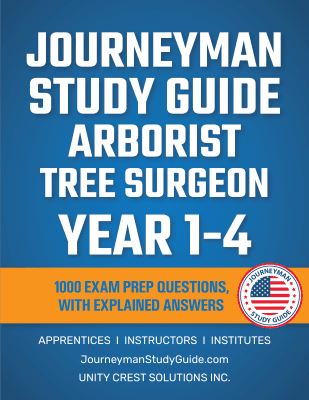
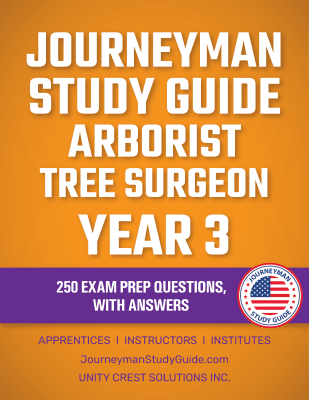
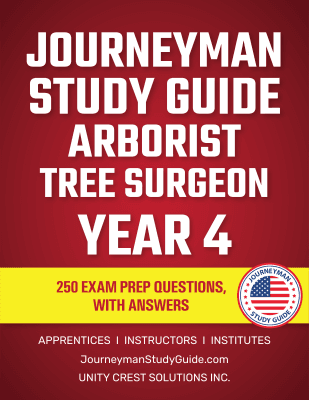
      Journeyman Arborist/Tree Surgeon Study Guide

      This journey starts with an arborist with a focus on tree surgery. Their main job is support, management, and saving urban trees, while also maximizing hardwood resources. In many outdoor and land-based careers, professionals often expand into related environmental roles, which can be explored further through this broader landscape management perspective.

      Professionals in this area prune, diagnose, and remove trees when disease is an issue. An Arborist, however, is a cool person who protects trees from wood-destroying bugs and protects urban structures harmed by tree roots.

      This Journeyman Arborist/Tree Surgeon Study Guide highlights both the hands-on and theoretical aspects of training in Arboriculture and tree maintenance. This enables learners to gain insightful industry expectations. Additionally, users will gain access to industry standards to better evaluate the theories and/or build on their research in Arboriculture.

      This guide is for informational purposes and does not replace training, licensing, or certification.

      The Trade of Tree Surgeon and Arborist

      Arborists perform the crucial job of caring for and managing the health of trees that are found in urban and landscaped settings. Unlike foresters who are responsible for entire ecosystems of forests, the arborists job is to tend to individual trees in urban settings, as well as trees found in parks, private homes, and landscaped sites of commercial businesses.

      Most people think that tree surgeons are a type of arborist. In fact, tree surgeons are a little more specialized. They are primarily concerned with the pruning of the more dangerous branches of trees, the removal of trees that are unhealthy, and the propping of trees that are damaged. To do this work safely, these specialists need to understand tree anatomy and tree biology, as well as the processes of how trees grow and how trees stay stable.

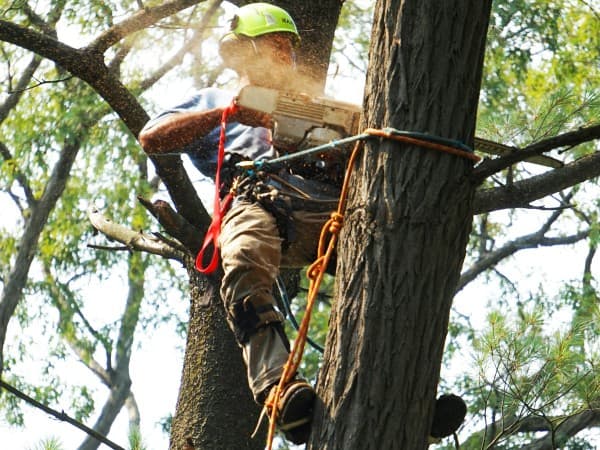
      The type of equipment needed for modern arboriculture is very specialized. It includes chainsaws, climbing equipment, rigging, aerial lifts, among other tools. Technicians may be required to diagnose a tree's disease to establish whether it is unhealthy or whether it is suffering from pest infestation.

      The training guide for arborists helps them learn how to diagnose tree problems, manage tree-related hazards, and communicate tree care strategies to stakeholders. In many cases, arborists also work alongside conservation-focused roles, which can be better understood through this environmental fieldwork connection.

      Training and Entry Career Opportunities in the United States

      To become an arborist in the U.S., one may choose to begin with vocational training, studies in horticulture, or environmental science. Community and agricultural colleges offer courses for beginners in the field of arboriculture and in the science and management of plants and landscapes.

      Training programs usually cover tree risk assessments, tree pruning, tree pests and diseases, tree identification, and so on. Because arborists need to climb trees and bring their own equipment to do so, they require a lot of on the job training. This is a very high risk occupation so they need to undergo thorough training strategies.

      In tree care, many begin their careers as apprentices at tree care companies, landscaping companies, or municipal park departments. More experienced tree care professionals and arborists train them in pruning, tree removal, and assessments of tree health.

      The U.S. Department of Agriculture has collaborated with other professionals in developing programs that incorporate aspects of urban forestry and the sustainable management of trees.

      Other professionals choose to obtain additional credentials described in the certified arborist study guide. These can be beneficial in deepening one’s knowledge of tree biology and the practice of arboriculture.

      What to Expect on Arborist and Tree Care Assessments

      The assessments focus on theoretical and practical components. There are written assessments that cover tree biology, tree pruning, tree pest and disease identification, soil and tree risk assessments.

      Candidates should possess some knowledge of safe climbing, proper tree pruning, and identification of tree-related diseases and other structural issues. The assessment requires knowledge of the environmental soil and irrigation and climate components.

      For practical evaluations, candidates may be required to demonstrate skills in climbing, pruning, or tree hazard assessment. The primary aim of these evaluations is to demonstrate knowledge of the principles of tree care and tree safety.

      Resources from Arborist study guides help learners gain, or brush up on, their knowledge on the terminology, concepts, and procedures associated with tree care, tree evaluations, and arboriculture.

      What This Journeyman Arborist/Tree Surgeon Study Guide Provides

      The Journeyman Arborist/Tree Surgeon Study Guide helps learners review the more critical aspects of tree care and arboriculture within a professional context. This guide focuses on tree biology, pruning, and general safety procedures as an arborist as opposed to helping an individual achieve a specific certification.

      The guide has, but is not limited to, tree anatomy, pruning, tree hazard assessments, pest and tree environment evaluations, and health assessments. The guide has practical examples to help learners understand the various aspects of tree care and tree practice that they may face as an arborist in a private or public tree care.

      These resources help learners to be familiar with the duties they will be expected to perform as an arborist and to be proficient in the care and maintenance of trees in a developed environment.

      Careers for Tree Surgeons and Arborists

      Some arborists and tree surgeons work in landscaping and general maintenance. Many are employed by tree service companies that specialize in tree removal, and maintenance of the overall health of a tree.

      They can also work for municipal park departments, utility companies, or environmental organizations that are in charge of managing urban forests and public green spaces. Utility arborists work on tree management and maintenance around power lines and other facilities for safety purposes.

      With increased years of experience in the field, arborists can become tree care consultants, urban forestry specialists, or tree care supervisors. Others are known to start their own tree services companies.

      With more investments in cities, the work of arborists in the care and management of urban trees will continue to grow.

      Industry and Training For Arborists

      Because of their profession, arborists must keep themselves in contact with the major organizations for tree care and urban tree care education, as they promote the safe and appropriate management of environmental tree care.

      Because of the tools that arborists use, the Occupational Safety and Health Administration (OSHA) has a set of work safety guidelines that are followed while arborists are working. Many tree care organizations work towards ensuring the safety of arborists.

      Arborists must pursue continuing education, as well as ongoing training, that helps them stay current with the latest tree care and environmental management methods and techniques. Those looking to expand into broader outdoor operational roles can explore this related equipment-based career direction.

      Case Scenarios: Entry-Level Arborist vs Experienced Tree Care Professional

      Scenario 1: New Migrant or Entry-Level Candidate

      A new entrant to the arboriculture field may have general landscaping experience but limited exposure to specialized tree care practices. Early challenges may include learning safe climbing techniques, understanding tree pruning standards, and identifying tree diseases or structural weaknesses.

      Entry-level workers often begin by assisting experienced arborists with ground operations such as equipment setup, debris removal, and safety monitoring. Over time, they gradually develop the skills needed to perform pruning and tree care tasks independently.

      With continued training and hands-on experience, entry-level arborists build confidence working with climbing equipment and performing safe tree maintenance.

      Scenario 2: Experienced Arborist or Tree Surgeon (10–20 Years)

      An experienced arborist may have many years of experience performing tree pruning, removal, and risk assessment. However, even seasoned professionals must stay updated as arboriculture research continues to improve tree care practices.

      Experienced arborists often take on leadership roles within tree service companies, supervising crews, training new technicians, and performing complex tree risk evaluations.

      Their experience allows them to diagnose tree health problems quickly and implement effective maintenance strategies that protect both trees and surrounding property.

      Frequently Asked Questions

      Arborists specialize in the care and maintenance of trees, including pruning, disease diagnosis, risk assessment, and tree removal when necessary.

      Many individuals enter the field through horticulture programs, landscaping experience, or on-the-job training with tree care companies.

      Key skills include tree identification, pruning techniques, safety procedures, climbing skills, and knowledge of tree biology.

      Arborists often use climbing gear, chainsaws, pruning tools, aerial lifts, and rigging equipment to safely perform tree care tasks.

      No. The study guide is intended as a supportive learning resource and does not replace formal training programs or certification requirements.

      Buy Arborist/Tree Surgeon

      Questions, Answers, & Explanations

      Get clear explanations behind every answer, perfect for deeper learning and more thorough exam preparation.

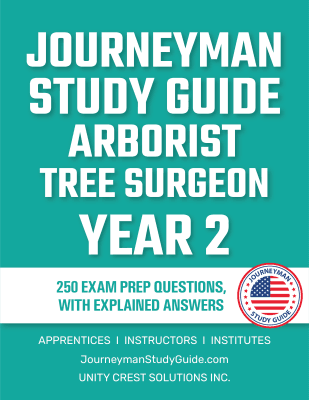
      • year-1-1

        Year 1

        250+ Exam Prep Questions
        $39
        Order Now Download Sample Book
      • year-2-1

        Year 2

        250+ Exam Prep Questions
        $39
        Order Now Download Sample Book
      • year-3-1

        Year 3

        250+ Exam Prep Questions
        $39
        Order Now Download Sample Book
      • year-4-1

        Year 4

        250+ Exam Prep Questions
        $39
        Order Now Download Sample Book
      • all-years-explained-answers

        All years - Explained Answers

        1000 Exam Prep Questions
        $139
      Questions & Answers

      Quick and easy practice to test your knowledge anytime, anywhere—ideal for simple, on-the-go preparation.
      • year-1

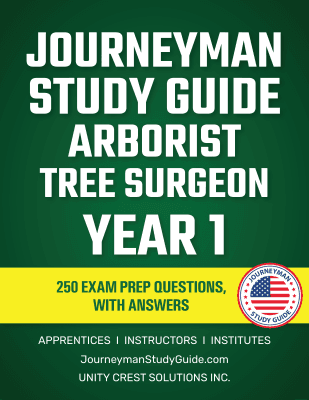
        Year 1

        250+ Exam Prep Questions
        $19
        Order Now Download Sample Book
      • year-2

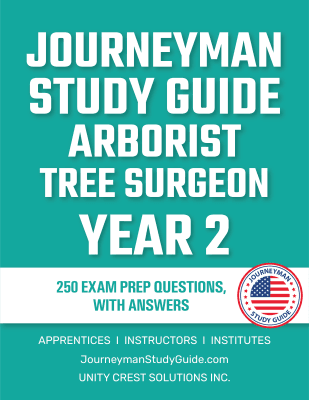
        Year 2

        250+ Exam Prep Questions
        $19

      Evaluate Your Experience
      Test Access Here

      Take Online Test
      Order Now Download Sample Book
    • year-3

      Year 3

      250+ Exam Prep Questions
      $19
      Order Now Download Sample Book
    • year-4

      Year 4

      250+ Exam Prep Questions
      $19
      Order Now Download Sample Book
    • all-years

      All years

      250+ Exam Prep Questions
      $59