Questions, Answers, & Explanations
Get clear explanations behind every answer, perfect for deeper learning and more thorough exam preparation.

This guide is designed to help you get ready for the job of textile and garment manufacturing. People in this industry take raw materials and create finished goods. This includes designing the item, preparing the fabric, running the production machinery, and doing quality control for the apparel manufacturing & textile production. For a broader look into other industries and their technological advancements, check out the essential techniques in various manufacturing sectors.
This industry relies on workers who know the secrets of garment construction and the science of production. Textile and production workers operate sewing and cutting and production and processing machines. They are the ones who ensure that the garments are produced on time and are of the adequate quality, in accordance with the given sample and cutting.
This guide is designed to provide supplemental material for people entering environments of textile production and apparel manufacturing. This guide is not designed to replace formal education, on-site training, or training for specific employer certifications.
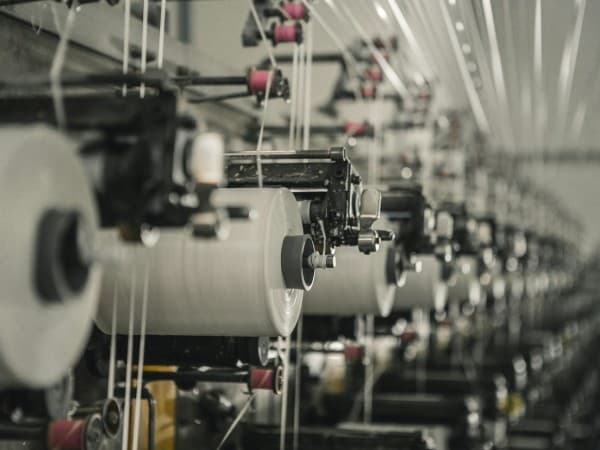
The steps in manufacturing apparel include fabric selection, pattern making, cutting, sewing, finishing, and checking quality. Apparel and textile workers need knowledge on varying fabric characteristics as well as the machines used to create and assemble garments. If you're looking to expand your skills, it might help to explore more about skills required for diverse trade environments.
Natural materials, such as cotton and wool, and synthetic materials, such as polyester and nylon, are used in textile production. Careful consideration by the technician on the characteristics of each fabric influences the cutting, sewing, and finishing used.
With the rise of automation and computer-controlled textiles in the apparel manufacturing industry, production per hour reached unlimited peaks. Now garments can be made by the thousands uninterrupted.
The Manufacturing of Apparel and Production of Textiles study guide offers details on the many steps involved in the production of a single garment. It recognizes each phase of production as a step with significant interdependence to the total apparel manufacturing process.
Training for a career in clothing production may take the form of vocational education, community colleges, or manufacturer on-the-job training. Training in these programs includes garment construction, types of fabrics, and operation of an industrial sewing machine.
Training manuals assist in areas of interpreting and constructing production patterns and quality inspection of garments. In the textile industry, skills such as reading and interpreting technical drawings and accompanying specifications are necessary and valuable.
The most typical method of entering the industry is by seeking an entry-level position at a garment factory or a textile production plant. Entry-level factory workers are often trained by the employer in one of the following areas: machine operation, garment assembly, or quality control.
The U.S. Department of Labor sponsors workforce training and job training for workers funded by textile production and manufacturing career programs.
The study guide for textile production and apparel manufacturing contains an overview of training manuals and the manufacturing environment.
When it comes to textiles and apparel assessments, both practical and analytical skills are needed. Written assessments may include fabric, garment construction, machine, and production flow principles. To understand more about how assessments are handled in other industries, look into how other trades manage technical evaluations.
Questions can be about types of stitches, types of seams, piece arrangement to form a pattern, and product quality control methods. It is crucial to know production-related terminology and processes to do well on these assessments.
Practical assessments can include sewing, assembling garment sections, and identifying production-related problems after quality control of a product. Familiarity with assessment procedures is crucial for those in apparel production manufacturing.
The apparel manufacturing and textile production study guide will help in understanding the definitions and processes of the garment industry, the manufacturing of garments, and the guides of textile production.
What is the benefit of the study guide for the Apparel Manufacturing and Textile Production Study Guide to the learner?
What should be the benefit for the student when they review the study guide for the textile production and teaching manufacturing apparel guide? Every student with concerns for the manufacture of garments and the processing of textile materials is able to utilize the guide, and although the guide does not assure the student of any particular result from the exam, the guide will help the student to gain more knowledge on the steps involved in the production process and the various applications of technology for the construction of the garments.
Users of the guide will be able to understand how to produce clothing from the initial stages of production to the end by studying the fabric, construction, and assembly of garments, as well as the operation of industrial sewing machines and the quality control of these processes.
The guide indicates that there are real-life production scenarios and outlines the typical tasks and challenges faced by apparel manufacturing employees. Reviewing this material may help to ease some of the participants’ worries about the functions involved in the production of garments and textile materials.
There are varied employment opportunities in the production of clothing and textiles in various factories. Many people first get into manufacturing as sewing machine operators, garment assembly operators, or other roles in textile production.
With more experience, workers move on to more specialized positions, like production supervisor, quality control inspector, or pattern technician. These positions require more detailed knowledge about how to maximize production, how to construct clothing, and how to work with various materials.
Some may go on to help designers by converting their illustrations into mass production patterns, while others may go into fabric evaluation or production management.
Despite rapid global changes, the apparel industry still needs skilled technicians familiar with garment construction and fabric technology.
Those in apparel manufacturing should stay in touch with their relevant trade organizations representing the textile and clothing industry. These bodies offer advocacy and research, training and educational resources, and standards for quality control in clothing production.
The Occupational Safety and Health Administration usually sets the standards for safety in manufacturing environments. These standards become more critical in environments where cutting tools, sewing machines, and automated textile machines are used.
Industry associations and manufacturers provide workers with the most current training materials and guides on emerging textile technologies and production techniques.
A newcomer to the garment manufacturing industry may start practicing basic sewing skills without any experience in working on a large-scale production environment. Deficiencies on the working methodologies when undertaking industrial sewing or on the functionality of the specific equipment considered sewing contraptions may arise. In the initial phases of working in the factory setting several issues may arise in the understanding of the machine and equipment functionality, the production goals and levels, and quality standards. However, as workers gain experience and, in particular, training, the working standards in the manufacturing setting will also increase. In other words, through practice, entry level workers have the opportunity to develop proficiency in the sewing process, as well as the entire production process.
A professional in garment manufacturing with many years of experience has most probably spent several years working with a number of different garment production and manufacturing facilities in garment production. Within the industry, most such professionals will have acquired a fairly good understanding of the techniques of garment construction and the operation of machines. In many instances, even the professionals and specialists will have to start from the bottom and learn the operational methodologies of the technologically advanced sewing machines or automatic production machines. The professionals are well versed in adapting to the changes in the methodologies of production. As such, the experienced professionals are well suited to take the supervisory positions and manage production teams, train the newcomers, and set the quality standards of the production activity of the factory. Similar to the preparation required for the Apparel Manufacturing & Textile Production, professionals in technical trades must combine hands-on experience with strong knowledge of machinery, operational procedures, and evolving technologies to maintain high industry standards.
Manufacturing apparel involves processes to turn raw textiles into finished clothing articles. These processes include cutting, sewing, assembling, and finishing.
Some workers may complete vocational training, but many have no training and start at entry positions and learn through on-site training.
Some machines used in apparel production are industrial sewing machines, machines to cut fabric, pressing machines, and machines used to automate the production process.
Some skills needed include paying attention to detail, the ability to operate machines, knowledge of fabrics, and the ability to follow production specifications.
The study guide is intended to assist in learning and does not substitute for any training programs or requirements of specific employers.
Get clear explanations behind every answer, perfect for deeper learning and more thorough exam preparation.
Quick and easy practice to test your knowledge anytime, anywhere—ideal for simple, on-the-go preparation.