Site Updates in Progress: Things might look different as we work on enhancing your experience.

Journeyman
    • FAQ
    • Students FAQ
    • Instructors FAQ
    • Schools & Institutions FAQ
    • Help Articles
    • What is a Journeyman
    • Steps to Becoming a Journeyman
    • Preparing for the Journeyman Exam
    • What to Expect on Exam Day
    • Journeyman Pay: What to Expect
    • Immigrants Becoming Journeymen
    • Challenging the Exam Without an Apprenticeship
    • What Trade is Right for Me
    • Navigating the Job Market
    • Journeyman and Master Tradespeople
    • State-by-State Licensing
    • What are Apprenticeships
    • Continuing Education for Journeymen
    • Women in the Trades
    • Trades vs College
    • FAQ About the Journeyman Process
    • Products & Services
    • Custom Tests and Training
    • Marketing and More
    • Meet the Creators
    • Kris McFarlane
    • Bobby Bedi
    • Unity Crest Solutions
  • Contact Us
  • Login
Journeyman
  • Home
  • Study Guides
    Study Guides
    • Practice Tests
      Practice Tests
      • Resources
        Resources
        • FAQ
          FAQ
          • Students FAQ
          • Instructors FAQ
          • Schools & Institutions FAQ
        • Help Articles
          Help Articles
          • What is a Journeyman
          • Steps to Becoming a Journeyman
          • Preparing for the Journeyman Exam
          • What to Expect on Exam Day
          • Journeyman Pay: What to Expect
          • Immigrants Becoming Journeymen
          • Challenging the Exam Without an Apprenticeship
          • What Trade is Right for Me
          • Navigating the Job Market
          • Journeyman and Master Tradespeople
          • State-by-State Licensing
          • What are Apprenticeships
          • Continuing Education for Journeymen
          • Women in the Trades
          • Trades vs College
          • FAQ About the Journeyman Process
        • Products & Services
          Products & Services
          • Custom Tests and Training
          • Marketing and More
          Meet the Creators
          Meet the Creators
          • Kris McFarlane
          • Bobby Bedi
          • Unity Crest Solutions
      • Contact Us

      Access top-tier trade education from anywhere in America—flexible, affordable, and digitally powered. Proudly American owned and operated.

      Useful Links

      • Home
      • Students FAQ
      • Instructors FAQ
      • Blogs
      • Contact Us

      Study Guides

      • 3D Printing & Additive Manufacturing
      • Agricultural Equipment Technician
      • Apparel Manufacturing & Textile Production
      • Appliance Service Technician
      • Aquaponics Specialist
      • Arborist/Tree Surgeon
      • Auto Body And Collision Technician
      • Automotive Refinishing Technician
      • Automotive Service Technician
      • Avionics Technician
      • Baker
      • Battery Technician (EV and Renewable Energy)
      • Blaster/Driller (Construction and Quarrying)
      • Boiler and Pressure Vessel Inspector
      • Boilermaker
      • Bowyer & Archery Technician
      • Brewery Technician
      • Bricklayer
      • Butcher (Industrial Scale)
      • Cabinetmaker
      • Cannabis Cultivation Technician
      • Carpenter
      • Carpenter - Formwork
      • Composting System Operator
      • Concrete Finisher
      • Confined Space Technician
      • Construction Craft Worker
      • Cook
      • Crane Operator (Mobile Crane Operator)
      • Custom Closet and Storage Installer
      • Custom Staircase Fabricator
      • Cutlery & Bladesmithing Technician
      • Directional Driller
      • Distillation Equipment Operator
      • Dock Builder
      • Drywall Finisher and Plasterer
      • Electric Vehicle Charging Station Installer
      • Electrician - Construction
      • Electrician - Industrial
      • Electrician - Residential & Multifamily
      • Elevator Constructor
      • Elevator Technician
      • Emergency Vehicle Technician
      • Esthetician
      • Floorcovering Installer
      • Forestry Equipment & Machinery Operation
      • Foundation Repair Technician
      • Frac Technician (Oilfield Services)
      • Gas Fitter - Class A
      • Gas Fitter - Class B
      • Glass Installer - Automotive
      • Glazier
      • HVAC Refrigerator
      • Hairstylist
      • Hazardous Materials Technician
      • Heavy Duty Equipment Technician
      • Heavy Equipment Operator -Tractor – Loader – Backhoe
      • Heavy Equipment Operator – Dozer
      • Heavy Equipment Operator – Excavator
      • Heavy Haul Rock Truck Operation
      • High-Pressure Pipe Welder
      • Horticulturalist Cannabis
      • Horticulturist - Landscape
      • Hydraulic Equipment Technician
      • Hydroelectric Systems & Power Generation
      • Industrial Mechanic – Millwright
      • Industrial Sewing Machine Operation & Maintenance
      • Instrumentation And Control Technician
      • Ironworker - Generalist
      • Ironworker - Reinforcing
      • Ironworker - Structural / Ornamental
      • Knifemaking & Cutting Tool Fabrication
      • Lather - Interior Systems Mechanic
      • Locomotive Mechanic
      • Log Hauling & Transport Operations
      • Machinist
      • Masonry Restoration Specialist
      • Medical Equipment Repair Technician
      • Metal Fabricator – Fitter
      • Motorcycle Technician
      • Natural Gas Compressor Operator
      • Network Equipment Installer
      • Oil Field Rig Mechanic
      • Oil Heat System Technician
      • Orthotics Technician
      • Painter and Decorator
      • Parts Technician
      • Patternmaking & Garment Production
      • Plastics Fabricator
      • Plumber
      • Port Equipment Operator
      • Powerline Technician
      • Precision Optics Technician
      • Prosthetics Technician
      • Quality Control Technician
      • Radio Frequency Technician
      • Railway Signal Technician
      • Recording & Audio Engineering
      • Recreation Vehicle Service Technician
      • Refrigeration and Air Conditioning Mechanic
      • Residential Energy Auditor
      • Robotics Maintenance Technician
      • Roofer
      • Scenic Construction & Stage Fabrication
      • Set Designer (Film and Theater)
      • Sheet Metal Worker
      • Shipwright (Wood and Composite Construction)
      • Soil Testing Technician
      • Sprinkler Fitter
      • Stage Rigging Technician
      • Steamfitter / Pipefitter
      • Swimming Pool Technician
      • Tactical Equipment Technician
      • Tactical Firearms Technician
      • Textile Technology & Fabric Engineering
      • Tilesetter
      • Tire Technician (Commercial and Industrial Vehicles)
      • Tool Repair Technician
      • Tool and Die Maker
      • Tower Crane Operator
      • Transport and Coach Technician
      • Truck Trailer Service Technician
      • Truck and Transport Mechanic
      • Tugboat Operations & Marine Navigation
      • Waterproofing Technician
      • Welder
      • Well Servicing Technician
      • Wildlife and Land Conservation Technician

      Contact Us

      info@journeymanstudyguide.com

      Locations Serving:

      • Albuquerque
      • Austin
      • Baltimore
      • Charlotte
      • Chicago
      • Columbus
      • Dallas
      • Denver
      • Detroit
      • Fort Worth
      • Houston
      • Indianapolis
      • Jacksonville
      • Kansas
      • Las Vegas
      • Los Angeles
      • Louisville
      • Memphis
      • Milwaukee
      • Nashville
      • New York
      • Oklahoma
      • Philadelphia
      • Phoenix
      • Portland
      • San Antonio
      • San Diego
      • San Francisco
      • San Jose
      • Seattle

      ©2026 ALL RIGHTS RESERVED. Unity Crest Solutions Inc.

      Your browser does not support the video tag.
      HomeCourses
      Blaster/Driller (Construction and Quarrying)
      Buy Now

      Journeyman Blaster/Driller (Construction and Quarrying) Study Guide & Exam Prep

      What Is a Blaster/Driller?

      Blaster/Drillers are highly skilled tradespeople responsible for drilling and controlled blasting operations in construction, mining, and quarrying projects. These professionals are critical to preparing sites for excavation, building foundations, resource extraction, and infrastructure development. Working across diverse sectors, Blaster/Drillers play a vital role in ensuring that drilling and blasting activities are carried out safely, efficiently, and in compliance with strict regulations.

      Whether supporting highway expansion in Texas or quarry operations in Pennsylvania, Blaster/Drillers help shape America’s physical landscape through precision and expertise.

      Key Responsibilities

      Site Preparation and Analysis

      Before any blasting or drilling begins, Blaster/Drillers conduct thorough site assessments. They evaluate geological conditions, review engineering plans, and determine the appropriate drilling and blasting strategies to achieve project goals while minimizing environmental impact.

      Drilling Operations

      Using advanced drilling machinery from manufacturers like Caterpillar, Sandvik, and Atlas Copco, technicians drill precise blast holes in rock and soil formations. Accurate drilling is essential to ensure the effectiveness and safety of subsequent blasting activities.

      Handling Explosives

      Blaster/Drillers are trained to safely transport, store, load, and detonate explosives. Their work must comply with strict federal and state regulations enforced by agencies like the Bureau of Alcohol, Tobacco, Firearms and Explosives (ATF) and the Occupational Safety and Health Administration (OSHA).

      Safety and Regulatory Compliance

      Maintaining strict adherence to safety protocols is a core responsibility. Blaster/Drillers follow federal, state, and company-specific guidelines to protect personnel, equipment, and the environment throughout the drilling and blasting process.

      Inspection and Maintenance

      Regular inspection and maintenance of drilling rigs, detonators, and blasting accessories are critical to ensuring that all equipment functions reliably and safely. Preventative maintenance minimizes downtime and enhances operational efficiency.

      Skills and Traits for Success

      Successful Blaster/Drillers typically possess a unique blend of technical expertise, physical stamina, and keen attention to safety:

      • Technical Knowledge: Mastery of explosives, drilling technologies, and geotechnical conditions.
      • Attention to Detail: Precision is vital when calculating blast patterns and handling explosives.
      • Physical Strength and Endurance: The ability to operate heavy machinery and perform tasks in challenging outdoor environments.
      • Safety Consciousness: A proactive commitment to maintaining a safe working environment.
      • Problem-Solving Ability: Quick thinking and adaptability are necessary to address unexpected site conditions and technical challenges.

      Industries Where Blaster/Drillers Thrive

      Blaster/Drillers are indispensable across several major American industries:

      • Construction and Infrastructure: Preparing sites for roads, tunnels, dams, and commercial developments.
      • Mining and Quarrying: Assisting in the extraction of aggregates, coal, minerals, and stone used in a wide range of industries.
      • Demolition and Site Clearance: Executing controlled demolitions of buildings, bridges, and industrial structures.

      Leading employers include construction giants like Kiewit Corporation, Granite Construction, and mining companies such as Peabody Energy.

      Why Choose This Career?

      A career as a Blaster/Driller offers strong long-term prospects:

      • Strong Job Demand: High demand in infrastructure projects, mining operations, and large-scale urban development, especially in states like Texas, Colorado, and Pennsylvania.
      • Competitive Earnings: Attractive wages and comprehensive benefits, often negotiated through union representation with organizations like the Laborers' International Union of North America (LIUNA).
      • Career Growth Opportunities: Advancement pathways into roles such as Blast Supervisor, Safety Officer, or Technical Consultant.
      • Rewarding Work: Immediate and tangible results, along with the satisfaction of contributing to the construction of essential public and private infrastructure.

      Blaster/Drillers are part of the backbone of America’s development, shaping the environment with precision and professionalism.

      Ready to Become a Blaster/Driller?

      Set yourself up for success with our targeted study materials:

      • Question & Answer (Q&A): Straightforward questions with four logical answer options to assess your knowledge.
      • Question, Answer, & Explanation (Q/A Explanation): Dive deeper with clear, concise explanations to reinforce your understanding.
      • Online Tests: Simulate real exam conditions with instant scoring and running averages to build your confidence before test day.

      All products are available as instant-download digital PDFs. Preview our Q&A and Q/A Explanation products, and get ready to advance your career with confidence.

      What to Expect on the Blaster/Driller Certification Exam

      The Blaster/Driller Certification Exam validates a candidate’s skills and knowledge, ensuring they meet the high standards expected in America’s construction, mining, and quarrying industries. Certification is recognized by leading companies such as Kiewit, Bechtel, and Fluor, as well as prominent quarry operators like Vulcan Materials and Martin Marietta.
      Unions like the Laborers’ International Union of North America (LIUNA) also support certification as part of their commitment to maintaining workplace safety and excellence.

      Exam Format

      The certification exam assesses both theoretical knowledge and practical competencies necessary for success in the field.

      • Number of Questions: 100–120 multiple-choice questions
      • Duration: Approximately 3 to 4 hours

      Question Types

      Expect a range of question formats designed to test real-world knowledge:

      • Scenario-Based Questions: Evaluate your judgment in handling drilling and blasting operations.
      • Equipment Identification: Recognize tools and machinery from manufacturers like Caterpillar and Sandvik.
      • Safety and Compliance: Focus on regulations set by the ATF and OSHA.
      • Mathematical Applications: Perform blast design calculations, including burden, spacing, and powder factor estimations.

      Key Topics Covered

      Drilling Techniques and Equipment

      Understanding drilling technology is critical. The exam covers:

      • Safe operation and maintenance of drills from Atlas Copco and Caterpillar.
      • Selecting drilling techniques based on soil, rock type, and site conditions.

      Explosives Handling and Safety

      Candidates must be familiar with:

      • Transportation, storage, and usage standards for explosives.
      • Federal regulations outlined by the Bureau of Alcohol, Tobacco, Firearms and Explosives (ATF) and workplace safety rules enforced by OSHA.

      Blast Design and Execution

      Knowledge of blasting is essential, including:

      • Designing effective blast patterns to control fragmentation and minimize environmental impacts.
      • Calculating quantities of explosives needed for specific projects.

      Environmental Considerations

      Modern blasting must balance operational goals with environmental stewardship:

      • Managing dust, noise, and vibration.
      • Complying with EPA and state environmental guidelines.

      Mathematical Applications

      Technicians must perform calculations for:

      • Hole depth, spacing, burden, and powder factor.
      • Estimating explosive quantities for safe, efficient blasts.

      Passing Requirements

      To pass, candidates typically must:

      • Achieve a minimum score of 70%.
      • Demonstrate competency in written tests and, in some cases, a practical exam where candidates may need to perform basic drilling and blasting tasks under supervision.

      Tips for Effective Preparation

      Start Early

      Allow at least 3–6 months for comprehensive study. Starting early ensures mastery of both technical knowledge and safety regulations.

      Structured Study

      Use targeted study tools:

      • Question & Answer (Q&A): Focus on practicing key concepts through structured questions.
      • Question, Answer, & Explanation (Q/A Explanation): Deepen understanding with brief, clear explanations for each answer.

      Interactive Practice

      Our Online Tests simulate the certification exam experience, offering:

      • Immediate scoring
      • Running averages to track your progress
      • Realistic exam timing and pressure

      Focus on Safety Regulations

      Thoroughly study regulations from ATF, OSHA, and other relevant agencies, as safety compliance questions are heavily emphasized on the exam.

      Hands-On Experience

      Practical experience is crucial. Enroll in training programs offered by institutions like:

      • Colorado School of Mines (Golden, Colorado): Known for mining engineering and explosives handling programs.
      • Missouri University of Science and Technology (Rolla, Missouri): Offers specialized courses in drilling and blasting techniques.

      Additionally, union training through LIUNA Training and Education Fund provides excellent hands-on preparation.

      Ready to Excel on Your Certification Exam?

      Strengthen your knowledge and boost your confidence with our expertly crafted study resources:

      • Question & Answer: Targeted practice for self-assessment.
      • Question, Answer, & Explanation: In-depth understanding through detailed answers.
      • Online Tests: Realistic exam simulations with instant scoring and feedback.

      All study materials are available as instant-download PDFs. Preview our Q&A and Q/A Explanation formats to start preparing with confidence today.

      What Types of Questions Are on the Certification Exam?

      The Blaster/Driller Certification Exam is designed to evaluate both your theoretical knowledge and practical skills in explosives handling, drilling operations, and safety. The exam includes multiple-choice, scenario-based, and practical questions that assess your understanding of blasting techniques, equipment operation, and safety protocols. You may be tested on federal regulations, blast calculations, vibration control, and proper use of drilling machinery and explosives. This well-rounded assessment ensures candidates are ready to perform safely and effectively in real-world job sites.

      Common Question Formats

      1. Multiple-Choice Questions
        • These questions test your knowledge on core topics like blasting materials, drilling equipment, and environmental safety standards.
      2. Scenario-Based Questions
        • These present real-world scenarios where you must apply your technical knowledge to solve a problem, such as troubleshooting equipment failures or adjusting drilling parameters.
      3. Calculation Questions
        • Some questions involve mathematical problems related to blast design, drill depths, or charge calculations.
      4. Tool and Equipment Identification
        • You may be asked to identify tools, explosives, or equipment used in blasting and drilling operations.

      Sample Questions

      1. Blasting Materials
        Question: "Which explosive material is commonly used for rock blasting in mining operations?"
        • A) TNT
        • B) ANFO (Ammonium Nitrate Fuel Oil)
        • C) Dynamite
        • D) Black powder
        • Answer: B) ANFO (Ammonium Nitrate Fuel Oil)
      2. Drilling Equipment
        Question: "What is the purpose of a rotary drill in blasting operations?"
        • A) To insert explosives into the ground
        • B) To create vertical or angled holes in rock for blasting
        • C) To measure soil composition
        • D) To compact soil
        • Answer: B) To create vertical or angled holes in rock for blasting
      3. Blast Design
        Question: "When designing a blast pattern, what is the ideal spacing between blast holes for optimal efficiency?"
        • A) 5-10 feet
        • B) 15-20 feet
        • C) 25-30 feet
        • D) 40-50 feet
        • Answer: B) 15-20 feet
      4. Safety Protocols
        Question: "What is the primary safety measure when transporting explosive materials to a drilling site?"
        • A) Use of standard delivery trucks
        • B) Keeping the materials dry and away from heat sources
        • C) Ensuring the materials are in secure, sealed containers
        • D) All of the above
        • Answer: D) All of the above
      5. Environmental Impact
        Question: "What is the purpose of controlling blast vibration during mining operations?"
        • A) To improve the visual appeal of the site
        • B) To ensure worker safety and minimize damage to nearby structures
        • C) To speed up the blasting process
        • D) To create a more intense blast effect
        • Answer: B) To ensure worker safety and minimize damage to nearby structures

      Tips for Answering Exam Questions

      • Read Carefully: Make sure you fully understand the question and all possible answers before making your selection.
      • Use the Process of Elimination: Eliminate answers you know are incorrect to increase your chances of selecting the right one.
      • Practice Under Timed Conditions: Simulate real exam conditions by practicing with a timer to improve your time management skills.

      Practice Questions for Better Preparation

      Mock exams and practice questions are critical for effective preparation. They help you:

      • Familiarize yourself with the exam format and time constraints.
      • Identify subject areas that require deeper review or clarification.
      • Build confidence and reduce test anxiety through repetition and active recall.

      Regular practice also improves your ability to interpret complex questions and apply knowledge in real-world scenarios. Our Q&A and Q/A Explanation products are specifically crafted to simulate the types of questions found on the Blaster/Driller exam. Practicing consistently can significantly boost your accuracy, speed, and overall performance on test day.

      Prepare for Your Certification Today!
      Ensure success with our expert-designed study guides, detailed Q&A explanations, and interactive online tests.
      Start Your Certification Prep Now →

      What Is It Like to Work as a Blaster/Driller?

      The daily work of a Blaster/Driller is a combination of high-stakes precision, technical planning, and physical labor. These professionals are essential to projects ranging from large-scale construction and highway expansion to mineral extraction in quarries. Whether supporting infrastructure projects for Bechtel, drilling for Turner Construction, or preparing quarry sites for Vulcan Materials or Martin Marietta, Blaster/Drillers are responsible for initiating the first, and often most critical, steps of any excavation-based operation.

      Morning: Preparation and Safety Checks

      Job Planning and Review

      A Blaster/Driller typically begins their day at 6:00 or 7:00 AM. The first task is a detailed job review with site supervisors, engineers, and safety managers. These meetings ensure alignment with the day’s objectives and allow for a final check of blast designs, environmental conditions, and site logistics.

      Equipment Inspection

      Following the briefing, the crew inspects all equipment. Drilling rigs from manufacturers such as Caterpillar, Atlas Copco, and Sandvik are examined for hydraulic leaks, bit wear, and mechanical function.

      Safety Briefings

      Before beginning any fieldwork, teams participate in daily safety briefings. These cover:

      • Site-specific hazards
      • Federal regulations from the ATF for explosive handling
      • OSHA requirements for confined spaces, high-decibel environments, and equipment operation
      • Emergency protocols and communication procedures

      Midday: Active Drilling and Blasting Operations

      Precision Drilling

      The core of the day is spent drilling holes for explosives. Using GPS-guided rigs and onboard monitoring systems, technicians drill to exact depths and angles to meet the engineered blast pattern.

      Blaster/Drillers must adapt to unexpected rock formations or voids, adjusting techniques on the fly while staying within the parameters of the blast design.

      Explosive Handling and Placement

      Once the holes are drilled, the team transitions to loading explosives. All actions follow strict procedures, including:

      • Placing explosive charges
      • Inserting delay detonators
      • Ensuring accurate depth and sequencing

      This stage demands exceptional attention to detail and collaboration. Communication is constant between blasters and the wider crew to clear the site and verify readiness.

      Problem Solving in Real Time

      Drilling rigs may malfunction, rock conditions may shift, or weather may force schedule adjustments. Experienced Blaster/Drillers use critical thinking, mechanical skills, and on-the-spot coordination to solve issues without compromising safety or deadlines.

      Afternoon: Final Checks and Reporting

      Blast Execution and Monitoring

      After a full site clearance and safety review, the blast is executed using a secure remote firing system. Monitoring equipment captures vibration data and fragmentation results, which are reviewed immediately for performance and environmental compliance.

      Documentation and Compliance

      Accurate record-keeping is essential. The team documents:

      • Blast results
      • Explosive quantities used
      • Compliance with local, state, and federal laws

      These reports are submitted to regulatory bodies and maintained for audits and safety reviews.

      Cleanup and Preparation for Next Shift

      Finally, tools are cleaned, explosives stored securely, and equipment staged for the next day. The crew reviews the day’s outcomes and prepares to adjust for upcoming tasks if needed.

      Challenges and Rewards

      Challenges

      The role is physically demanding, often requiring work in rugged terrain, extreme weather, and hazardous conditions. The responsibility of working with explosives requires consistent mental focus and rigorous adherence to safety standards.

      Rewards

      In return, Blaster/Drillers enjoy:

      • High compensation, especially in union roles under LIUNA
      • Job security in a specialized, in-demand trade
      • Tangible results—each project starts with their work
      • Advancement opportunities in safety leadership or project management

      Ready to Begin Your Career as a Blaster/Driller?

      Prepare confidently with our proven exam preparation tools:

      • Question & Answer (Q&A): Focused questions to test your technical skills
      • Question, Answer, & Explanation (Q/A Explanation): Clear breakdowns of correct answers for deeper understanding
      • Online Tests: Realistic simulations with scoring and feedback to track your readiness

      All materials are delivered digitally as downloadable PDFs. Preview our Q&A and Q/A Explanation formats and take the next step toward certification.

      What Are the Long-Term Benefits of a Career as a Blaster/Driller?

      A career as a Blaster/Driller offers significant long-term benefits, including high demand, excellent wages, and numerous opportunities for advancement. Working in construction, mining, and quarrying sectors, these skilled professionals support critical infrastructure and extraction projects across the United States.

      Earning Potential

      Entry-Level Technician

      • Wage Range: $20–$30/hour
      • Description: Entry-level Blaster/Drillers typically begin through apprenticeships or vocational training programs. Schools like Missouri University of Science and Technology, Ivy Tech Community College, and other trade-focused institutions offer foundational education in drilling technology, explosives safety, and regulations.

      Certified Journeyman Blaster/Driller

      • Wage Range: $30–$45/hour
      • Description: Journeyman-level professionals handle full-scale drilling and blasting tasks. They often hold certifications from OSHA, MSHA, and other recognized training programs, qualifying them to lead operations independently.

      Supervisory and Specialist Roles

      • Wage Range: $45–$60/hour or more
      • Description: With years of experience, Blaster/Drillers can move into supervisory or highly specialized roles. These positions may involve overseeing safety operations, consulting on blast design, or instructing new apprentices at union training centers or industry schools.

      Some technicians transition into site management or safety director roles within major firms like Granite Construction or Martin Marietta.

      Regional Salary Differences

      Wages for Blaster/Drillers can vary widely based on project type, local market conditions, and demand.

      Northeast (e.g., Pennsylvania, New York, Massachusetts)

      The region’s quarrying industry and public infrastructure projects ensure stable demand and wages, particularly in aggregate production and tunneling operations.

      Midwest (e.g., Ohio, Illinois, Michigan)

      Ongoing construction and mining activity in the Midwest provides reliable employment with strong pay packages, often tied to large-scale road and bridge projects.

      West and Southwest (e.g., California, Nevada, Texas)

      Regions with strong mining activity and high construction demand offer the highest compensation. Projects involving tunneling, renewable energy infrastructure, and urban expansion fuel the need for skilled Blaster/Drillers.

      Career Growth Opportunities

      Specialization

      Blaster/Drillers can specialize in:

      • Controlled Demolition: Working in urban environments to safely dismantle old structures.
      • Tunneling: Operating in complex underground systems for transportation or utilities.
      • Quarry Operations: Developing deep expertise in aggregate production and geological evaluation.

      Leadership Roles

      With experience, many Blaster/Drillers become:

      • Crew Leaders: Managing drilling teams and coordinating with project managers.
      • Project Supervisors: Overseeing entire drilling and blasting scopes on major projects.
      • Safety Coordinators: Focusing on compliance, audits, and training at large construction sites.

      Union Affiliation

      Unions like LIUNA offer tremendous career support:

      • Advanced training in explosives safety and environmental compliance
      • Networking opportunities through national and regional chapters
      • Pension plans, healthcare, and legal representation

      Entrepreneurship and Consulting

      Veteran professionals often leverage their experience by launching:

      • Consulting Services: Advising on blast design, permitting, and compliance.
      • Independent Blasting Operations: Serving clients in construction, mining, and demolition.

      This pathway offers flexibility, high earning potential, and the ability to contract with both private firms and government agencies.

      Benefits of Certification

      Increased Earning Potential

      Certifications from organizations like OSHA, MSHA, and manufacturer-specific training centers allow professionals to access higher-paying roles and leadership opportunities.

      Professional Recognition

      Certified Blaster/Drillers are often first in line for promotions and leadership positions. Their skills are validated not just by field experience but also by formal recognition, giving them a competitive edge in job markets nationwide.

      Ready to Advance Your Career?

      Our comprehensive study tools are tailored to help you reach the next level:

      • Question & Answer: A great tool for focused practice and self-assessment.
      • Question, Answer, & Explanation: Understand the reasoning behind each answer to build deeper knowledge.
      • Online Tests: Realistic testing simulations with scoring and performance tracking.

      All materials are delivered instantly as downloadable PDFs. Preview our Q&A and Q/A Explanation options today and take your first step toward advancement.

      How Much Can You Earn as a Blaster/Driller?

      Blaster/Drillers play a crucial role in shaping infrastructure and resource development across the United States. Their work demands precision, safety, and technical skill—traits that are rewarded with strong wages and long-term job stability. Salaries vary by experience level, region, certifications, and the type of projects undertaken. Whether working on highway expansions in Texas or quarrying operations in Pennsylvania, skilled professionals in this trade consistently command competitive compensation.

      General Wage Ranges

      Entry-Level Blaster/Driller

      • Hourly Wage: $20–$30/hour
      • Annual Salary: $41,600–$62,400
      • Description: At the entry level, technicians often gain hands-on experience through apprenticeship programs or vocational schools such as Missouri University of Science and Technology or the Colorado School of Mines. They work under supervision, assisting with drilling setup and safety procedures.

      Certified Journeyman Blaster/Driller

      • Hourly Wage: $30–$45/hour
      • Annual Salary: $62,400–$93,600
      • Description: Certified journeymen can manage blast designs, handle explosives, and perform site inspections. Certifications from agencies like OSHA and MSHA are essential at this level. Companies such as Kiewit, Bechtel, and Rogers Group actively seek certified professionals for infrastructure and mining projects.

      Advanced and Specialized Roles

      • Hourly Wage: $45–$60/hour or higher
      • Annual Salary: $93,600–$124,800+
      • Description: With years of experience, Blaster/Drillers may move into supervisory or consulting roles. These positions exist in top firms like Turner Construction, Martin Marietta, and Vulcan Materials, focusing on high-stakes blasting, regulatory compliance, and large-scale operations.

      Regional Salary Differences

      Wage expectations vary based on demand, regional economies, and project scopes.

      Northeast (PA, NY, MA)

      Consistent infrastructure investments and quarrying operations result in steady, well-paying opportunities. Employers such as Peckham Industries and Callanan Industries contribute to strong wage averages.

      Midwest (OH, IL, MI)

      Public and private construction projects, combined with aggregate production, keep demand high. Companies like Great Lakes Aggregates and Rogers Group support stable, competitive wages.

      West and Southwest (CA, NV, TX)

      Mining and large-scale construction projects create some of the highest salary ranges in the field. Granite Construction and Martin Marietta lead ongoing developments in these states.

      Southeast (FL, GA, TN)

      Infrastructure growth and material demand have increased opportunities for Blaster/Drillers. Job stability and solid pay are driven by both public works and commercial expansion.

      Factors Influencing Earnings

      Certification and Training

      Holding certifications from OSHA, MSHA, and explosives training programs leads to better job offers and higher pay. Specialized certifications in environmental controls or vibration monitoring can further enhance your value to employers.

      Union Membership

      Membership in the Laborers’ International Union of North America (LIUNA) often results in:

      • Higher negotiated wages
      • Paid training programs
      • Access to union job boards and hiring halls
      • Pension and healthcare benefits

      Unions play a key role in advancing careers while protecting worker rights.

      Experience and Specialization

      Blaster/Drillers with expertise in areas like:

      • Controlled demolition
      • Tunneling operations
      • Environmental blasting compliance

      often receive premium wages due to the increased risk and technical demands of these roles.

      Employer Type and Project Scope

      Professionals employed by national construction firms or major quarrying operations tend to earn more due to the size, budget, and complexity of the projects. Government infrastructure contracts and high-production mining operations typically offer better compensation than small-scale or seasonal employers.

      Want to Maximize Your Earnings?

      The key to increasing your income as a Blaster/Driller lies in mastering essential industry skills and staying current with regulations. Our study materials are specifically designed to help you:

      • Question & Answer: Test your knowledge with real-world examples and clear options.
      • Question, Answer, & Explanation: Learn why each answer is correct to deepen your understanding.
      • Online Tests: Simulate real exam conditions with instant feedback, scoring, and tracking.

      All materials are available as instant-download PDFs. Preview our Q&A and Q/A Explanation products and start your preparation today.

      What Tools and Resources Do Blaster/Drillers Need to Succeed?

      Blaster/Drillers in the U.S. construction and quarrying industries rely on specialized tools and high-quality training to perform their duties with precision and safety. From operating drill rigs on job sites in Nevada to managing explosives for quarry operations in Pennsylvania, the right tools and ongoing education are essential for ensuring regulatory compliance and operational excellence.

      Essential Tools for Blaster/Drillers

      Drilling Equipment

      Efficient drilling is the foundation of successful blasting operations. Blaster/Drillers use:

      • Drill Rigs: Manufactured by trusted names like Caterpillar, Atlas Copco, and Sandvik, these machines are engineered for accuracy, durability, and performance across varied terrain.
      • Drill Bits and Rods: Selected based on soil and rock conditions to ensure precise boreholes for explosive placement.

      Blasting Equipment

      Reliable blasting systems are crucial for safety and performance:

      • Explosive Loading Tools: Equipment from Austin Powder Company and Dyno Nobel enables accurate loading and safe handling of materials.
      • Remote Initiation Systems: Wireless systems improve operator safety and enhance the accuracy of detonation timing.

      Safety Gear

      Safety is paramount in all drilling and blasting operations:

      • Personal Protective Equipment (PPE): OSHA-compliant gear includes hard hats, high-decibel ear protection, anti-fog safety goggles, and steel-toed boots.
      • Specialized Apparel: Anti-static clothing, fire-resistant coveralls, and explosion-shielding accessories are mandatory when handling explosives.

      Measurement and Monitoring Tools

      Precision is key in maintaining safety and minimizing environmental impact:

      • Seismographs and Vibration Monitors: Devices from companies like Instantel help monitor ground movement and ensure compliance with federal vibration limits.
      • Borehole Survey Tools: Used to confirm drill hole depth, angle, and placement accuracy before explosives are inserted.

      Recommended Learning Resources

      Study Guides and Certification Prep

      Technicians preparing for OSHA, MSHA, or employer-mandated exams benefit from:

      • Official Certification Guides: Materials that align with federal standards and exam objectives.
      • Our Q&A Products: Real-world practice questions designed to test knowledge and reinforce key concepts.
      • Q/A Explanation Resources: Each answer includes a concise explanation to help learners understand the reasoning and improve retention.

      Interactive and Online Tools

      Simulated testing is a critical part of exam readiness:

      • Online Tests: Designed to mimic actual certification exams, our digital practice tests offer scoring, feedback, and running averages so users can monitor progress and improve confidence over time.

      Training Institutions and Programs

      Several U.S. institutions offer focused programs in drilling and explosives technology:

      • Missouri University of Science and Technology (Rolla, MO): Offers degrees and certifications in explosives engineering and mining technology.
      • Colorado School of Mines (Golden, CO): Known for advanced mining programs with drilling and blasting specialization.
      • Penn State University – College of Earth and Mineral Sciences: Provides coursework in construction, mining operations, and applied blasting sciences.

      Unions and Professional Associations

      Career advancement often involves affiliation with respected unions and associations:

      • Laborers’ International Union of North America (LIUNA): Offers structured apprenticeships, continuing education, and access to jobs through hiring halls.
      • International Society of Explosives Engineers (ISEE): Provides networking, professional development, and industry-recognized certification programs.

      Why Having the Right Tools and Resources Matters

      Using dependable equipment and maintaining a commitment to lifelong learning allows Blaster/Drillers to:

      • Operate safely in high-risk environments
      • Increase accuracy and efficiency on the job
      • Stay compliant with OSHA, MSHA, and ATF regulations
      • Qualify for higher-paying roles and supervisory opportunities

      Technicians who prioritize professional development and proper tool usage position themselves for long-term success in the field.

      Ready to Equip Yourself for Success?

      Accelerate your progress with our proven digital study resources:

      • Question & Answer: Practice with realistic questions for exam prep and daily application.
      • Question, Answer, & Explanation: Master key concepts with concise explanations behind every answer.
      • Online Tests: Simulate real exam conditions, track your scores, and target areas for improvement.

      All study materials are delivered instantly as downloadable PDFs. Preview our Q&A and Q/A Explanation resources and begin preparing with confidence.

      Where Can You Learn Blaster/Driller Skills?

      Blaster/Drillers require specialized training that blends classroom learning with real-world hands-on experience. As safety, accuracy, and compliance are critical in this trade, education programs are designed to meet the standards of major U.S. construction firms like Kiewit, Bechtel, and Turner Construction, as well as top quarrying companies such as Vulcan Materials and Martin Marietta.

      Types of Blaster/Driller Education Programs

      Vocational and Technical Schools

      Vocational institutions provide industry-aligned training for students pursuing careers in drilling, blasting, and heavy equipment operation.

      • Pennsylvania College of Technology (Williamsport, PA): Offers specialized programs in heavy equipment operations with modules covering basic blasting techniques.
      • Tulsa Tech (Oklahoma): Provides technical training focused on heavy machinery, explosive safety, and site preparation for construction and mining jobs.

      Community Colleges

      Community colleges are a practical and affordable option for foundational training and certifications.

      • Ivy Tech Community College (Indiana): Features coursework in safety management and equipment operation tailored to high-risk environments.
      • Gateway Community College (Arizona): Offers training in geological assessments, blasting safety, and practical drilling practices.

      Union Training Centers

      Unions provide some of the most robust training pathways in the field.

      • Laborers’ International Union of North America (LIUNA): Delivers nationwide training programs focused on explosive handling, equipment safety, and OSHA compliance. Training is often delivered through regional centers and partnered employers, offering both theoretical and hands-on instruction.

      University Programs

      For those interested in advanced education or specialization, university programs offer in-depth degrees and certifications.

      • Missouri University of Science and Technology (Rolla, MO): Known for its Explosives Engineering program—one of the few in the nation—with access to underground labs and simulation environments.
      • Colorado School of Mines (Golden, CO): Offers degrees in Mining Engineering with advanced coursework in drilling systems, blast design, and safety protocols.

      What to Expect in a Blaster/Driller Training Program

      Core Curriculum Topics

      Programs generally include instruction in:

      • Explosives handling and OSHA/MSHA safety guidelines
      • Drilling methodologies based on rock and soil types
      • Site surveying, geological evaluation, and blast design
      • Equipment maintenance and troubleshooting

      Hands-On Training

      In-field simulations and supervised site work help students:

      • Operate drilling rigs safely
      • Prepare and load explosive charges
      • Practice emergency response procedures
      • Analyze real-time blast outcomes for accuracy and compliance

      Certification Preparation

      Courses often align with exam standards to help students earn credentials such as:

      • OSHA 30-Hour Construction Safety
      • MSHA Part 46/48 Training
      • State-specific Blaster Licenses for regulated operations

      How to Choose the Right Program

      Accreditation

      Ensure the institution is regionally accredited and meets federal and state regulatory training standards.

      Industry Partnerships

      Look for programs with partnerships or internships offered through companies like Granite Construction, Peckham Industries, or Great Lakes Aggregates. These connections can lead directly to job opportunities.

      Location

      Choosing a school near quarrying hubs or infrastructure-heavy regions can offer more exposure to job sites and employer networks.

      Financial Aid

      Explore options for financial assistance, including:

      • Trade school scholarships
      • Federal student aid
      • Employer-sponsored reimbursement
      • Union grants and apprenticeship stipends

      Why Education Matters for Blaster/Drillers

      Proper education prepares you to handle explosives, operate heavy drilling equipment, and manage safety on high-risk job sites. It also:

      • Boosts employability and wage potential
      • Helps meet federal certification requirements
      • Builds confidence through supervised training
      • Lays the foundation for future advancement in supervisory or specialist roles

      The investment in quality training pays off in long-term job security and career mobility across the construction and quarrying sectors.

      Ready to Begin Your Career as a Blaster/Driller?

      Launch your professional journey with the right study tools:

      • Question & Answer (Q&A): Practice exam-style questions to reinforce essential knowledge.
      • Question, Answer, & Explanation (Q/A Explanation): Learn why answers are correct to build mastery.
      • Online Tests: Realistic simulations with feedback, scoring, and time tracking.

      All materials are digital and available for instant download. Preview the Q&A and Q/A Explanation formats and begin preparing with confidence.

      Why Join a Union or Connect with Employers?

      Blaster/Drillers working in construction, quarrying, and mining industries gain significant advantages by joining established unions and aligning with reputable employers. From better wages to enhanced safety and job security, these relationships are essential for long-term career success.

      Benefits of Joining a Union

      Improved Compensation and Benefits

      Unionized workers often enjoy higher wages compared to their non-union counterparts. In addition to strong hourly rates, union membership typically includes:

      • Comprehensive healthcare plans
      • Retirement contributions and pensions
      • Paid leave, including sick days and vacation time

      These benefits significantly contribute to financial stability and peace of mind.

      Job Security

      Unions play a major role in job placement and retention. Through hiring halls and job boards, members are connected to employers in need of certified, experienced workers. This system reduces employment gaps and increases project consistency.

      Professional Training

      Union-affiliated training centers offer:

      • Apprenticeship programs with hands-on training
      • Certification preparation for OSHA, MSHA, and explosive licensing
      • Continuing education in emerging tools, technologies, and safety practices

      Staying current with new equipment and techniques helps Blaster/Drillers remain competitive in evolving job markets.

      Representation and Advocacy

      Unions ensure fair treatment and advocate for:

      • Safe working conditions
      • Reasonable work hours
      • Protection from workplace discrimination
      • Negotiation of better wages and benefits during contract renewals

      Top Unions for Blaster/Drillers

      Laborers' International Union of North America (LIUNA)

      LIUNA offers a wide range of training programs for construction and quarrying professionals. Their training centers focus on:

      • Drilling and blasting operations
      • Explosives handling and transportation
      • OSHA and MSHA safety compliance

      International Union of Operating Engineers (IUOE)

      IUOE provides:

      • Certification for heavy equipment operators
      • Specialized training in drilling equipment and site preparation
      • Strong industry connections to major employers in mining and construction

      Connecting with Employers

      Types of Employers

      Blaster/Drillers find career opportunities across various sectors, including:

      • Construction Firms: Kiewit, Bechtel, Turner Construction, Fluor Corporation
      • Quarrying and Mining Companies: Vulcan Materials, Martin Marietta, Rogers Group

      These employers seek skilled technicians for drilling operations, controlled blasting, and site development across infrastructure, mining, and energy projects.

      What Employers Look For

      Top employers prioritize candidates with:

      • Valid OSHA/MSHA certifications
      • Demonstrated experience in high-risk work environments
      • Proficiency in drilling equipment and explosives protocols
      • Strong communication and teamwork skills

      How to Stand Out

      To maximize your appeal to potential employers:

      • Keep certifications current and well-documented
      • Participate in continuing education and skills workshops
      • Attend trade expos, union meetings, and training events to network
      • Maintain a professional online presence on platforms like LinkedIn

      Tips for Finding Work Through Unions and Employers

      Union Job Placement Services

      Registering with your local LIUNA or IUOE chapter provides access to:

      • Exclusive job listings
      • Referral systems for active projects
      • Hiring events and employer showcases

      Networking

      Connect with professionals in your field by:

      • Participating in union-hosted training programs
      • Attending safety conferences and industry expos
      • Engaging in apprenticeships with employer partners

      Direct Employer Outreach

      Many companies accept applications directly via their career portals. Keep your resume up to date and highlight your certifications, hands-on experience, and union affiliation.

      Online Job Platforms

      Use platforms like:

      • Indeed
      • Glassdoor
      • Monster
      • CareerBuilder

      to monitor job openings in construction, mining, and explosives-related roles. Set alerts based on your region and preferred employer type.

      Why Unions and Employers Matter

      Partnering with trusted unions and respected employers accelerates your professional growth, expands your network, and provides access to higher-paying, more secure opportunities. These connections support both your day-to-day job satisfaction and your long-term career advancement.

      Ready to Connect with the Best Opportunities?

      Prepare to meet the industry’s expectations with our targeted learning tools:

      • Question & Answer: Practice questions aligned with real exam formats
      • Question, Answer, & Explanation: Understand the “why” behind each answer
      • Online Tests: Simulate exam conditions, track performance, and boost your confidence

      All products are digital and available for immediate download. Explore the options and start advancing your career today.

      How to Stay Ahead in the Blaster/Driller Industry

      The Blaster/Driller trade continues to evolve through the integration of new technologies, improved safety standards, and sustainable practices. Professionals in this field play a critical role in shaping America’s infrastructure—supporting roads, bridges, quarries, tunnels, and energy development.

      Emerging Trends in Blasting and Drilling

      Advanced Drilling Technologies

      Automation is transforming the way drilling is performed. Tools such as GPS-guided drill rigs, integrated safety sensors, and onboard diagnostics—developed by companies like Caterpillar, Sandvik, and Atlas Copco—are now standard on many job sites. These systems allow for improved precision, reduced downtime, and better data tracking.

      Explosives Innovation

      Explosives technology has become more stable, efficient, and environmentally conscious. U.S. manufacturers like Dyno Nobel and Austin Powder Company continue to develop advanced formulations that offer controlled energy release with reduced environmental impact.

      Sustainable Practices

      Environmental concerns are shaping industry methods. Techniques such as vibration monitoring, blast noise control, and dust suppression are now essential. Projects involving sensitive urban or ecological zones prioritize sustainable blasting to meet federal and state regulations.

      Best Practices for Professional Growth

      Continuous Education

      Pursuing training through unions and academic institutions ensures continued relevance and compliance. Programs at the Missouri University of Science and Technology and the Colorado School of Mines offer industry-leading coursework in explosives and mining operations.

      Industry Networking

      Joining professional groups like the International Society of Explosives Engineers (ISEE) allows you to:

      • Attend annual conferences
      • Access exclusive training resources
      • Stay informed on policy changes and best practices

      Networking helps you learn from peers, discover job opportunities, and build lasting connections with employers.

      Certification and Specialization

      Certifications remain essential for job retention and advancement. Maintain active credentials with:

      • OSHA (Occupational Safety and Health Administration)
      • MSHA (Mine Safety and Health Administration)
      • State-specific Blaster Licenses

      Specializing in areas like controlled demolition, underground blasting, or tunneling increases your value to employers working on complex or high-risk projects.

      Adaptability and Skill Development

      As drilling and blasting tools evolve, technicians must:

      • Learn to operate new equipment
      • Stay current on safety protocols
      • Understand advanced monitoring software
      • Respond to new environmental standards

      Adaptability ensures long-term employability in a trade where innovation moves quickly.

      Challenges and Opportunities

      Increasing Demand

      States like Texas, Florida, and California are investing heavily in transportation, energy, and commercial development—creating a strong and consistent demand for skilled Blaster/Drillers.

      Regulatory Compliance

      Federal and state regulations are always changing. Remaining compliant with OSHA, MSHA, and ATF guidelines is crucial not only for safety but also for project approval and contractor eligibility.

      Technological Adaptation

      Technicians who embrace new technologies—such as blast simulation software and real-time site analytics—are in high demand. These tools help improve precision, reduce risk, and meet environmental requirements.

      Sustainability in Practice

      Environmental Responsibility

      Modern Blaster/Drillers must take accountability for their environmental impact. By adopting controlled blasting techniques, professionals reduce flyrock, vibration, and dust emissions—safeguarding nearby structures and ecosystems.

      Operational Efficiency

      Increased focus on equipment performance means workers must be trained to maintain, calibrate, and operate advanced tools. Efficient systems reduce material waste and contribute to cleaner, more sustainable worksites.

      Why Staying Ahead Matters

      Staying current with training, regulations, and innovations allows you to:

      • Command higher wages
      • Secure leadership roles
      • Expand into consulting or project management
      • Deliver safe, compliant, and environmentally conscious results

      A forward-thinking mindset is essential for long-term success in the Blaster/Driller trade.

      Stay Competitive and Informed

      Whether you’re entering the trade or looking to move into advanced roles, our study materials provide the tools to succeed:

      • Question & Answer: Practice with real-world, trade-focused scenarios
      • Question, Answer, & Explanation: Build deep understanding through concise explanations
      • Online Tests: Simulate real exam conditions, receive scores, and track your progress

      All study tools are available as instant-download PDFs. Preview our Q&A and Q/A Explanation formats today.

      Buy Blaster/Driller (Construction and Quarrying)

      Questions, Answers, & Explanations

      Get clear explanations behind every answer, perfect for deeper learning and more thorough exam preparation.

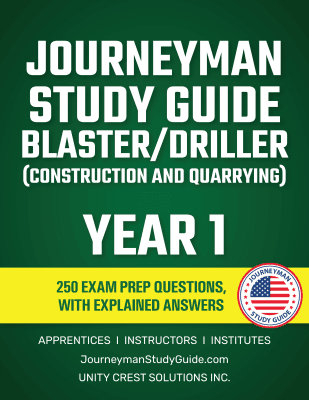
      • year-1-1

        Year 1

        250+ Exam Prep Questions
        $39
        Order Now Download Sample Book
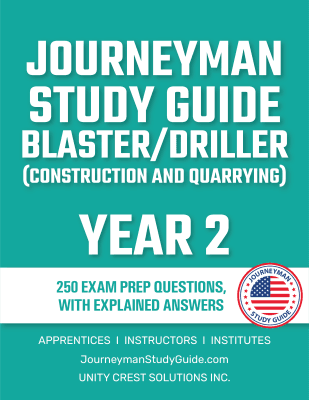
      • year-2-1

        Year 2

        250+ Exam Prep Questions
        $39
        Order Now Download Sample Book
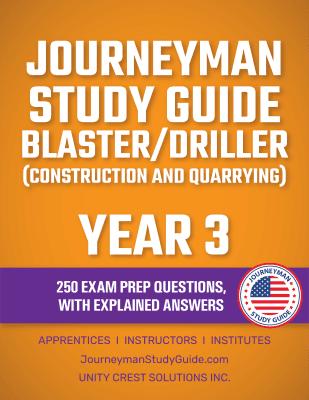
      • year-3-1

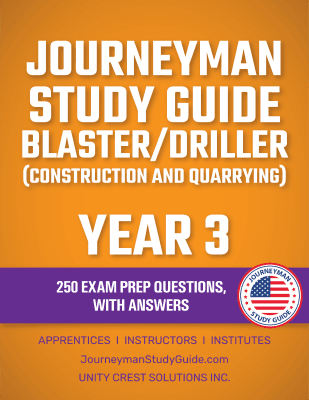
        Year 3

        250+ Exam Prep Questions
        $39
        Order Now Download Sample Book
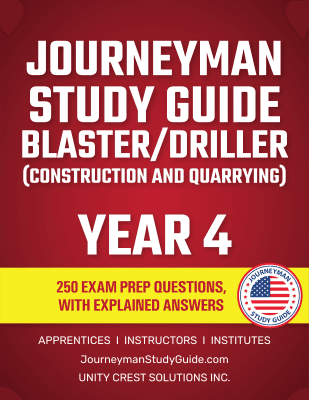
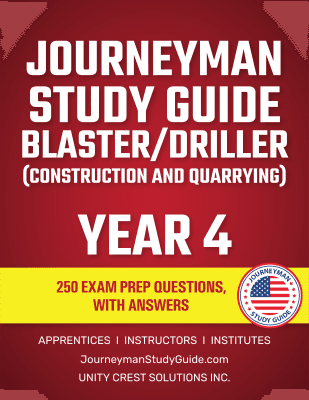
      • year-4-1

        Year 4

        250+ Exam Prep Questions
        $39
        Order Now Download Sample Book
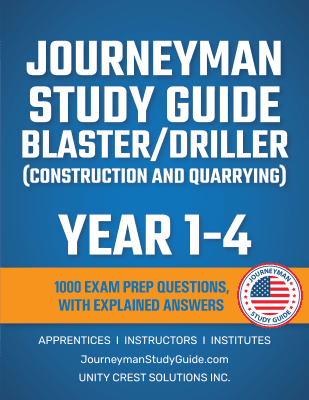
      • all-years-explained-answers

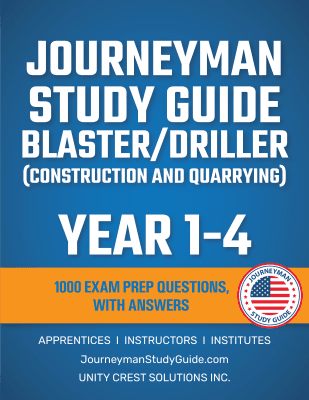
        All years - Explained Answers

        1000 Exam Prep Questions
        $139
      Questions & Answers

      Quick and easy practice to test your knowledge anytime, anywhere—ideal for simple, on-the-go preparation.
      • year-1

        Year 1

        250+ Exam Prep Questions
        $19
        Order Now Download Sample Book
      • year-2

        Year 2

        250+ Exam Prep Questions

      Evaluate Your Experience
      Test Access Here

      Take Online Test
      $19
      Order Now Download Sample Book
    • year-3

      Year 3

      250+ Exam Prep Questions
      $19
      Order Now Download Sample Book
    • year-4

      Year 4

      250+ Exam Prep Questions
      $19
      Order Now Download Sample Book
    • all-years

      All years

      250+ Exam Prep Questions
      $59