Questions, Answers, & Explanations
Get clear explanations behind every answer, perfect for deeper learning and more thorough exam preparation.

As part of your study guide, we want students to understand what a career in appliance repair and maintenance looks like. Appliance Service Technicians do repair and maintenance work on appliances in residential and commercial locations. Many professionals in related mechanical fields also expand into similar diagnostic roles, and you can explore that crossover through this related mechanical troubleshooting progression.
Appliances have become very complicated. They have a mix of electrical circuits, electronic controls, sensors, and mechanical parts. People in this field should be skilled in working all of these.
Service Technicians work on all types of appliances, both residential and commercial, including: refrigerators, ovens, dishwashers, washing machines and driers. They also assist in case a customer's appliance needs work to be operable and safe to use.
This study guide does not aim to be all encompassing. It only aims to assist you in obtaining the knowledge related to the training of an Appliance Service Technician. This study guide does not aim to substitute training programs, training, licenses, customer certifications, or employer certifications.
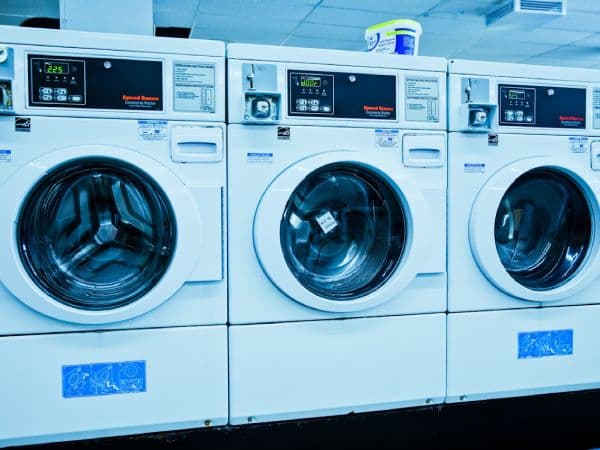
An Appliance Service Technician is an important job in fixing appliances used in households. In the past 20 years, there have been improvements in appliances in electronics such as digital displays, automatic controls, and integrated controls.
Beyond mechanical diagnosis and repair, one also needs to know how to test and repair the appliance's major electronic control boards. Different troubleshooting levels, diagnostics, and repairs are done with specialized tools, repair manuals, and most of all, the appliance's wiring schematics.
Most of the time, the job requires direct contact with the client at their own house, which can be a particularly daunting task for some. Explaining to a client how the repair will be done, and how to manage a client’s expectations is a very helpful skill to have.
The technician’s Modern Appliance Repair Journeyman Technician Study Guide describes the systems and processes for troubleshooting.
An Appliance Service Technician generally starts with some kind of vocational training. Courses that prepare for Appliance Repair include the basics of appliance diagnostics, repair, and troubleshooting techniques for electrical and mechanical systems.
While someone is engaged with vocational training, they are expected to master several skills, including the electrical safety of an appliance, circuit testing and troubleshooting, repair and modification of an appliance, and several of the repair methodologies. They may also be trained to analyze and utilize wiring schematics, and understand the control circuitry of modern appliances.
Apart from vocational training, another common way to get into the trade is to obtain on the job training in an appliance repair firm, or in the service branch of the satellite offices. Initially, junior staff members are expected to collaborate with seniors, with the expectation that they will then work independently and undertake repair work.
The U.S. DOL sponsors the labor force training on teaching apprentices in mechanical and electrical systems. The main focus is on promoting skills enhancement. Many individuals working in service environments also develop broader system knowledge, which can be better understood through this hands-on equipment service pathway.
Generally, the important technical concepts in the study guides of any training manual will be covered in the Journeyman Appliance Service Technician Study Guide.
The training evaluations of Appliance Service Technician Exam try to focus on the theory and the practical reasoning. The theoretical sides cover the electrical systems and the one and to many parts, and the diagnosis and procedure versions.
The evaluations of the candidates may come out as the testing of the situational knowledge of the testing of the circuits, of the thermostats, of the motors and of the control electronic boards. There is a great importance in having and to know the safety and the electrical troubleshooting that are related to the work with the appliances.
The evaluation practicum demonstrates the practice of safety, as well as the demonstration of the repair practice. Example activities might include, as stated, the repair of appliances, the testing of electrical circuits, and the repair practices demonstration.
Journeyman Appliance Service Technician Study Guide, for example, is one of the study guides that provides the students the ability to concentrate their study on the relevant terminology and strategies that pertain to appliance repair and troubleshooting.
The study guide is to help learners to reinforce their knowledge of principles of the appliances that are technical. The guide, without any promises, is to provide knowledge of the systems and the troubleshooting of the appliances to be able to pass the exam.
You will study elements, appliances, electrical motors, pumps, thermostats, and control modules and circuits. You will also be exposed to actual service situations that repair technicians are likely to encounter.
The evaluation from you will assist the learners in developing their confidence in the technical and problem-solving skills of an Appliance Service Technician.
Service technicians can work for appliance repair companies, repair sections in retail stores, or work as self-employed repairers. Some technicians work only with household appliances, while others work with commercial appliances, like those used in restaurants, hotels, or laundries.
With more experience, technicians tend to develop more knowledge about a given company (brand) of appliances or a specific kind of appliances. Many old technicians get promoted in a reparative company to more senior roles such as lead technician, service supervisor, or even trainer.
Some repairers also opt to open appliance repair businesses within their locality.
Given the significance of appliances in businesses and homes, appliance technicians are in demand within the country.
Appliance technicians should belong to associations of their profession. These associations offer postgraduate education, updated standards and techniques in the industry, and guidelines from manufacturers to help technicians keep up with new changes in appliances.
Offices in the electrical repair industry have to comply with OSHA (Occupational Safety and Health Administration) standards. There is a focus on safety when the technician is dealing with live (high voltage) wires.
To comprehend the changes in appliance models and the developing technology in appliance repair, additional education and training are required. For those expanding into broader residential system work, this connected home systems learning direction may also provide useful context.
A new entrant to the appliance repair industry may have basic electrical or mechanical knowledge but limited experience diagnosing complex appliance systems. Early challenges may include learning how to interpret wiring diagrams, using diagnostic tools, and understanding manufacturer repair procedures.
Entry-level technicians often work alongside experienced professionals while gradually developing troubleshooting skills. With hands-on experience and continued training, new technicians can become confident in identifying faults and completing appliance repairs safely.
Over time, entry-level workers build the practical knowledge required to diagnose a wide variety of appliance problems.
An experienced appliance technician may have years of experience repairing household and commercial appliances. However, even seasoned professionals must continue learning as appliances incorporate advanced electronics and digital control systems.
Experienced technicians often become mentors within service departments, helping train new employees and solving complex diagnostic problems. Their knowledge of appliance systems allows them to identify issues quickly and perform efficient repairs.
Continuous learning helps experienced professionals remain effective as appliance technology continues to evolve.
Appliance service technicians diagnose and repair household or commercial appliances such as refrigerators, ovens, dishwashers, washing machines, and dryers.
Training programs typically range from several months to two years, depending on the level of technical instruction and hands-on experience required.
Certification is not always required, but technical training programs and manufacturer certifications can improve employment opportunities.
Technicians may work for appliance repair companies, retail service departments, equipment manufacturers, or independent repair businesses.
No. The study guide is intended as a supportive learning resource and does not replace formal training programs, licensing requirements, or employer training.
Get clear explanations behind every answer, perfect for deeper learning and more thorough exam preparation.
Quick and easy practice to test your knowledge anytime, anywhere—ideal for simple, on-the-go preparation.