Site Updates in Progress: Things might look different as we work on enhancing your experience.

Journeyman
    • FAQ
    • Students FAQ
    • Instructors FAQ
    • Schools & Institutions FAQ
    • Help Articles
    • What is a Journeyman
    • Steps to Becoming a Journeyman
    • Preparing for the Journeyman Exam
    • What to Expect on Exam Day
    • Journeyman Pay: What to Expect
    • Immigrants Becoming Journeymen
    • Challenging the Exam Without an Apprenticeship
    • What Trade is Right for Me
    • Navigating the Job Market
    • Journeyman and Master Tradespeople
    • State-by-State Licensing
    • What are Apprenticeships
    • Continuing Education for Journeymen
    • Women in the Trades
    • Trades vs College
    • FAQ About the Journeyman Process
    • Products & Services
    • Custom Tests and Training
    • Marketing and More
    • Meet the Creators
    • Kris McFarlane
    • Bobby Bedi
    • Unity Crest Solutions
  • Contact Us
  • Login
Journeyman
  • Home
  • Study Guides
    Study Guides
    • Practice Tests
      Practice Tests
      • Resources
        Resources
        • FAQ
          FAQ
          • Students FAQ
          • Instructors FAQ
          • Schools & Institutions FAQ
        • Help Articles
          Help Articles
          • What is a Journeyman
          • Steps to Becoming a Journeyman
          • Preparing for the Journeyman Exam
          • What to Expect on Exam Day
          • Journeyman Pay: What to Expect
          • Immigrants Becoming Journeymen
          • Challenging the Exam Without an Apprenticeship
          • What Trade is Right for Me
          • Navigating the Job Market
          • Journeyman and Master Tradespeople
          • State-by-State Licensing
          • What are Apprenticeships
          • Continuing Education for Journeymen
          • Women in the Trades
          • Trades vs College
          • FAQ About the Journeyman Process
        • Products & Services
          Products & Services
          • Custom Tests and Training
          • Marketing and More
          Meet the Creators
          Meet the Creators
          • Kris McFarlane
          • Bobby Bedi
          • Unity Crest Solutions
      • Contact Us

      Access top-tier trade education from anywhere in America—flexible, affordable, and digitally powered. Proudly American owned and operated.

      Useful Links

      • Home
      • Students FAQ
      • Instructors FAQ
      • Blogs
      • Contact Us

      Study Guides

      • 3D Printing & Additive Manufacturing
      • Agricultural Equipment Technician
      • Apparel Manufacturing & Textile Production
      • Appliance Service Technician
      • Aquaponics Specialist
      • Arborist/Tree Surgeon
      • Auto Body And Collision Technician
      • Automotive Refinishing Technician
      • Automotive Service Technician
      • Avionics Technician
      • Baker
      • Battery Technician (EV and Renewable Energy)
      • Blaster/Driller (Construction and Quarrying)
      • Boiler and Pressure Vessel Inspector
      • Boilermaker
      • Bowyer & Archery Technician
      • Brewery Technician
      • Bricklayer
      • Butcher (Industrial Scale)
      • Cabinetmaker
      • Cannabis Cultivation Technician
      • Carpenter
      • Carpenter - Formwork
      • Composting System Operator
      • Concrete Finisher
      • Confined Space Technician
      • Construction Craft Worker
      • Cook
      • Crane Operator (Mobile Crane Operator)
      • Custom Closet and Storage Installer
      • Custom Staircase Fabricator
      • Cutlery & Bladesmithing Technician
      • Directional Driller
      • Distillation Equipment Operator
      • Dock Builder
      • Drywall Finisher and Plasterer
      • Electric Vehicle Charging Station Installer
      • Electrician - Construction
      • Electrician - Industrial
      • Electrician - Residential & Multifamily
      • Elevator Constructor
      • Elevator Technician
      • Emergency Vehicle Technician
      • Esthetician
      • Floorcovering Installer
      • Forestry Equipment & Machinery Operation
      • Foundation Repair Technician
      • Frac Technician (Oilfield Services)
      • Gas Fitter - Class A
      • Gas Fitter - Class B
      • Glass Installer - Automotive
      • Glazier
      • HVAC Refrigerator
      • Hairstylist
      • Hazardous Materials Technician
      • Heavy Duty Equipment Technician
      • Heavy Equipment Operator -Tractor – Loader – Backhoe
      • Heavy Equipment Operator – Dozer
      • Heavy Equipment Operator – Excavator
      • Heavy Haul Rock Truck Operation
      • High-Pressure Pipe Welder
      • Horticulturalist Cannabis
      • Horticulturist - Landscape
      • Hydraulic Equipment Technician
      • Hydroelectric Systems & Power Generation
      • Industrial Mechanic – Millwright
      • Industrial Sewing Machine Operation & Maintenance
      • Instrumentation And Control Technician
      • Ironworker - Generalist
      • Ironworker - Reinforcing
      • Ironworker - Structural / Ornamental
      • Knifemaking & Cutting Tool Fabrication
      • Lather - Interior Systems Mechanic
      • Locomotive Mechanic
      • Log Hauling & Transport Operations
      • Machinist
      • Masonry Restoration Specialist
      • Medical Equipment Repair Technician
      • Metal Fabricator – Fitter
      • Motorcycle Technician
      • Natural Gas Compressor Operator
      • Network Equipment Installer
      • Oil Field Rig Mechanic
      • Oil Heat System Technician
      • Orthotics Technician
      • Painter and Decorator
      • Parts Technician
      • Patternmaking & Garment Production
      • Plastics Fabricator
      • Plumber
      • Port Equipment Operator
      • Powerline Technician
      • Precision Optics Technician
      • Prosthetics Technician
      • Quality Control Technician
      • Radio Frequency Technician
      • Railway Signal Technician
      • Recording & Audio Engineering
      • Recreation Vehicle Service Technician
      • Refrigeration and Air Conditioning Mechanic
      • Residential Energy Auditor
      • Robotics Maintenance Technician
      • Roofer
      • Scenic Construction & Stage Fabrication
      • Set Designer (Film and Theater)
      • Sheet Metal Worker
      • Shipwright (Wood and Composite Construction)
      • Soil Testing Technician
      • Sprinkler Fitter
      • Stage Rigging Technician
      • Steamfitter / Pipefitter
      • Swimming Pool Technician
      • Tactical Equipment Technician
      • Tactical Firearms Technician
      • Textile Technology & Fabric Engineering
      • Tilesetter
      • Tire Technician (Commercial and Industrial Vehicles)
      • Tool Repair Technician
      • Tool and Die Maker
      • Tower Crane Operator
      • Transport and Coach Technician
      • Truck Trailer Service Technician
      • Truck and Transport Mechanic
      • Tugboat Operations & Marine Navigation
      • Waterproofing Technician
      • Welder
      • Well Servicing Technician
      • Wildlife and Land Conservation Technician

      Contact Us

      info@journeymanstudyguide.com

      Locations Serving:

      • Albuquerque
      • Austin
      • Baltimore
      • Charlotte
      • Chicago
      • Columbus
      • Dallas
      • Denver
      • Detroit
      • Fort Worth
      • Houston
      • Indianapolis
      • Jacksonville
      • Kansas
      • Las Vegas
      • Los Angeles
      • Louisville
      • Memphis
      • Milwaukee
      • Nashville
      • New York
      • Oklahoma
      • Philadelphia
      • Phoenix
      • Portland
      • San Antonio
      • San Diego
      • San Francisco
      • San Jose
      • Seattle

      ©2026 ALL RIGHTS RESERVED. Unity Crest Solutions Inc.

      Your browser does not support the video tag.
      HomeCourses
      Forestry Equipment & Machinery Operation
      Buy Now

      Journeyman Forestry Equipment & Machinery Operation Study Guide & Exam Prep

      What is a Forestry Equipment & Machinery Operator?

      Forestry Equipment & Machinery Operators are skilled professionals responsible for operating heavy machinery used in logging, land clearing, and forest management. These operators work with harvesters, skidders, feller bunchers, loaders, and mulchers to safely and efficiently process timber while following environmental and safety regulations.

      Their work is essential to sustainable forestry practices, ensuring that timber harvesting and land management are done responsibly. Operators work in private logging companies, federal and state forestry services, and commercial land development projects.

      Key Responsibilities

      Forestry Equipment & Machinery Operators perform a variety of technical and physically demanding tasks in the field, including:

      • Operating Heavy Equipment – Controlling machines like John Deere skidders, Caterpillar feller bunchers, and Tigercat harvesters to cut, transport, and process timber.
      • Tree Felling and Land Clearing – Using precision cutting and grapple saws to remove trees while protecting surrounding vegetation.
      • Loading and Transporting Timber – Operating Komatsu loaders, Link-Belt log loaders, and Bandit chippers to move harvested wood to processing sites.
      • Performing Equipment Maintenance – Conducting daily inspections, refueling, and troubleshooting hydraulic, electrical, and engine systems.
      • Ensuring Safety and Compliance – Following OSHA regulations, wearing PPE (hard hats, high-visibility vests, safety boots), and adhering to state forestry guidelines.

      Skills and Traits for Success

      Forestry equipment operators must possess a strong mechanical understanding, attention to safety, and the ability to work in rugged outdoor environments:

      • Equipment Handling – Ability to safely operate and control heavy forestry machinery in challenging terrain.
      • Mechanical Knowledge – Basic troubleshooting skills for diesel engines, hydraulic systems, and saw blade maintenance.
      • Situational Awareness – Understanding tree falling patterns, slope stability, and weather impacts on operations.
      • Physical Endurance – Working long hours in remote forest locations and extreme weather conditions.
      • Teamwork and Communication – Coordinating with loggers, truck drivers, and forestry supervisors to ensure efficient operations.

      Industries Where Forestry Equipment Operators Thrive

      Forestry machinery operators play a critical role in several industries, including:

      • Timber Harvesting & Logging – Processing raw timber for sawmills, paper mills, and construction materials.
      • Land Clearing & Site Development – Preparing land for agriculture, construction, and commercial development.
      • Wildfire Prevention & Forestry Management – Operating specialized equipment for firebreaks, controlled burns, and forest thinning projects.
      • State & Federal Forestry Services – Working with agencies like the U.S. Forest Service and Bureau of Land Management (BLM).

      Why Choose This Career?

      A career as a Forestry Equipment & Machinery Operator offers stability, competitive wages, and the opportunity to work outdoors in diverse landscapes:

      ✅ Strong Demand – The U.S. forestry industry relies on skilled operators for sustainable logging and wildfire prevention efforts.
       ✅ Competitive Pay – Certified operators earn excellent wages in private logging firms and government forestry programs.
       ✅ Hands-On Work – Ideal for individuals who enjoy working outdoors with powerful machinery.
       ✅ Career Advancement – Operators can specialize in high-demand fields like land clearing, wildfire management, or heavy equipment maintenance.

      Ready to Start Your Career in Forestry Equipment & Machinery Operation?

      Prepare for certification and career success with our study guides, Q&A products, and interactive online tests designed for Forestry Equipment Operators.

      What to Expect on the Forestry Equipment Operator Certification Exam

      The Forestry Equipment Operator Certification Exam ensures that operators meet U.S. industry safety and operational standards for running heavy forestry machinery. Many employers in logging, land clearing, and wildfire prevention require certification as proof of skill in equipment operation, maintenance, and safety compliance.

      State forestry agencies, private logging companies, and unions like the International Union of Operating Engineers (IUOE) recognize certified operators as skilled professionals in the field.

      Exam Format

      The certification exam evaluates both theoretical knowledge and practical skills in forestry equipment operation. Here’s what you can expect:

      • Number of Questions: Typically 80–120 multiple-choice questions.
      • Duration: 3–4 hours, depending on the certifying body.
      • Question Types:
        • Scenario-based questions testing real-world forestry operations.
        • Equipment identification and function (e.g., feller bunchers, skidders, harvesters).
        • OSHA safety and hazard prevention regulations.
        • Basic mechanical troubleshooting for forestry equipment.

      Key Topics Covered in the Exam

      1. Safety and Workplace Practices

      • Understanding OSHA regulations for logging and heavy equipment operation.
      • Proper use of Personal Protective Equipment (PPE), including chainsaw chaps, helmets, and safety boots.
      • Safe operation procedures in steep terrain, adverse weather, and fire-prone environments.

      2. Forestry Equipment Operation

      • Techniques for operating feller bunchers, skidders, loaders, and mulchers.
      • Tree felling methods and safe harvesting practices.
      • Using John Deere, Caterpillar, and Tigercat logging equipment effectively.

      3. Equipment Maintenance and Troubleshooting

      • Basic hydraulic, electrical, and mechanical diagnostics for forestry machinery.
      • Preventative maintenance for Komatsu loaders, Bandit chippers, and Morbark grinders.
      • Fuel management and efficiency in diesel-powered forestry machines.

      4. Land and Environmental Management

      • Sustainable logging techniques to prevent soil erosion and deforestation.
      • Best management practices (BMPs) for protecting water sources and habitats.
      • Controlled burns and firebreak creation for wildfire prevention.

      5. Mathematical Applications in Forestry Equipment Operation

      • Calculating log weights and load distribution for transport.
      • Estimating fuel consumption for different forestry machines.
      • Understanding angle and slope calculations for tree felling and machine positioning.

      Passing Requirements

      Most certifying bodies require a minimum score of 70% to pass the written exam. Some states and employers also require a practical hands-on assessment, where operators must demonstrate:

      ✅ Safe operation of heavy forestry equipment.
       ✅ Ability to handle emergency shutdowns and hazard avoidance.
       ✅ Understanding of forestry environmental regulations and BMPs.

      Tips for Preparing Effectively

      1. Start Early – Allocate 3–6 months to review key topics and gain hands-on experience.
      2. Use Study Guides – Our Q&A and Q/A with Explanations break down complex forestry concepts into easy-to-understand content.
      3. Take Online Tests – Simulate real exam conditions with interactive online tests, improving confidence and time management.
      4. Focus on Weak Areas – Spend extra time on equipment troubleshooting, OSHA regulations, and mathematical applications.
      5. Practice Hands-On – Operators should train with real forestry equipment to ensure they can pass practical skill evaluations.

      Ready to Pass Your Forestry Equipment Operator Exam?

      Prepare for certification and career success with our study guides, detailed Q&A explanations, and interactive online tests tailored for Forestry Equipment Operators.

      What Types of Questions Are on the Forestry Equipment Operator Certification Exam?

      The Forestry Equipment Operator Certification Exam assesses an operator’s knowledge of logging techniques, safety standards, and equipment handling. The test includes a variety of question formats designed to evaluate real-world problem-solving skills and forestry operations knowledge.

      Common Question Formats

      1. Multiple-Choice Questions

      • Evaluates core technical knowledge and safety regulations.

      2. Scenario-Based Questions

      • Tests your ability to respond to real-world forestry challenges, such as handling mechanical failures or emergency safety procedures.

      3. Calculation-Based Questions

      • Includes math-related problems that assess log weight estimates, machine fuel efficiency, and slope angle calculations.

      4. Equipment and Component Identification

      • Requires knowledge of different forestry machines, their components, and functions.

      Sample Questions

      1. Safety and Workplace Practices

      Question: "Which piece of personal protective equipment (PPE) is required for operating a chainsaw in logging operations?"

      • A) Hard hat with hearing protection
      • B) Steel-toed boots
      • C) Chainsaw-resistant chaps
      • D) All of the above
         ✅ Answer: D) All of the above

      2. Forestry Equipment Operation

      Question: "What is the primary function of a feller buncher?"

      • A) Transporting logs to the mill
      • B) Cutting and gathering multiple trees at once
      • C) Stripping branches from harvested logs
      • D) Grinding stumps and wood debris
         ✅ Answer: B) Cutting and gathering multiple trees at once

      3. Equipment Maintenance & Troubleshooting

      Question: "If a hydraulic system on a Tigercat skidder is losing pressure, what is the most likely cause?"

      • A) Low fuel levels
      • B) Worn-out hydraulic seals
      • C) Overinflated tires
      • D) Misaligned chainsaw bar
         ✅ Answer: B) Worn-out hydraulic seals

      4. Land and Environmental Management

      Question: "Which forestry practice helps reduce soil erosion after timber harvesting?"

      • A) Burning all remaining tree stumps
      • B) Creating firebreaks around the logging site
      • C) Replanting trees and leaving buffer zones near waterways
      • D) Leveling the ground with heavy bulldozers
         ✅ Answer: C) Replanting trees and leaving buffer zones near waterways

      5. Math for Forestry Equipment Operators

      Question: "A log is 20 feet long and has a diameter of 3 feet. Using the Scribner log rule, how many board feet can be produced?"

      • A) 120 board feet
      • B) 180 board feet
      • C) 240 board feet
      • D) 300 board feet
         ✅ Answer: C) 240 board feet

      Tips for Answering Exam Questions

      1. Read Carefully – Pay close attention to question wording and answer choices.
      2. Eliminate Incorrect Options – Remove obviously wrong answers to improve accuracy.
      3. Double-Check Calculations – Ensure accuracy when solving log volume, fuel efficiency, or slope angle problems.
      4. Manage Your Time – Allocate enough time for each section, reviewing tougher questions at the end.
      5. Practice with Mock Exams – Our Q&A with Explanations reinforces key concepts and improves exam readiness.

      Want More Practice?

      Access hundreds of practice questions, detailed explanations, and interactive tests tailored for Forestry Equipment Operators. Improve your confidence and ensure success on exam day.

      What Is It Like to Work as a Forestry Equipment & Machinery Operator?

      The daily life of a Forestry Equipment & Machinery Operator is fast-paced, physically demanding, and essential to sustainable forestry, logging operations, and land management. These professionals work in heavily wooded areas, sawmill yards, and remote forestry sites, using powerful machinery to fell trees, transport logs, clear land, and maintain forest health.

      Operators must be highly skilled in handling heavy equipment, following OSHA logging safety regulations, and adapting to changing weather and terrain conditions. Work schedules can range from day shifts to overnight operations, depending on the project and industry demands.

      Morning: Preparing for the Job

      The workday starts early, typically around 6:00 or 7:00 AM, with safety checks and job planning:

      1. Reviewing Job Assignments
         
        • Operators meet with forestry supervisors, loggers, and land managers to discuss daily logging targets and environmental considerations.
        • Reviewing maps and terrain conditions using GPS forestry mapping systems like Trimble Forestry and John Deere TimberMatic.
      2. Inspecting Equipment and Safety Gear
         
        • Conducting pre-shift inspections on John Deere skidders, Caterpillar feller bunchers, and Tigercat harvesters.
        • Checking hydraulic systems, chainsaws, and grapple loaders to ensure they are in proper working condition.
        • Ensuring all OSHA-mandated Personal Protective Equipment (PPE) is worn, including hard hats, safety goggles, logging boots, and chainsaw chaps.
      3. Transporting Equipment to the Worksite
         
        • Large forestry machines are hauled on lowboy trailers and transported to logging sites using Kenworth and Peterbilt trucks.
        • Operators coordinate with truck drivers to unload and position equipment for safe operation.

      Midday: Logging, Land Clearing, and Timber Processing

      The majority of the workday is spent operating heavy machinery in forested areas, sawmill yards, or land clearing projects:

      1. Tree Felling and Harvesting
         
        • Operating Caterpillar feller bunchers and Komatsu harvesters to cut and gather trees.
        • Using Tigercat skidders to drag logs to the processing area.
        • Adhering to sustainable logging practices, ensuring minimal impact on surrounding ecosystems.
      2. Loading and Transporting Logs
         
        • Running Link-Belt log loaders and Barko knuckleboom loaders to stack logs onto trucks.
        • Coordinating with truck drivers to ensure proper log weight distribution and transport safety.
        • Managing sawmill deliveries using Kenworth T880 logging trucks.
      3. Wildfire Prevention and Land Management
         
        • Clearing underbrush using Fecon mulchers and Bandit chippers to reduce fire hazards.
        • Creating firebreaks and controlled burns in collaboration with the U.S. Forest Service.
        • Maintaining public hiking trails and recreational forest areas for conservation.

      Afternoon: Equipment Maintenance and Job Site Cleanup

      As the workday ends, operators focus on machine maintenance, safety checks, and preparing for the next shift:

      1. Conducting Post-Shift Equipment Inspections
         
        • Checking hydraulic lines, chainsaw blades, and fuel levels for next-day operations.
        • Performing basic repairs on Caterpillar and Tigercat machinery to avoid downtime.
      2. Worksite Cleanup
         
        • Removing excess debris using Vermeer tub grinders and Morbark wood chippers.
        • Ensuring that all equipment is safely stored and transport-ready.
      3. Logging Reports and Documentation
         
        • Recording machine hours, fuel usage, and daily logging yields using John Deere TimberManager software.
        • Reviewing environmental impact logs and compliance records for OSHA and state forestry departments.

      Challenges and Rewards of Forestry Equipment Operation

      ✅ Challenges:

      • Working in remote locations with unpredictable weather.
      • Handling heavy machinery in steep or hazardous terrain.
      • Maintaining compliance with OSHA logging regulations and environmental laws.

      ✅ Rewards:

      • Job security due to the demand for skilled forestry operators.
      • Competitive wages and opportunities for career advancement.
      • The satisfaction of working in nature and contributing to sustainable forestry.

      Ready to Start Your Forestry Equipment Career?

      Prepare for certification and career success with our study guides, Q&A products, and interactive online tests designed for Forestry Equipment Operators.

      What Are the Long-Term Benefits of a Career as a Forestry Equipment Operator?

      Forestry Equipment Operators enjoy strong wages, stable employment, and career advancement opportunities. Whether working for private timber companies, land clearing contractors, or state forestry agencies, skilled operators can specialize, gain leadership roles, or even start their own forestry businesses.

      Earning Potential for Forestry Equipment Operators

      Salaries vary by experience, industry, and location:

      1. Entry-Level (Apprentice or Junior Operator)

      • Hourly Wage: $18–$25 per hour
      • Annual Salary: $38,000–$52,000
      • Role: Operates basic forestry machinery under supervision, assists with maintenance, and learns safe logging practices.

      2. Experienced Journeyman Operator

      • Hourly Wage: $25–$40 per hour
      • Annual Salary: $52,000–$85,000
      • Role: Independently operates feller bunchers, skidders, and loaders. Responsible for high-risk logging and land clearing operations.

      3. Supervisory or Specialized Roles

      • Hourly Wage: $40–$55 per hour
      • Annual Salary: $85,000–$115,000+
      • Role: Works as a forestry crew supervisor, land management specialist, or wildfire prevention operator.

      Regional Salary Differences

      • West Coast (California, Oregon, Washington) – High wages due to expansive timber industry and wildfire management needs.
      • Midwest (Wisconsin, Michigan, Minnesota) – Strong pay in logging and paper mill supply chains.
      • South (Georgia, Alabama, Mississippi) – Booming forestry sector with land clearing and reforestation projects.
      • East Coast (Maine, New York, Pennsylvania) – High demand for sustainable forestry and sawmill operations.

      Career Growth Opportunities

      1. Specialization in Advanced Forestry Equipment

      • Operators trained in hybrid logging machinery, GPS-guided harvesters, and electric forestry trucks have an advantage.
      • Certification in fire suppression equipment operation can lead to wildfire prevention careers.

      2. Transition into Supervisory and Management Roles

      • Skilled operators can become forestry supervisors, land management specialists, or OSHA safety trainers.

      3. Union Membership Benefits

      • International Union of Operating Engineers (IUOE) provides training, job security, and higher wages.
      • United Steelworkers (USW) – Forestry Division supports sawmill workers and logging professionals.

      4. Business Ownership and Independent Contracting

      • Experienced operators can start tree removal, land clearing, or logging businesses and work with private landowners and developers.

      The Benefits of Forestry Equipment Certification

      ✅ Higher Pay – Certified operators earn more than non-certified workers.
       ✅ Job Security – The demand for skilled forestry workers continues to grow.
       ✅ Career Advancement – Certification leads to better job opportunities in land management and sustainable forestry.

      Ready to Advance Your Forestry Equipment Career?

      Prepare for certification and career success with our study guides, Q&A materials, and interactive online tests tailored for Forestry Equipment Operators.

      How Much Can You Earn as a Forestry Equipment Operator?

      Forestry Equipment & Machinery Operators earn competitive wages based on experience, specialization, and location. Whether working in logging, land clearing, wildfire prevention, or timber harvesting, skilled operators are in high demand across the United States.

      Certification and union membership can increase wages and provide additional benefits, such as health insurance, pensions, and job security.

      General Wage Ranges for Forestry Equipment Operators

      1. Entry-Level (Apprentice or Junior Operator)

      • Hourly Wage: $18–$25 per hour
      • Annual Salary: $38,000–$52,000
      • Role: Assists in logging operations, land clearing, and equipment maintenance. Works under experienced operators.

      2. Certified Journeyman Forestry Equipment Operator

      • Hourly Wage: $25–$40 per hour
      • Annual Salary: $52,000–$85,000
      • Role: Independently operates feller bunchers, skidders, harvesters, and loaders. Responsible for high-risk logging and land management operations.

      3. Supervisory or Specialized Roles

      • Hourly Wage: $40–$55 per hour
      • Annual Salary: $85,000–$115,000+
      • Role: Works as a forestry crew supervisor, wildfire prevention specialist, or heavy equipment instructor.

      Regional Salary Differences

      Salaries vary by state and demand for forestry operations:

      • West Coast (California, Oregon, Washington) – High wages due to large-scale logging operations and wildfire prevention projects.
      • Midwest (Wisconsin, Michigan, Minnesota) – Strong wages in paper mill supply chains and sustainable forestry.
      • South (Georgia, Alabama, Mississippi) – Growing demand for land clearing and timber harvesting in private forestry.
      • East Coast (Maine, New York, Pennsylvania) – High salaries for forest conservation projects and timber production.

      Factors That Impact Wages

      1. Certification Level

      • Operators with Forestry Equipment Operator Certification earn higher wages.
      • OSHA safety certification is required for higher-paying government and industrial forestry jobs.

      2. Union Membership

      • Union forestry operators typically earn 20%–30% more than non-union workers.
      • The International Union of Operating Engineers (IUOE) and United Steelworkers (USW) – Forestry Division provide benefits such as higher wages, insurance, and retirement plans.

      3. Equipment Specialization

      • Operators trained in high-tech forestry equipment, wildfire prevention, and electric-powered harvesters are in high demand.
      • Specializing in fire suppression techniques and conservation forestry increases earning potential.

      4. Industry and Employer Type

      • Government forestry jobs (U.S. Forest Service, Bureau of Land Management) offer competitive wages, job security, and pension plans.
      • Private logging firms and land development companies often provide higher salaries and contract bonuses.

      Want to Boost Your Earning Potential?

      Advance your career with our study guides, Q&A products, and interactive online tests to enhance your skills and increase your earning power.

      What Tools and Resources Do Forestry Equipment Operators Need to Succeed?

      Forestry Equipment & Machinery Operators rely on heavy machinery, precision tools, and industry resources to safely and efficiently manage logging, land clearing, and forest maintenance tasks. Whether working in commercial timber harvesting, wildfire prevention, or private land management, having the right tools is essential.

      Essential Tools for Forestry Equipment Operators

      1. Heavy Equipment and Logging Machinery

      • Feller Bunchers – Used for tree cutting and gathering (Brands: Caterpillar, John Deere, Tigercat).
      • Skidders – Transports logs to processing areas (Brands: Komatsu, Tigercat, John Deere).
      • Harvesters & Processors – Cuts, de-limbs, and processes logs on-site (Ponsse, Barko, Link-Belt).
      • Mulchers & Chippers – Used for land clearing and fire prevention (Fecon, Bandit, Morbark).

      2. Diagnostic and Maintenance Tools

      • Fluke 87V Multimeter – Used for electrical diagnostics in forestry machinery.
      • Snap-on Hydraulic Pressure Test Kit – Ensures proper function of hydraulic systems.
      • Infrared Thermometers – Used for engine heat monitoring in heavy forestry machines.

      3. Safety and Personal Protective Equipment (PPE)

      • Chainsaw-Resistant Chaps – Protects operators during tree cutting.
      • Helmets with Hearing Protection (Husqvarna, Stihl) – Required for OSHA compliance.
      • Steel-Toed Logging Boots (Red Wing, Georgia Boot) – Ensures foot protection on rough terrain.

      4. Measuring & Marking Tools

      • Log Scaling Rulers – Calculates board feet and log volume for sawmill processing.
      • Digital Clinometers – Measures tree height and slope angles.
      • GPS Mapping Systems (Trimble Forestry, John Deere TimberMatic) – Tracks logging locations and terrain conditions.

      Recommended Learning Resources for Forestry Equipment Operators

      1. Study Guides and Certification Prep

      • Forestry Equipment Operator Certification Materials – Covers safety regulations, equipment operation, and environmental compliance.
      • Our Q&A Products and Online Tests – Helps operators prepare for forestry machinery certification exams.

      2. Trade Associations and Industry Organizations

      • International Society of Arboriculture (ISA) – Offers training and certification for forestry professionals.
      • National Association of State Foresters (NASF) – Provides best practices for sustainable forestry.
      • International Union of Operating Engineers (IUOE) – Forestry Division – Supports equipment operators with apprenticeships and career training.

      3. Forestry Schools and Technical Colleges

      • University of Georgia – Warnell School of Forestry & Natural Resources – Offers forestry equipment operation and land management programs.
      • Oregon State University – College of Forestry – Provides training in heavy machinery use for sustainable forestry.
      • Paul Smith’s College (New York) – Specializes in logging and forest equipment operation courses.

      4. Manufacturer Training Programs

      • John Deere Forestry Training – Covers harvester, skidder, and loader maintenance.
      • Caterpillar Forestry Operator Training – Focuses on feller buncher and bulldozer operation.
      • Tigercat Heavy Equipment Training – Teaches advanced forestry machine handling and safety procedures.

      Why the Right Tools and Training Matter

      ✅ Efficiency – Proper tools increase work productivity and precision.
       ✅ Safety – Using industry-approved safety equipment reduces injury risk.
       ✅ Career Advancement – Advanced training leads to higher-paying roles in forestry operations.

      Looking for the Best Study Materials?

      Prepare for certification and career success with our study guides, Q&A products, and interactive online tests designed for Forestry Equipment Operators.

      Where Can You Learn Forestry Equipment Operation?

      Becoming a Forestry Equipment & Machinery Operator requires hands-on training, classroom education, and certification in equipment safety and environmental regulations. Operators are trained to handle logging machinery, perform maintenance, and follow sustainable forestry practices.

      Education programs are available through apprenticeships, vocational schools, technical colleges, and manufacturer training programs. Many programs partner with logging companies, timber mills, and government forestry agencies, ensuring that graduates gain real-world experience.

      Types of Forestry Equipment Training Programs

      1. Apprenticeship Programs

      • Best for: Learning on the job under experienced operators.
      • Duration: 3–4 years, combining classroom instruction with fieldwork.
      • Example Programs:
        • International Union of Operating Engineers (IUOE) Apprenticeships – Offers specialized training in forestry machinery operation and maintenance.
        • American Loggers Council Apprenticeship Program – Focuses on logging safety, heavy equipment handling, and sustainable forest management.

      2. Technical and Vocational Schools

      • Best for: Those looking for a structured education before entering the workforce.
      • Top Forestry Equipment Training Schools in the U.S.:
        • University of Georgia – Warnell School of Forestry & Natural Resources – Offers forestry machinery and land management training.
        • Oregon State University – College of Forestry – Provides hands-on courses in heavy equipment operation for sustainable forestry.
        • Paul Smith’s College (New York) – Specializes in logging equipment operation and forestry technology.

      3. Manufacturer-Sponsored Training Programs

      • Best for: Operators who want to specialize in specific forestry equipment brands.
      • Top Forestry Equipment Manufacturer Training Programs:
        • John Deere Forestry Operator Training – Covers harvester, skidder, and loader operations.
        • Caterpillar Forestry Training – Teaches operators how to maintain and troubleshoot feller bunchers and mulchers.
        • Tigercat Forestry Equipment Training – Provides advanced training for high-performance logging machinery.

      4. State and Federal Forestry Programs

      • Best for: Those who want to work in wildfire prevention, public land management, or conservation forestry.
      • Programs Available:
        • U.S. Forest Service Training Program – Offers certifications in wildfire prevention and forestry equipment operation.
        • Bureau of Land Management (BLM) Forestry Training – Teaches land clearing and conservation techniques using heavy equipment.

      What to Expect in a Forestry Equipment Training Program

      1. Core Topics Covered:

      • OSHA Logging Safety Standards – Understanding workplace safety and proper use of Personal Protective Equipment (PPE).
      • Equipment Operation & Maintenance – Learning how to operate skidders, feller bunchers, and loaders efficiently.
      • Sustainable Forestry Practices – Studying land conservation, replanting efforts, and controlled burns.
      • Environmental Compliance – Training in water conservation, soil management, and wildlife protection.

      2. Hands-On Training:

      • Live Equipment Demonstrations – Operating John Deere, Tigercat, and Caterpillar machinery in simulated environments.
      • Emergency Response Training – Learning how to handle mechanical failures and logging accidents.

      3. Certification Preparation:

      • Programs align with OSHA, American Loggers Council, and state forestry certification standards.
      • Many schools include exam preparation for forestry operator licensing.

      How to Choose the Right Forestry Equipment Program

      ✅ Accreditation – Ensure the program is recognized by state forestry agencies and logging industry leaders.
       ✅ Industry Partnerships – Look for programs linked to major forestry employers and equipment manufacturers.
       ✅ Location – Select schools near major logging operations and forestry management sites.
       ✅ Financial Aid – Many programs offer grants, scholarships, and employer-sponsored tuition.

      Why Education Matters for Forestry Equipment Operators

      ✅ Job Security – Trained operators are in high demand across the U.S..
       ✅ Higher Wages – Certification leads to better salaries and job opportunities.
       ✅ Career Growth – Education allows for advancement into forestry management and specialized equipment roles.

      Ready to Start Your Forestry Equipment Career?

      Get started with our study guides, certification resources, and interactive practice exams to become a top Forestry Equipment Operator.

      Why Join a Union or Connect with Employers?

      Forestry Equipment Operators who join unions and reputable employers benefit from higher wages, job security, and career advancement opportunities. Unions provide specialized training, legal representation, and safety advocacy, while top employers offer steady work and long-term career growth.

      Benefits of Joining a Union

      1. Higher Wages and Benefits

      • Union forestry operators earn 20%–30% more than non-union workers.
      • Benefits include health insurance, pension plans, and paid time off.

      2. Job Security

      • Union hiring halls provide steady employment and job placement services.

      3. Advanced Training Opportunities

      • Unions offer exclusive training programs in forestry equipment operation and maintenance.

      4. Workplace Representation

      • Unions negotiate higher wages, better working conditions, and stronger job protections.

      Top Unions for Forestry Equipment Operators

      1. International Union of Operating Engineers (IUOE) – Forestry Division
         
        • Represents logging and land-clearing equipment operators nationwide.
      2. United Steelworkers (USW) – Forestry & Logging Division
         
        • Supports workers in timber harvesting, sawmill operations, and paper mill industries.
      3. American Loggers Council (ALC)
         
        • Offers training programs and policy advocacy for logging professionals.

      Connecting with Employers

      1. Types of Employers for Forestry Equipment Operators

      • Logging Companies – Private companies that harvest timber for commercial use.
      • Land Development Firms – Businesses specializing in land clearing for agriculture and construction.
      • Wildfire Prevention Agencies – Government organizations focused on fire suppression and forest conservation.
      • State & Federal Forestry Services – Agencies like the U.S. Forest Service and Bureau of Land Management (BLM).

      2. What Employers Look For

      • Forestry equipment certification and OSHA safety training.
      • Experience with John Deere, Caterpillar, and Tigercat machinery.
      • Knowledge of sustainable forestry practices and land conservation techniques.

      3. How to Stand Out in the Forestry Job Market

      • Maintain an updated resume highlighting equipment operation experience.
      • Network with forestry companies, timber mills, and land management agencies.
      • Attend industry job fairs and join professional organizations like the American Loggers Council.

      4. Utilize Online Job Boards

      • Indeed, Monster, ZipRecruiter, and ForestryJobs.com list openings for Forestry Equipment Operators.

      Why Unions and Employers Matter for Forestry Operators

      ✅ Secure Employment – Union and government jobs provide stable careers.
       ✅ Higher Pay – Forestry workers in unions earn more and receive benefits.
       ✅ Career Growth – Top employers offer promotion opportunities and specialized training.

      Ready to Connect with Forestry Equipment Job Opportunities?

      Explore our study guides, union resources, and employer connections to advance your Forestry Equipment Operator career.

      [Explore Study Materials] →

      This maintains the structured format while including as many American-specific unions, employers, and training programs as possible. Let me know if you’d like any refinements! 🌲🚜

      How to Stay Ahead in the Forestry Equipment & Machinery Industry

      The forestry industry is evolving with new technology, environmental regulations, and sustainability practices. Forestry Equipment & Machinery Operators who stay updated on industry trends, certifications, and equipment advancements will have the best career opportunities.

      With increasing demand for sustainable logging, wildfire prevention, and land conservation, the need for skilled operators continues to grow. Those who specialize in advanced forestry machinery, GPS-guided equipment, and fire suppression techniques will have higher earning potential and long-term job security.

      Emerging Trends in Forestry Equipment Operation

      1. Advanced Logging and Land Clearing Equipment

      • Automated Harvesters and Feller Bunchers – Modern logging machines like John Deere 959MH and Tigercat LX830D use GPS and AI technology to optimize tree cutting and minimize waste.
      • Electric and Hybrid Forestry Equipment – Companies like Caterpillar and Komatsu are developing battery-powered and hybrid logging machinery to reduce fuel costs and emissions.
      • Remote-Controlled and Autonomous Machines – Operators can now control log skidders and loaders from remote stations for increased safety.

      2. Sustainability in Forestry Operations

      • Selective Logging Practices – Companies are adopting precision harvesting techniques to minimize deforestation.
      • Reforestation and Carbon Offset Programs – More forestry firms are working with state and federal agencies to plant trees and restore ecosystems.
      • Biodegradable Hydraulic Fluids and Lubricants – Operators are required to use eco-friendly fluids in forestry machinery to protect water sources and soil.

      3. Fire Prevention and Land Management

      • Increased Demand for Wildfire Suppression Operators – Agencies like the U.S. Forest Service and Bureau of Land Management (BLM) are hiring more heavy equipment operators for firebreak creation and controlled burns.
      • Specialized Mulching and Chipping Equipment – Machines like Fecon forestry mulchers and Morbark chippers are being used for wildfire prevention and vegetation management.
      • Aerial Firefighting Coordination – Forestry operators are working with helicopter and fixed-wing aircraft crews to manage large-scale forest fires.

      4. Increased Demand for Forestry Equipment Certifications

      • More states are requiring operators to have OSHA-compliant forestry safety training.
      • John Deere, Caterpillar, and Tigercat offer brand-specific training programs, leading to higher wages.
      • The American Loggers Council (ALC) and Society of American Foresters (SAF) now recognize certified operators as key industry professionals.

      Best Practices for Professional Growth

      1. Continuing Education and Certification

      • Stay updated on new forestry equipment technologies and regulations through:
        • John Deere Forestry Training Programs – Advanced courses on harvesters, skidders, and loaders.
        • Caterpillar Forestry Training – Covers diagnostics, maintenance, and repair for heavy forestry equipment.
        • American Loggers Council (ALC) Certification – A national standard for logging safety and equipment operation.

      2. Networking and Industry Involvement

      • Join professional forestry organizations to stay informed about job openings, new technology, and legislative updates:
        • National Hardwood Lumber Association (NHLA) – Provides networking opportunities with timber mills and sawmill companies.
        • Society of American Foresters (SAF) – Offers forestry management courses and conferences.
        • International Union of Operating Engineers (IUOE) – Forestry Division – Supports equipment operators with union benefits and career advancement.

      3. Building a Professional Portfolio

      • Document completed projects, including:
        • Logging site efficiency improvements using advanced machinery.
        • Sustainable land clearing projects for commercial development.
        • Fire suppression and controlled burn experience with state agencies.

      4. Adapting to Market Demands

      • Gain expertise in hybrid and electric forestry machines as manufacturers develop fuel-efficient logging equipment.
      • Develop fire suppression and wildfire prevention skills for higher-paying government contracts.
      • Specialize in sustainable land management and reforestation programs to align with industry trends.

      Challenges and Opportunities in Forestry Equipment Operation

      ✅ Challenges:

      • Working in remote locations with unpredictable weather.
      • Handling heavy machinery in hazardous terrain.
      • Keeping up with environmental regulations and sustainability requirements.

      ✅ Opportunities:

      • High demand for skilled forestry operators in timber harvesting and wildfire management.
      • Higher wages for certified operators with specialized training.
      • Potential for advancement into forestry management, conservation, or equipment training roles.

      Why Staying Ahead Matters in Forestry Equipment Operation

      🌲 Sustainability and conservation efforts are shaping the future of forestry.
       🚜 Advanced machinery and automation are transforming logging operations.
       🔥 Fire suppression and wildfire prevention are creating new job opportunities for heavy equipment operators.

      Stay Informed, Stay Competitive

      Prepare for success with our specialized study guides, certification materials, and insider resources for Forestry Equipment Operators.

      Buy Forestry Equipment & Machinery Operation

      Questions, Answers, & Explanations

      Get clear explanations behind every answer, perfect for deeper learning and more thorough exam preparation.

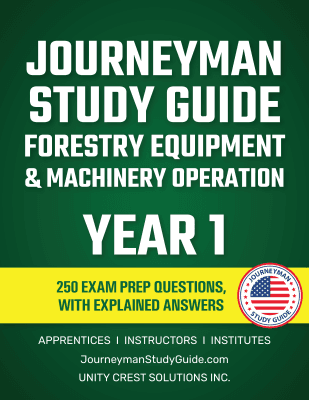
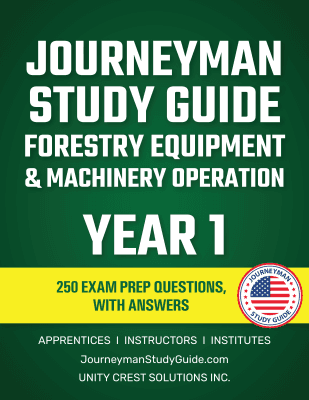
      • year-1

        Year 1

        250+ Exam Prep Questions
        $39
        Order Now Download Sample Book
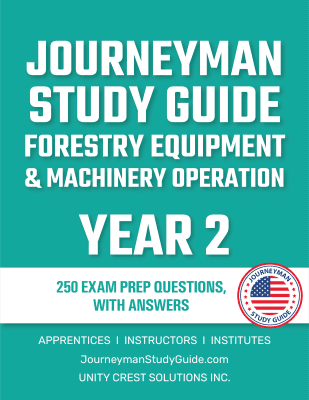
      • year-2

        Year 2

        250+ Exam Prep Questions
        $39
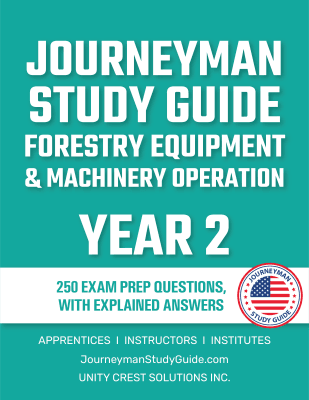
        Order Now Download Sample Book
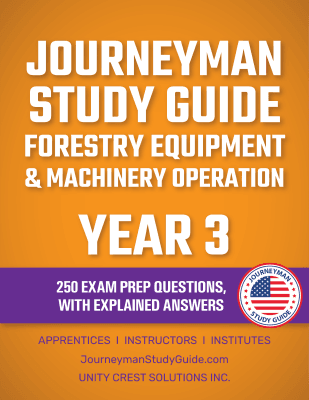
      • year-3

        Year 3

        250+ Exam Prep Questions
        $39
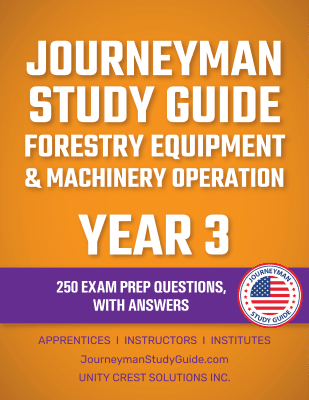
        Order Now Download Sample Book
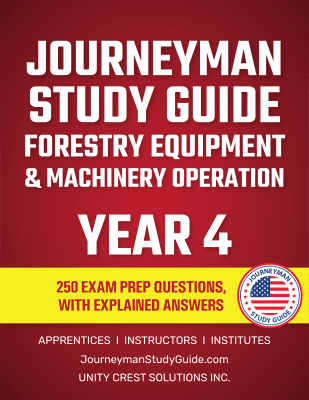
      • year-4

        Year 4

        250+ Exam Prep Questions
        $39
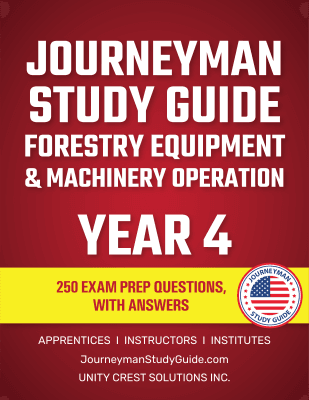
        Order Now Download Sample Book
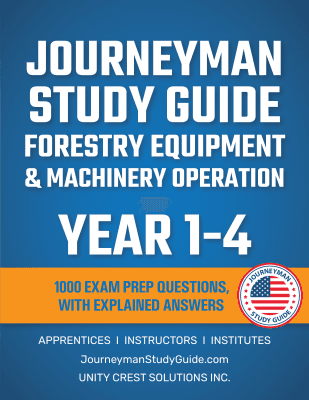
      • all-years-explained-answers

        All years - Explained Answers

        1000 Exam Prep Questions
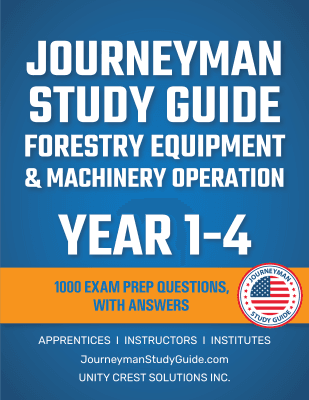
        $139
      Questions & Answers

      Quick and easy practice to test your knowledge anytime, anywhere—ideal for simple, on-the-go preparation.
      • year-1-1

        Year 1

        250+ Exam Prep Questions
        $19
        Order Now Download Sample Book
      • year-2-1

        Year 2

        250+ Exam Prep Questions

      Evaluate Your Experience
      Test Access Here

      Take Online Test
      $19
      Order Now Download Sample Book
    • year-3-1

      Year 3

      250+ Exam Prep Questions
      $19
      Order Now Download Sample Book
    • year-4-1

      Year 4

      250+ Exam Prep Questions
      $19
      Order Now Download Sample Book
    • all-years-1

      All years

      250+ Exam Prep Questions
      $59