Questions, Answers, & Explanations
Get clear explanations behind every answer, perfect for deeper learning and more thorough exam preparation.

The Journeyman 3D Printing and Additive Manufacturing Study Guide helps individuals prepare to work in contemporary manufacturing settings that utilize the latest in additive technology. Additive manufacturing (3D printing) enables engineers and technicians to construct intricate parts using specific materials combined with a digital model and built-up manufacturing processes. For those exploring related modern production environments, you can also look into how similar workflows are applied in advanced fabrication settings.
These professionals manufacture components for various industries, including aerospace, automotive, healthcare, consumer electronics, and industrial manufacturing. Additive manufacturing technicians may have roles such as operating printers, preparing digital files, monitoring the production process, and inspecting parts to ensure quality and precision.
This study guide is a resource for those preparing for the concepts and technical aspects of the additive manufacturing assessment. It does not constitute or replace the required formal training and certification programs or the employer-specific requirements.
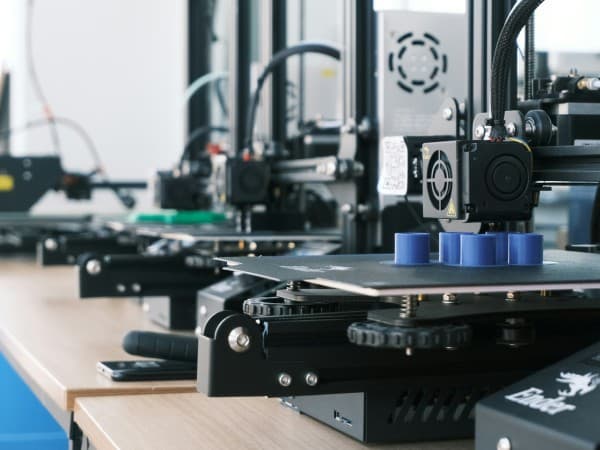
Additive manufacturing is changing the entire process of product design and production. Rather than using traditional methods of cutting or machining materials away from a solid block, additive manufacturing uses a layered approach to manufacturing. This technology employs various materials, including plastics, metals, resins, or composite materials.
Technicians in the additive manufacturing sector need to know how to develop digital models, use printing machinery, and check if the prints meet the designated specifications. Therefore, in most settings, additive manufacturing technicians need to collaborate with engineers, machinists, and quality assurance personnel to aid in the production and prototyping.
The employee must be able to understand digital models and how to set and repair printers. It is also necessary for individuals to know the procedures, processes, and techniques for the safe use of materials, the handling of materials, and the post-processing that is done to the finished printed components.
Additive manufacturing is becoming more prevalent in many sectors, and the need for technicians who understand both digital manufacturing and manual production techniques is also increasing. For a closer look at hands-on industrial environments that rely on similar precision and coordination, you may find it useful to review how work is approached in mechanical production roles.
In the United States, training, apprenticeships, and pathways for starting a career in additive manufacturing are available.
In additive manufacturing, most practitioners have a background in technical education or training in manufacturing technologies, engineering, or digital fabrication. Many community colleges and technical schools that have recently opened in the United States offer courses on additive manufacturing, both theory and practice.
The training also covers computer-aided design (CAD), operation of printers, materials science, and quality control. Students are trained on how to adjust and prepare the machines for operation and how to control the machines during the production stages.
Some people most likely come into the industry through wider manufacturing apprenticeship or technical training programs tied to workforce development programs from the U.S. Department of Labor.
As new techniques emerge in additive manufacturing, workplace training and professional development programs are particularly beneficial for continual enhancement in skills. Those working towards certifications in additive manufacturing are likely to gain a deeper understanding of advanced manufacturing systems.
This Journeyman 3D Printing and Additive Manufacturing Study Guide provides a good review of the most important concepts that you will likely come across in your industry evaluations and technical trainings.
If you are planning to conduct evaluations in additive manufacturing, you need to be prepared for both the theoretical and practical aspects of the evaluations. The theory side consists of evaluations and questions on various printing technologies, materials, design and production preparation, and workflow.
In the evaluation, you could be asked to respond to questions on printer calibration, layer adhesion, digital models, and machine maintenance. It is also of great importance to have a good understanding of the additive techniques involved in fused filament fabrication, selective laser sintering, or stereolithography.
As for the practical side of the evaluation, you are likely to be asked to download or create a digital file that you will prepare for printing, and then set up the machine to conduct the print, and then evaluate the print afterwards, and it is therefore important to show technical proficiency and great attention to proper quality control of the print.
Study guides, like the 3D Printing and Additive Manufacturing Study guide, allow learners to review the technical knowledge and process workflows they need to understand additive manufacturing environments.
The 3D Printing and Additive Manufacturing Study Guide helps learners review the technical principles and the process workflows involved in additive manufacturing. The guide does not support claims regarding the outcome of an examination, but rather, builds core knowledge to help develop other skills.
The study guide covers the following topics: Digital model preparation, operation of 3D printing machines, materials used in 3D printing, and 3D printing basic troubleshooting. The guide also covers a few typical workplace situations that technicians might encounter in a production or a prototyping role.
This also means that someone reviewing practice exams will also understand what is expected of them in an additive manufacturing workplace, especially if they are targeting the rapidly changing industry workforce exams.
The potential for careers in additive manufacturing is vast. Rapid prototyping and advanced manufacturing are used in many different industries. For example, 3D printing is used in the aerospace industry for designing and manufacturing lightweight parts. The same technology is used in the medical industry for designing and manufacturing specialized medical devices and implants.
Additive technicians may assist other teams in manufacturing or helping prototype other specialized small runs of production pieces. They assist in developing new materials and manufacturing techniques in the research and development department.
As one gains more experience, one may move into more role-specific positions such as production technician, manufacturing technologist, or additive manufacturing specialist. Some may move into engineering support roles, or training roles where they focus on the development of new additive manufacturing technology.
As digital manufacturing technology advances, there will be a greater need for technicians who know design engineering as well as who know the technology. For additional perspective on how evolving technologies impact other trades, you can explore how professionals adapt in technology-driven service environments.
There is a workforce development and training framework for the additive manufacturing industry and the numerous organizations that support it. Manufacturing education initiatives often work alongside a technical institution and a workforce development program in order to prepare technicians for advanced manufacturing careers.
Trade associations and professional networks have also developed training, conferences, and certification programs to help members stay abreast of new technologies.
The safety and manufacturing standards within the workplace, especially those that deal with advanced materials and machinery, are often the responsibility of the Occupational Safety and Health Administration, and other organizations.
By keeping in contact with other industry organizations, technicians are able to be informed on the latest in manufacturing practices and standards on safety.
A recent graduate or an early career professional moving into additive manufacturing from another technical field is an example of someone new to additive manufacturing. They might have some understanding of computer-aided design or general mechanical aptitude, but they will likely have little or no experience working with industrial 3D printers.
Some of the early challenges include learning how to do machine calibration, understanding the properties of manufacturing materials, and adapting to the production workflow pedigree typical of a manufacturing facility. Knowledge and familiarity with the relevant software and industry-specific jargon will also require practice and time.
Machine operation, fault diagnosis and quality control are areas within which entry-level technicians gradually develop confidence through the combination of technical instruction and practical experience. This is also the case with fault diagnosis and the control of quality.
Such a person has been engaged in professional practice in the field of digital fabrication technologies and more specifically, advanced manufacturing systems. However, when moving from one to another, perhaps more technologically advanced, sector, they may have to adapt to a whole new suite of printer technologies, different materials and a new production workflow etc.
It is the case, even for seasoned technicians, that the technologies in additive manufacturing are continually changing and therefore, in order to remain a technologist for any length of time, one is expected to do a lot of professional updating. This notion remains in an industry that is recognized as being fast changing.
It is also the case that many seasoned technicians are expected to assume managerial or leadership responsibilities in an advanced manufacturing system
Get clear explanations behind every answer, perfect for deeper learning and more thorough exam preparation.
Quick and easy practice to test your knowledge anytime, anywhere—ideal for simple, on-the-go preparation.