Questions, Answers, & Explanations
Get clear explanations behind every answer, perfect for deeper learning and more thorough exam preparation.
A Journeyman Instrumentation and Control Technician Study Guide is designed to support individuals preparing for work in industrial and commercial environments where automated systems and process controls are essential. Instrumentation and Control (I&C) technicians are responsible for installing, maintaining, calibrating, and troubleshooting instruments and control systems used to monitor variables such as pressure, temperature, flow, and level. To understand how similar technical environments operate across industries, you can explore this related field example
These systems are widely used in industries such as manufacturing, power generation, water treatment, oil and gas, and industrial automation. I&C technicians work closely with engineers, operators, and maintenance teams to ensure that equipment operates safely, accurately, and efficiently.
This study guide is intended as a supportive learning resource and does not replace formal education, apprenticeships, certifications, or employer-specific training requirements.

Most instrumentation and control technicians enter the trade through post-secondary technical education combined with hands-on experience. Common entry paths include diploma or certificate programs in electronics, instrumentation, or industrial control systems offered by technical colleges and community institutions.
These programs typically cover electrical fundamentals, instrumentation theory, control loops, PLC basics, and industrial safety practices. Graduates often continue into apprenticeships or entry-level technician roles where they gain practical experience under the supervision of senior technicians.
Apprenticeship programs usually last three to five years and provide structured exposure to field instrumentation, control panels, calibration procedures, and system diagnostics. While licensing is not required in all states, many employers prefer candidates with industry-recognized certifications and documented experience.
This Journeyman Instrumentation and Control Technician Study Guide helps reinforce the technical knowledge commonly required during training and assessment. For a broader perspective on system diagnostics and mechanical coordination, refer to this additional reference point
Although not mandatory in all jurisdictions, certifications can improve employability and career progression for I&C technicians. One widely recognized credential is the Certified Control Systems Technician certification offered by professional industry bodies.
Professional organizations and training authorities provide standards, continuing education, and assessment frameworks that help technicians stay current with evolving technologies. Certification demonstrates a technician’s understanding of calibration practices, troubleshooting techniques, and control system fundamentals.
Assessments for instrumentation and control technicians often include both written and practical components. Written evaluations typically focus on instrumentation theory, control system concepts, electrical fundamentals, and safety awareness.
Common exam topics include sensors and transmitters, control valves, PLC logic basics, signal types, and calibration principles. Candidates may also be assessed on their ability to interpret wiring diagrams, loop drawings, and system schematics.
Practical assessments usually involve hands-on tasks such as calibrating instruments, verifying signal accuracy, diagnosing faults, and safely working with live systems. These evaluations measure both technical ability and attention to safety procedures.
Structured review using an Instrumentation and Control Technician Mock Test or Instrumentation and Control Technician Online Test can help candidates become more familiar with exam-style questions and assessment formats.
This Journeyman Instrumentation and Control Technician Study Guide is structured to support learners preparing for assessments, workplace evaluations, or skills upgrades. It focuses on strengthening understanding rather than making performance guarantees.
Key areas covered include instrumentation fundamentals, control loop operation, calibration concepts, troubleshooting methods, and workplace safety practices. The guide also supports Instrumentation and Control Technician Exam Prep by reinforcing technical concepts commonly encountered in both written and hands-on assessments.
By working through the material, learners can improve confidence, technical accuracy, and problem-solving ability in industrial control environments.
Instrumentation and control technicians are employed across a wide range of industries. Manufacturing facilities rely on I&C technicians to maintain automated production systems, while energy and utility companies depend on them to ensure reliable operation of control systems.
Other employment sectors include water and wastewater treatment, petrochemical processing, food and beverage manufacturing, and industrial automation services. With experience, technicians may advance into roles such as senior technician, control systems specialist, calibration specialist, or maintenance supervisor.
Some technicians transition into engineering support roles, automation programming, or system commissioning positions, depending on additional training and experience.
Several recognized organizations support education, certification, and workforce development for instrumentation and control professionals. These include professional societies focused on automation and control systems, construction education organizations, and registered apprenticeship programs overseen by the U.S. Department of Labor.
Technical colleges and accredited training institutions also play an important role in preparing technicians with foundational skills and industry-aligned knowledge. To see how technical careers evolve across different environments, you can review this parallel pathway insight
A new entrant to the instrumentation and control field may be a recent graduate, a migrant technician, or someone transitioning from a related electrical or mechanical trade. This individual may understand basic electronics but have limited exposure to industrial control systems used locally.
Early challenges often include learning site-specific safety procedures, understanding local standards, and gaining hands-on experience with industrial instruments and control panels. Technical terminology and documentation formats may also take time to adjust to.
With structured training, mentorship, and practical experience, entry-level candidates can gradually build competency and move into independent technician roles.
An experienced I&C technician brings strong diagnostic skills and deep knowledge of industrial systems developed over many years. However, relocating to a new region or employer may require learning different standards, documentation practices, or control platforms.
Formal assessments or certifications may still be required, even for experienced professionals. Once these requirements are met, experienced technicians often advance into senior technical roles, system commissioning positions, or supervisory responsibilities.
Their experience also positions them well to mentor junior technicians and support complex troubleshooting and system upgrades.
Most technicians require two to five years of combined education and hands-on experience to become job-ready.
Certification is not mandatory in all areas, but it can improve employment opportunities and demonstrate technical competency.
Common industries include manufacturing, energy, utilities, water treatment, petrochemical processing, and industrial automation.
Key skills include troubleshooting, calibration, understanding control systems, electrical fundamentals, and interpreting technical diagrams.
No. This study guide is intended as a supportive learning resource and does not replace formal education, apprenticeships, or certifications.
Get clear explanations behind every answer, perfect for deeper learning and more thorough exam preparation.
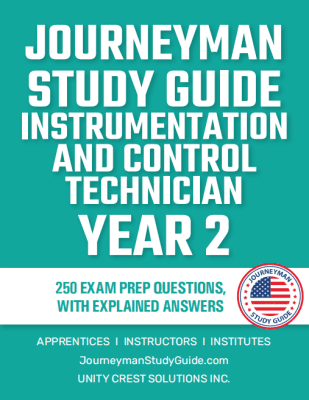
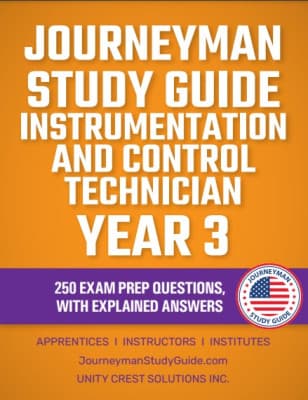
Quick and easy practice to test your knowledge anytime, anywhere—ideal for simple, on-the-go preparation.