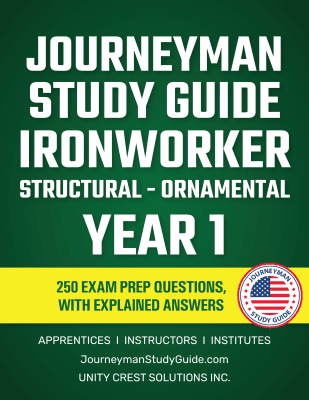
Questions, Answers, & Explanations
Get clear explanations behind every answer, perfect for deeper learning and more thorough exam preparation.

Ironworkers – Structural/Ornamental are vital to the construction industry, specializing in the installation, maintenance, and repair of steel and iron frameworks, ornamental features, and structural elements in buildings, bridges, and industrial facilities. These professionals bring strength, precision, and artistry to projects, helping shape America’s urban landscapes and infrastructure.
Key Responsibilities
Structural/Ornamental Ironworkers perform diverse tasks, including:
Skills and Traits for Success
To excel as a Structural/Ornamental Ironworker, you’ll need:
Industries Where Ironworkers Thrive
Structural and Ornamental Ironworkers play a crucial role in several sectors:
Why Choose This Career?
A career as an Ironworker – Structural/Ornamental offers:
What to Expect on the Ironworker Certification Exam
The Ironworker Certification Exam validates your ability to safely and effectively perform tasks essential to structural and ornamental ironworking. Certification is often required by American employers, unions like the International Association of Bridge, Structural, Ornamental and Reinforcing Iron Workers (Iron Workers Union), and regulatory agencies. Achieving certification demonstrates your expertise in structural assembly, ornamental installations, and safety compliance, making you a valuable asset in the construction industry.
Exam Format
The certification exam assesses both theoretical knowledge and practical skills. Here’s an overview of the structure:
Key Topics Covered
The exam is divided into several focus areas to assess critical competencies:
Passing Requirements
Most certifying organizations require a score of 70% or higher to pass. Each section contributes to your overall score, so a comprehensive understanding of all topics is crucial for success.
Tips for Effective Preparation
Review Regularly: Consistent study sessions enhance knowledge retention.
What Types of Questions Are on the Ironworker Certification Exam?
The Ironworker Certification Exam includes a variety of question formats designed to assess your technical skills, safety knowledge, and expertise in structural assembly, ornamental installations, and related calculations. Familiarizing yourself with these question types will help you prepare effectively and demonstrate your qualifications as an Ironworker – Structural/Ornamental.
Common Question Formats
Here’s an overview of the types of questions you can expect:
Sample Questions
Below are examples of the types of questions you might encounter:
Tips for Answering Exam Questions
Practice Questions for Better Preparation
Studying with practice exams is one of the most effective ways to boost confidence and improve performance. Benefits include:
Our Q&A with Explanations is perfect for understanding why an answer is correct, while Online Tests simulate real exam conditions with real-time scoring.
What Is It Like to Work as an Ironworker – Structural/Ornamental?
The daily life of an Ironworker – Structural/Ornamental is dynamic, physically demanding, and incredibly rewarding. From assembling the steel frameworks of skyscrapers to installing decorative architectural elements, these professionals play a vital role in shaping America’s skylines and infrastructure. Precision, teamwork, and adaptability are essential to succeeding in this trade.
Morning: Preparing for the Job
Ironworkers start their day with thorough preparation to ensure safety and efficiency:
Midday: Assembling and Installing
The bulk of the workday involves hands-on tasks that demand precision and coordination:
Afternoon: Wrapping Up the Day
As the day concludes, ironworkers focus on quality assurance and preparing the site for the next shift:
Typical Work Environments
Ironworkers operate in diverse and challenging settings, including:
Tools and Equipment Used Daily
Ironworkers rely on a mix of specialized tools and safety gear, including:
Challenges and Rewards
Challenges:
Rewards:
What Are the Long-Term Benefits of a Career as an Ironworker – Structural/Ornamental?
A career as an Ironworker – Structural/Ornamental provides stability, competitive wages, and the opportunity to contribute to America’s infrastructure and architecture. From constructing towering skyscrapers to installing intricate ornamental details, this trade rewards precision, teamwork, and dedication.
Earning Potential in Ironworking
Ironworker salaries vary based on experience, specialization, and geographic location. Here’s a breakdown:
Regional Salary Differences
Earning potential is influenced by location and industry demand:
Career Growth Opportunities
Ironworkers – Structural/Ornamental have numerous pathways to advance their careers:
The Benefits of Certification
Certification enhances your credibility and opens doors to high-paying opportunities:
Success Stories
Ironworkers across the country have built rewarding careers:
Why Choose Ironworking as a Career?
This trade offers:
How Much Can You Earn as an Ironworker – Structural/Ornamental?
Ironworkers specializing in structural and ornamental work enjoy competitive wages, with earnings influenced by experience, location, and specialization. Whether you’re beginning as an apprentice or advancing to supervisory roles, this trade offers significant earning potential and financial stability.
General Wage Ranges
Here’s a breakdown of typical wages across career stages:
Regional Salary Differences
Wages for ironworkers vary widely based on industry demand and location:
Factors That Impact Wages
Several factors influence earning potential for structural and ornamental ironworkers:
Earnings by Industry
Wages also depend on the sector of employment:
Opportunities for Wage Growth
Why Ironworking Is a High-Potential Career
Ironworking combines financial stability with professional growth. With certification, specialization, and union membership, ironworkers can achieve long-term success in a rewarding and essential trade.
What Tools and Resources Do Ironworkers Need to Succeed?
Ironworkers specializing in structural and ornamental work require precision tools, safety equipment, and educational resources to thrive in their demanding field. From mastering basic tools to accessing advanced training, the right resources ensure efficiency, safety, and long-term success. Below is a detailed guide to the tools, resources, and suppliers trusted by ironworkers across the United States.
Essential Tools for Ironworkers
A comprehensive toolkit is critical for completing projects safely and effectively:
1. Hand Tools
2. Power Tools
3. Specialized Tools
4. Safety Equipment
Recommended Learning Resources
Ironworkers benefit greatly from continuous education to master tools and techniques:
1. Study Guides and Practice Exams
2. Trade Associations
3. Educational Institutions
4. Digital Tools and Applications
Reliable Suppliers and Material Resources
Accessing quality tools and materials is crucial for efficiency and project success:
1. National Suppliers
2. Local Steel and Equipment Providers
3. Specialty Providers
Tips for Building Your Toolkit on a Budget
Why the Right Tools and Resources Matter
Equipping yourself with the right tools ensures safety, precision, and efficiency on the job site. Accessing top-tier resources also positions you for long-term success and competitiveness in the ironworking industry.
Where Can You Learn Ironworking?
A robust education is the cornerstone of a successful career as a Structural/Ornamental Ironworker. From apprenticeship programs to specialized welding schools, American training centers provide the hands-on experience and theoretical knowledge needed to excel in this dynamic field. Below is a comprehensive guide to education programs tailored for ironworkers across the United States.
Types of Ironworker Education Programs
1. Apprenticeship Programs
2. Union Training Centers
3. Technical and Vocational Schools
4. Specialized Welding Programs
5. Online and Hybrid Learning
What to Expect in an Ironworking Program
1. Core Topics Covered
2. Hands-On Training
3. Certification Preparation
How to Choose the Right Program
1. Accreditation
2. Location
3. Financial Aid
4. Specialization Options
Featured Institutions and Training Centers
1. Iron Workers Union Training Centers
2. Hobart Institute of Welding Technology (Ohio)
3. Dunwoody College of Technology (Minnesota)
4. Triangle Tech (Pennsylvania)
5. Tulsa Welding School (Florida)
Why Education Matters in Ironworking
Investing in a quality education program provides:
Safety Confidence: Operate in challenging environments with proper training.
Why Join a Union or Connect with Employers?
Joining a union or partnering with reputable employers is essential for success as an Ironworker – Structural/Ornamental. Unions provide access to training, competitive wages, and job security, while working with trusted employers ensures steady work and career advancement. This guide explores the benefits and opportunities available to ironworkers in the United States.
Benefits of Joining a Union
1. Higher Wages and Benefits
2. Job Security
3. Advanced Training
4. Representation and Advocacy
Top Unions for Ironworkers
1. International Association of Bridge, Structural, Ornamental, and Reinforcing Iron Workers (Iron Workers Union)
2. Laborers' International Union of North America (LIUNA)
3. Local Union Chapters
Connecting with Employers
Finding reputable employers is key to building a successful career. Employers value skilled tradespeople and often provide opportunities for growth and specialization.
1. Types of Employers
2. What Employers Look For
3. How to Stand Out
Tips for Finding Work Through Unions and Employers
1. Register with a Hiring Hall
2. Attend Union Meetings
3. Contact Employers Directly
4. Leverage Job Boards
Featured Unions and Employers
1. Iron Workers Union Training Centers
2. Skanska USA
3. American Bridge Company
4. Steel Dynamics Inc.
How to Stay Ahead in the Ironworking Industry
The ironworking industry continues to evolve, driven by advancements in technology, stricter safety regulations, and a growing emphasis on sustainability. For Ironworkers – Structural/Ornamental, staying competitive requires ongoing education, adaptability, and a commitment to best practices. Whether you’re an apprentice or a seasoned journeyman, understanding these trends can help you thrive in this essential trade.
Emerging Trends in Ironworking
1. Technology Integration
2. Sustainability in Construction
3. Advanced Safety Measures
Best Practices for Professional Growth
1. Continuing Education
2. Networking
3. Building a Portfolio
4. Adapting to Market Demands
Challenges and Opportunities
1. Labor Shortages
2. Balancing Tradition and Innovation
3. Compliance with Regulations
Sustainability in Practice
1. Recycled Steel Usage
2. Modular Construction
3. Green Certifications
Get clear explanations behind every answer, perfect for deeper learning and more thorough exam preparation.
Quick and easy practice to test your knowledge anytime, anywhere—ideal for simple, on-the-go preparation.