Questions, Answers, & Explanations
Get clear explanations behind every answer, perfect for deeper learning and more thorough exam preparation.

An electrician residential and multifamily study guide is designed to support individuals preparing for work in residential homes and multifamily buildings such as apartments, condominiums, and townhouses. Electricians in this field install, maintain, and repair electrical systems while ensuring compliance with safety standards and local electrical codes. Many professionals also build experience across different electrical environments, and you can explore that progression through this related construction electrical pathway
Residential electricians typically work on single-family homes and small residential projects. Their responsibilities include installing wiring, outlets, switches, lighting fixtures, service panels, and circuit breakers. Multifamily electricians work on larger properties that contain multiple dwelling units and shared electrical systems, such as hallways, parking structures, and mechanical rooms. These projects often involve more complex power distribution systems and coordination with other trades.
Electricians working in residential and multifamily environments must be able to read blueprints, follow electrical schematics, troubleshoot system issues, and complete installations that meet inspection requirements. This study guide is intended as supportive preparation material and does not replace formal training, licensing, or apprenticeship requirements.

Most electricians enter the trade through a combination of classroom instruction and hands-on experience. The most common pathway is a registered apprenticeship program that lasts approximately four to five years.
During training, apprentices learn core electrical concepts such as electrical theory, wiring methods, grounding systems, circuit calculations, and blueprint reading. Classroom learning is paired with on-the-job training under the supervision of experienced electricians.
Apprenticeship programs are offered through unions, trade associations, contractors, and workforce development programs. After completing the required training hours, electricians are typically required to pass a licensing exam. Licensing requirements vary by state and jurisdiction, but most residential and multifamily electricians must demonstrate knowledge of electrical codes, safety practices, and practical installation methods.
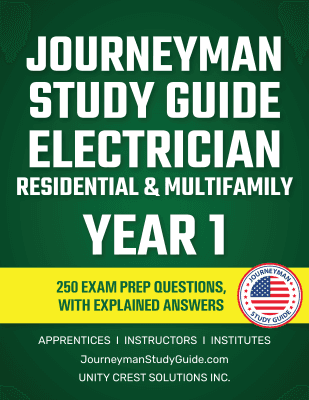
This journeyman electrician residential and multifamily study guide helps candidates reinforce key concepts they may encounter during exams and job assessments. Many electricians also expand into industrial or specialized systems over time, which can be better understood through this broader technical systems transition
Electrician exams generally include both written and practical components. The written portion evaluates technical knowledge, while the practical assessment focuses on real-world application.
Written exams commonly cover topics such as electrical theory, voltage and current calculations, blueprint interpretation, and code compliance. Candidates are expected to understand how the National Electrical Code applies to residential and multifamily electrical installations. Safety practices, including proper tool usage and hazard prevention, are also emphasized.
Practical assessments may involve installing wiring systems, connecting outlets and lighting circuits, troubleshooting electrical faults, and demonstrating proper panel installation. Multifamily assessments often include scenarios related to shared electrical systems and load distribution across multiple units.
An electrician residential and multifamily study guide is designed to support individuals preparing for work in residential homes and multifamily buildings such as apartments, condominiums, and townhouses. Electricians in this field install, maintain, and repair electrical systems while ensuring compliance with safety standards and local electrical codes. Many professionals also build experience across different electrical environments, and you can explore that progression through this related construction electrical pathway
Key areas covered include electrical system fundamentals, residential and multifamily wiring methods, code awareness, and safety best practices. The guide also includes exam-style questions and practical examples that reflect real-world job situations.
By working through the material, learners can improve their understanding of electrical principles, strengthen problem-solving skills, and become more confident when approaching written or hands-on assessments.
Electricians specializing in residential and multifamily work are in steady demand due to ongoing housing development and property maintenance needs. Entry-level electricians often begin as apprentices and progress to journeyman roles after gaining sufficient experience and licensing.
Residential electricians may work for small contractors, home builders, or renovation companies, while multifamily electricians often work on apartment complexes, condominiums, and mixed-use developments. With experience, electricians may advance to supervisory positions such as lead electrician, foreman, or project manager.
Some electricians choose to pursue additional certifications or transition into roles such as electrical inspector, estimator, or independent contractor. Career progression depends on experience, regional regulations, and continued professional development.
Several recognized organizations support training, standards, and workforce development for residential and multifamily electricians. These include the National Electrical Contractors Association, which provides industry resources and education, and the National Fire Protection Association, which publishes the National Electrical Code used across the United States.
The U.S. Department of Labor oversees registered apprenticeship programs, while the International Brotherhood of Electrical Workers supports training and professional development for union electricians. These bodies play an important role in shaping industry standards and education pathways. For those interested in expanding into broader energy systems and climate control environments, this advanced mechanical systems direction can provide additional insight.
A new entrant to the electrician field may be a recent migrant or someone changing careers. This individual may have limited exposure to local electrical systems and codes.
Common challenges include understanding regional electrical regulations, adapting to local work practices, and completing required apprenticeship or licensing steps. Language and technical terminology can also present early obstacles.
With structured training, apprenticeship enrollment, and consistent hands-on experience, new candidates can build foundational skills and gradually progress into residential and multifamily electrician roles.
An experienced electrician with many years in the trade brings strong practical skills and problem-solving ability. However, relocating or transitioning into a new jurisdiction may require adjusting to different codes, inspection processes, or equipment standards.
Despite extensive experience, certification or licensing exams may still be required. Once local requirements are met, experienced electricians often qualify for supervisory roles, mentorship positions, or higher-responsibility projects within residential and multifamily settings.
Most electricians complete four to five years of apprenticeship training before qualifying for licensing exams.
Licensing requirements vary by state, but most jurisdictions require electricians to hold a valid license to work independently.
Yes, many electricians work across both areas, especially after gaining sufficient experience and training.
Earnings vary by location and experience, but salaries commonly range between $40,000 and $70,000 per year.
No. This study guide is intended as a supportive learning resource and does not replace required training, apprenticeships, or licensing.
Get clear explanations behind every answer, perfect for deeper learning and more thorough exam preparation.
Quick and easy practice to test your knowledge anytime, anywhere—ideal for simple, on-the-go preparation.