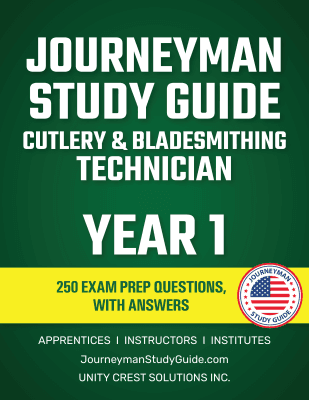
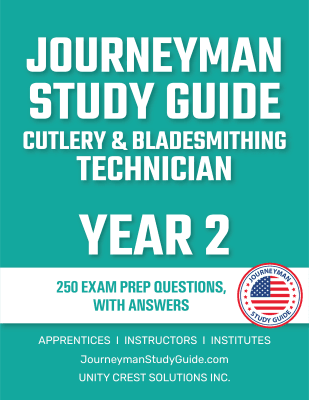
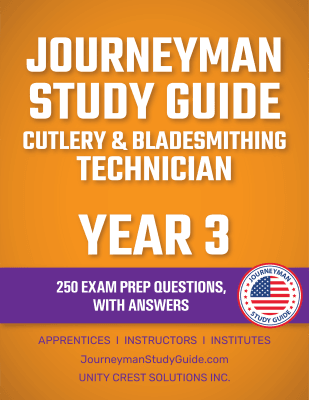
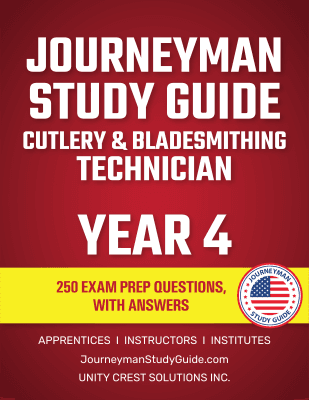
Questions, Answers, & Explanations
Get clear explanations behind every answer, perfect for deeper learning and more thorough exam preparation.

What is a Cutlery & Bladesmithing Technician?
A cutlery and bladesmithing technician is a skilled craftsperson who forges, grinds, and sharpens knives, swords, and other cutting tools for various applications, including culinary, industrial, and artisanal work. These professionals work with high-carbon steel, stainless steel, and specialty alloys to create durable and precision-crafted blades that are both functional and aesthetically refined.
Key Responsibilities
Bladesmiths and cutlery technicians must have technical expertise, craftsmanship, and an understanding of metallurgy to create high-quality blades. Their tasks include:
Skills and Traits for Success
A successful bladesmith combines engineering knowledge, craftsmanship, and problem-solving skills:
Industries Where Cutlery & Bladesmithing Technicians Thrive
Bladesmiths play a critical role in multiple industries, including:
Why Choose This Career?
A career as a cutlery and bladesmithing technician offers creative freedom, job stability, and opportunities for specialization:
Get Certified and Advance Your Career
Proper training in metallurgy, forging techniques, and safety compliance is essential for success in this trade. Our Q&A study materials, online tests, and certification prep guides provide the knowledge needed to excel in cutlery and bladesmithing.
What to Expect on the Cutlery & Bladesmithing Certification Exam
The Cutlery & Bladesmithing Certification Exam evaluates a candidate’s knowledge of metalworking, forging techniques, blade sharpening, and safety regulations. Many employers, custom knife manufacturers, industrial tool companies, and blacksmithing guilds require certification to ensure technicians meet OSHA standards, industry best practices, and metallurgical specifications.
Exam Format
The certification exam consists of both written and practical components:
Key Topics Covered
Passing Requirements
Most certifying bodies require a minimum score of 70% to pass. Some programs also include a practical hands-on assessment, where candidates must forge, grind, and finish a functional blade to industry standards.
Prepare with Confidence
Our Q&A study materials and interactive online tests help candidates reinforce key concepts, practice forging techniques, and improve test performance.
What Types of Questions Are on the Exam?
The Cutlery & Bladesmithing Certification Exam tests knowledge of metal properties, forging techniques, and blade finishing methods. Understanding the format will help ensure success.
Common Question Formats
Sample Questions
Study Smarter, Pass Faster
Our Q&A products help candidates focus on critical topics, while our Q/A Explanation guides provide deeper understanding. Our Online Tests simulate exam conditions for real-time assessment.
What Is It Like to Work as a Cutlery & Bladesmithing Technician?
A cutlery and bladesmithing technician’s workday blends metalworking, craftsmanship, and problem-solving. Whether producing high-end kitchen knives, custom hunting blades, or industrial cutting tools, bladesmiths must carefully control the forging, heat treatment, and finishing process to achieve the highest quality results.
Morning: Preparation & Planning
Midday: Grinding & Heat Treatment
Afternoon: Finishing & Assembly
Challenges & Rewards
Ready to Start Your Career?
Prepare for certification with our Q&A products, online tests, and study guides designed to help you master bladesmithing techniques and industry regulations.
What Are the Long-Term Benefits of a Career in Cutlery & Bladesmithing?
This career offers financial independence, creative fulfillment, and specialization opportunities. Many bladesmiths transition into custom knife-making, tool manufacturing, or industrial cutting solutions.
Career Progression
Top Employers & Career Opportunities
Union & Certification Benefits
Why This Career Matters
Bladesmiths contribute to culinary arts, outdoor survival, and industrial cutting applications, blending ancient craftsmanship with modern technology.
Take the Next Step
Advance your career with our study guides, Q&A materials, and interactive online tests tailored for cutlery and bladesmithing professionals.
How Much Can You Earn as a Cutlery & Bladesmithing Technician?
Earnings for cutlery and bladesmithing technicians vary based on experience, specialization, and location. Those working in custom knife-making, industrial blade manufacturing, or collectible knife design often earn higher wages.
Wage Breakdown by Experience Level
Factors That Impact Earnings
Maximize Your Earning Potential
Advance your career with our Q&A study materials, certification prep courses, and interactive online tests to enhance your knowledge and improve job prospects.
Essential Tools for Cutlery & Bladesmithing Technicians
Bladesmiths rely on forging tools, grinding machines, and precision sharpening equipment to create high-performance cutting tools.
Must-Have Tools for the Job
Top U.S. Suppliers for Bladesmithing Tools
Recommended Training & Certification Programs
Why the Right Tools & Training Matter
Using high-quality tools and industry certifications ensures craftsmanship, safety, and career growth.
Get Equipped for Success
Prepare for certification with our study guides, Q&A resources, and interactive online tests tailored for cutlery and bladesmithing professionals.
Where Can You Train to Become a Cutlery & Bladesmithing Technician?
Education programs in the U.S. offer hands-on training in forging, grinding, metallurgy, and knife-making techniques. These programs provide a blend of technical skills and artistic craftsmanship, preparing students for careers in custom knife-making, industrial blade manufacturing, and metalworking.
Types of Training Programs
What to Expect in Training Programs
How to Choose the Right Program
Advance Your Skills with Professional Training
Becoming a certified bladesmith requires technical expertise, hands-on practice, and safety training. Our Q&A study materials and online tests help reinforce key concepts and prepare for certification exams.
Why Join a Union or Work with a Reputable Employer?
Union membership and employment with established blade manufacturers and custom knife-making companies provide job security, competitive wages, and career advancement opportunities.
Benefits of Union Membership
Top Unions for Cutlery & Bladesmithing Technicians
Leading Employers Hiring Cutlery & Bladesmithing Technicians
What Employers Look For
How to Get Hired as a Cutlery & Bladesmithing Technician
Why Unions & Employers Matter
Unions and reputable employers ensure safe working conditions, competitive wages, and ongoing training opportunities for cutlery and bladesmithing technicians.
Secure the Best Career Opportunities
Enhance your employability by getting certified and joining a union. Use our study guides, Q&A materials, and online tests to ensure success in bladesmithing exams.
How to Stay Ahead in the Cutlery & Bladesmithing Industry
The bladesmithing industry continues to evolve with new materials, advanced heat treatments, and modern machining techniques. Staying competitive requires ongoing skill development, knowledge of industry trends, and an understanding of cutting-edge manufacturing practices.
Emerging Trends in Cutlery & Bladesmithing
Best Practices for Career Growth
Challenges & Opportunities in the Industry
Get clear explanations behind every answer, perfect for deeper learning and more thorough exam preparation.
Quick and easy practice to test your knowledge anytime, anywhere—ideal for simple, on-the-go preparation.