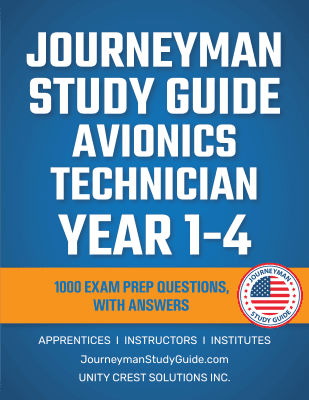
Questions, Answers, & Explanations
Get clear explanations behind every answer, perfect for deeper learning and more thorough exam preparation.

The Avionics Technician Study Guide is designed to support individuals preparing for careers in aircraft electronics installation, maintenance, and repair. Avionics technicians work with the electronic systems that control navigation, communication, monitoring, and flight operations within modern aircraft. Since many technical careers require strong system diagnostics and precision work, you can also explore similar skill development through this advanced systems troubleshooting pathway.
Aircraft rely heavily on complex electronic systems to ensure safe operation. These systems include navigation equipment, flight control electronics, radar systems, communication systems, and monitoring instruments that provide pilots with critical information during flight. Avionics technicians install, inspect, maintain, and repair these systems so that aircraft can operate safely and efficiently.
Professionals in this field may work for airlines, aircraft manufacturers, maintenance repair organizations (MROs), or aviation service companies. The avionics technician study guide helps learners review the key concepts and systems associated with avionics maintenance and troubleshooting.
This guide is intended as a supportive learning resource for individuals reviewing avionics systems and aviation electronics principles. It does not replace formal training programs, licensing requirements, or aviation certification processes.

Avionics technicians specialize in the electronic systems used in aircraft. These systems control many aspects of flight, including navigation, communication between aircraft and ground stations, and monitoring of aircraft performance.
Unlike mechanical aircraft technicians who focus on engines or structural components, avionics technicians concentrate on electronic equipment and digital control systems. Their responsibilities often include installing avionics components, testing electronic systems, and diagnosing faults when equipment malfunctions.
Modern aircraft contain advanced avionics systems such as autopilot controls, GPS navigation units, flight management systems, and digital cockpit displays. Technicians must understand how these systems communicate with each other and how to test and repair them when necessary.
The avionics technician study guide helps learners review the components, diagnostic procedures, and safety practices associated with aircraft electronics maintenance.
Individuals interested in becoming avionics technicians typically begin through aviation maintenance training programs offered by technical schools or aviation training institutes. Many programs focus on aircraft electronics, electrical systems, and aviation communication equipment.
Students learn how to read electrical schematics, test avionics components, and maintain complex electronic systems used in aircraft. Training programs often include hands-on experience working with avionics equipment and diagnostic tools used in aviation maintenance facilities.
Some individuals enter the aviation maintenance field through apprenticeship-style training with aviation maintenance organizations or aircraft manufacturers. Entry-level workers often assist experienced technicians while gaining familiarity with avionics systems and maintenance procedures.
Aviation training programs in the United States are commonly associated with guidelines established by organizations such as the Federal Aviation Administration, which oversees aviation safety and technician certification standards. Technical roles in aviation often overlap with broader electronics and field service skills, which can be further understood through this related electronic systems maintenance direction.
The avionics technician study guide reinforces many of the electrical and diagnostic concepts introduced during aviation training programs.
Assessments related to avionics technician training typically evaluate both theoretical knowledge and practical troubleshooting skills. Written evaluations may focus on electrical circuits, navigation systems, communication equipment, and aircraft instrumentation.
Candidates may encounter questions related to interpreting wiring diagrams, testing avionics equipment, and diagnosing faults in electronic systems. Understanding aviation safety procedures and proper testing techniques is essential.
Practical evaluations may involve inspecting avionics components, performing system checks, or troubleshooting electronic issues using diagnostic equipment.
Reviewing topics through an avionics technician study guide can help learners strengthen their understanding of aircraft electronics and aviation maintenance procedures.
The avionics technician study guide is structured to help learners review the fundamental concepts associated with aircraft electronics systems and maintenance procedures. Rather than guaranteeing certification outcomes, the guide focuses on strengthening understanding of avionics systems and troubleshooting techniques.
Topics covered may include electrical systems, communication equipment, navigation systems, and aircraft monitoring instruments. The guide may also present real-world examples of system failures and diagnostic procedures used by avionics technicians.
By reviewing these topics, learners can become more familiar with the responsibilities and technical skills required in aviation electronics maintenance.
Avionics technicians work in several sectors within the aviation industry. Many professionals are employed by airlines or aircraft maintenance facilities, where they maintain avionics systems used in commercial aircraft.
Others work for aircraft manufacturers or aviation service providers that install or upgrade electronic systems in new or existing aircraft. Some technicians specialize in military aviation systems or advanced aircraft technologies.
With experience, avionics technicians may advance into roles such as avionics supervisor, aviation electronics specialist, or technical instructor. Some professionals move into engineering support roles or aircraft system testing positions.
Because aviation safety relies heavily on reliable electronic systems, skilled avionics technicians remain essential within the aviation industry.
Professionals working in avionics maintenance benefit from staying informed about aviation safety regulations and emerging aircraft technologies. Aviation authorities and training organizations provide technical guidance and resources related to aircraft maintenance and electronic systems.
Safety practices in aviation maintenance environments are supported by organizations such as the Federal Aviation Administration, which establishes standards for aircraft maintenance and technician certification.
Continuing education and training help avionics technicians remain familiar with new avionics technologies and evolving aircraft systems. Professionals who expand into broader mechanical and system-integrated environments may also benefit from this combined mechanical and electronic systems exposure
A new entrant to the avionics field may have basic electrical knowledge but limited experience working with aircraft electronics systems. Early challenges may include understanding aviation wiring diagrams, learning specialized testing procedures, and becoming familiar with aircraft safety protocols.
Entry-level workers often begin by assisting experienced avionics technicians with equipment inspections, wiring installations, and system testing procedures. Over time, they gain the knowledge needed to diagnose and repair avionics systems independently.
Hands-on experience and continued training help entry-level technicians build confidence working with complex aircraft electronics.
An experienced avionics technician may have many years of experience maintaining aircraft communication and navigation systems. However, modern aircraft continue to incorporate advanced digital avionics technologies that require technicians to stay updated with new systems and diagnostic methods.
Experienced technicians often supervise maintenance teams, troubleshoot complex electronic issues, and mentor new technicians entering the aviation maintenance field.
Their expertise allows them to quickly identify system faults and ensure that avionics systems meet strict aviation safety standards.
Avionics technicians install, maintain, and repair the electronic systems used in aircraft, including navigation, communication, and monitoring equipment.
Training programs typically take one to two years, followed by practical experience in aviation maintenance environments.
They often work for airlines, aircraft manufacturers, aviation maintenance organizations, or aerospace service companies.
Key skills include electrical troubleshooting, interpreting wiring diagrams, diagnostic testing, and understanding aviation safety procedures.
No. The study guide is intended as a supportive learning resource and does not replace formal training programs or aviation certification requirements.
Get clear explanations behind every answer, perfect for deeper learning and more thorough exam preparation.
Quick and easy practice to test your knowledge anytime, anywhere—ideal for simple, on-the-go preparation.