Site Updates in Progress: Things might look different as we work on enhancing your experience.

Journeyman
    • FAQ
    • Students FAQ
    • Instructors FAQ
    • Schools & Institutions FAQ
    • Help Articles
    • What is a Journeyman
    • Steps to Becoming a Journeyman
    • Preparing for the Journeyman Exam
    • What to Expect on Exam Day
    • Journeyman Pay: What to Expect
    • Immigrants Becoming Journeymen
    • Challenging the Exam Without an Apprenticeship
    • What Trade is Right for Me
    • Navigating the Job Market
    • Journeyman and Master Tradespeople
    • State-by-State Licensing
    • What are Apprenticeships
    • Continuing Education for Journeymen
    • Women in the Trades
    • Trades vs College
    • FAQ About the Journeyman Process
    • Products & Services
    • Custom Tests and Training
    • Marketing and More
    • Meet the Creators
    • Kris McFarlane
    • Bobby Bedi
    • Unity Crest Solutions
  • Contact Us
  • Login
Journeyman
  • Home
  • Study Guides
    Study Guides
    • Practice Tests
      Practice Tests
      • Resources
        Resources
        • FAQ
          FAQ
          • Students FAQ
          • Instructors FAQ
          • Schools & Institutions FAQ
        • Help Articles
          Help Articles
          • What is a Journeyman
          • Steps to Becoming a Journeyman
          • Preparing for the Journeyman Exam
          • What to Expect on Exam Day
          • Journeyman Pay: What to Expect
          • Immigrants Becoming Journeymen
          • Challenging the Exam Without an Apprenticeship
          • What Trade is Right for Me
          • Navigating the Job Market
          • Journeyman and Master Tradespeople
          • State-by-State Licensing
          • What are Apprenticeships
          • Continuing Education for Journeymen
          • Women in the Trades
          • Trades vs College
          • FAQ About the Journeyman Process
        • Products & Services
          Products & Services
          • Custom Tests and Training
          • Marketing and More
          Meet the Creators
          Meet the Creators
          • Kris McFarlane
          • Bobby Bedi
          • Unity Crest Solutions
      • Contact Us

      Access top-tier trade education from anywhere in America—flexible, affordable, and digitally powered. Proudly American owned and operated.

      Useful Links

      • Home
      • Students FAQ
      • Instructors FAQ
      • Blogs
      • Contact Us

      Study Guides

      • 3D Printing & Additive Manufacturing
      • Agricultural Equipment Technician
      • Apparel Manufacturing & Textile Production
      • Appliance Service Technician
      • Aquaponics Specialist
      • Arborist/Tree Surgeon
      • Auto Body And Collision Technician
      • Automotive Refinishing Technician
      • Automotive Service Technician
      • Avionics Technician
      • Baker
      • Battery Technician (EV and Renewable Energy)
      • Blaster/Driller (Construction and Quarrying)
      • Boiler and Pressure Vessel Inspector
      • Boilermaker
      • Bowyer & Archery Technician
      • Brewery Technician
      • Bricklayer
      • Butcher (Industrial Scale)
      • Cabinetmaker
      • Cannabis Cultivation Technician
      • Carpenter
      • Carpenter - Formwork
      • Composting System Operator
      • Concrete Finisher
      • Confined Space Technician
      • Construction Craft Worker
      • Cook
      • Crane Operator (Mobile Crane Operator)
      • Custom Closet and Storage Installer
      • Custom Staircase Fabricator
      • Cutlery & Bladesmithing Technician
      • Directional Driller
      • Distillation Equipment Operator
      • Dock Builder
      • Drywall Finisher and Plasterer
      • Electric Vehicle Charging Station Installer
      • Electrician - Construction
      • Electrician - Industrial
      • Electrician - Residential & Multifamily
      • Elevator Constructor
      • Elevator Technician
      • Emergency Vehicle Technician
      • Esthetician
      • Floorcovering Installer
      • Forestry Equipment & Machinery Operation
      • Foundation Repair Technician
      • Frac Technician (Oilfield Services)
      • Gas Fitter - Class A
      • Gas Fitter - Class B
      • Glass Installer - Automotive
      • Glazier
      • HVAC Refrigerator
      • Hairstylist
      • Hazardous Materials Technician
      • Heavy Duty Equipment Technician
      • Heavy Equipment Operator -Tractor – Loader – Backhoe
      • Heavy Equipment Operator – Dozer
      • Heavy Equipment Operator – Excavator
      • Heavy Haul Rock Truck Operation
      • High-Pressure Pipe Welder
      • Horticulturalist Cannabis
      • Horticulturist - Landscape
      • Hydraulic Equipment Technician
      • Hydroelectric Systems & Power Generation
      • Industrial Mechanic – Millwright
      • Industrial Sewing Machine Operation & Maintenance
      • Instrumentation And Control Technician
      • Ironworker - Generalist
      • Ironworker - Reinforcing
      • Ironworker - Structural / Ornamental
      • Knifemaking & Cutting Tool Fabrication
      • Lather - Interior Systems Mechanic
      • Locomotive Mechanic
      • Log Hauling & Transport Operations
      • Machinist
      • Masonry Restoration Specialist
      • Medical Equipment Repair Technician
      • Metal Fabricator – Fitter
      • Motorcycle Technician
      • Natural Gas Compressor Operator
      • Network Equipment Installer
      • Oil Field Rig Mechanic
      • Oil Heat System Technician
      • Orthotics Technician
      • Painter and Decorator
      • Parts Technician
      • Patternmaking & Garment Production
      • Plastics Fabricator
      • Plumber
      • Port Equipment Operator
      • Powerline Technician
      • Precision Optics Technician
      • Prosthetics Technician
      • Quality Control Technician
      • Radio Frequency Technician
      • Railway Signal Technician
      • Recording & Audio Engineering
      • Recreation Vehicle Service Technician
      • Refrigeration and Air Conditioning Mechanic
      • Residential Energy Auditor
      • Robotics Maintenance Technician
      • Roofer
      • Scenic Construction & Stage Fabrication
      • Set Designer (Film and Theater)
      • Sheet Metal Worker
      • Shipwright (Wood and Composite Construction)
      • Soil Testing Technician
      • Sprinkler Fitter
      • Stage Rigging Technician
      • Steamfitter / Pipefitter
      • Swimming Pool Technician
      • Tactical Equipment Technician
      • Tactical Firearms Technician
      • Textile Technology & Fabric Engineering
      • Tilesetter
      • Tire Technician (Commercial and Industrial Vehicles)
      • Tool Repair Technician
      • Tool and Die Maker
      • Tower Crane Operator
      • Transport and Coach Technician
      • Truck Trailer Service Technician
      • Truck and Transport Mechanic
      • Tugboat Operations & Marine Navigation
      • Waterproofing Technician
      • Welder
      • Well Servicing Technician
      • Wildlife and Land Conservation Technician

      Contact Us

      info@journeymanstudyguide.com

      Locations Serving:

      • Albuquerque
      • Austin
      • Baltimore
      • Charlotte
      • Chicago
      • Columbus
      • Dallas
      • Denver
      • Detroit
      • Fort Worth
      • Houston
      • Indianapolis
      • Jacksonville
      • Kansas
      • Las Vegas
      • Los Angeles
      • Louisville
      • Memphis
      • Milwaukee
      • Nashville
      • New York
      • Oklahoma
      • Philadelphia
      • Phoenix
      • Portland
      • San Antonio
      • San Diego
      • San Francisco
      • San Jose
      • Seattle

      ©2026 ALL RIGHTS RESERVED. Unity Crest Solutions Inc.

      Your browser does not support the video tag.
      HomeCourses
      Frac Technician (Oilfield Services)
      Buy Now

      Journeyman Frac Technician (Oilfield Services) Study Guide & Exam Prep

      What is a Frac Technician?

      Frac Technicians are skilled tradespeople who operate and maintain high-pressure hydraulic fracturing equipment used in the oil and gas industry. These professionals are responsible for setting up and monitoring powerful pumping systems that inject water, sand, and chemicals into underground rock formations to release oil and natural gas. Their work is essential to energy production across major U.S. oilfields in states like Texas, North Dakota, and Pennsylvania.

      Frac Technicians are trained to handle complex machinery, manage fluid systems, and follow strict safety and environmental standards on active drilling sites. The role demands a high level of technical precision, physical endurance, and teamwork.

      Key Responsibilities

      Frac Technicians carry out a variety of critical tasks in the field:

      • Equipment Setup and Operation – Assemble and monitor fracturing pumps, blenders, and data vans, often supplied by U.S. manufacturers like Halliburton, Liberty Energy, and NOV (National Oilwell Varco).
      • High-Pressure Pumping – Control flow rates and monitor pressure gauges during fluid injection.
      • Fluid and Chemical Management – Mix and inject proppant materials like sand, gel, and slickwater into wells.
      • Safety Compliance – Follow OSHA, DOT, and API (American Petroleum Institute) safety standards for hazardous materials and high-pressure systems.
      • Maintenance and Troubleshooting – Inspect valves, hoses, and engine systems; perform repairs in the field.

      Skills and Traits for Success

      Successful Frac Technicians are highly dependable and mechanically skilled:

      • Mechanical Aptitude – Operate diesel-powered pumps, hydraulic systems, and automated controls.
      • Situational Awareness – Recognize risks such as overpressurization, chemical exposure, and high-voltage systems.
      • Physical Fitness – Work 12-hour shifts outdoors in rugged terrain and extreme weather.
      • Team Coordination – Collaborate with pump operators, data engineers, and rig crews for efficient operations.
      • Attention to Detail – Monitor pressure readings and flow rates with absolute precision.

      Industries Where Frac Technicians Thrive

      • Oil and Gas Extraction – Supporting operations in the Permian Basin (TX), Bakken Formation (ND), and Marcellus Shale (PA).
      • Energy Services – Employed by top American oilfield service companies such as ProPetro, BJ Energy, and Patterson-UTI.
      • Environmental and Water Services – Managing water recycling and flowback control systems.

      Why Choose This Career?

      • High Demand – The American energy sector depends on hydraulic fracturing to power homes, industries, and transportation.
      • Excellent Pay – Technicians often earn high wages, especially with overtime and hazard pay.
      • Advancement Opportunities – Move into field supervisor, maintenance lead, or frac engineer roles.
      • Hands-On Work – Ideal for those who enjoy solving problems, working with machines, and being part of a critical industry.

      Ready to Start a Career in Oilfield Services?

      Prepare for success with our Frac Technician study guides, Q&A resources, and interactive online tests designed to help you master field knowledge and pass certification exams.

      What to Expect on the Frac Technician Certification Exam

      The Frac Technician Certification Exam ensures workers meet U.S. industry standards for operating hydraulic fracturing equipment safely and effectively. Certification is often required by major American oilfield service providers such as Halliburton, Liberty Energy, and ProPetro. It confirms your understanding of high-pressure systems, chemical handling, and environmental safety—making you a qualified candidate in high-demand energy markets like West Texas and North Dakota.

      Exam Format

      The exam is designed to test both theoretical knowledge and practical field readiness:

      • Number of Questions: 100–120 multiple-choice questions
      • Duration: 3–4 hours, depending on the certifying body (e.g., NCCER, company-administered testing)
      • Content Delivery: Some exams include diagrams, schematics, and system walkthroughs

      Key Topics Covered

      1. Safety and Regulatory Compliance
         
        • OSHA 1910 standards for high-pressure pumping environments
        • Hazardous material handling under DOT and EPA guidelines
        • Lockout/tagout, confined space, and PPE protocols
      2. Equipment Operation and Setup
         
        • Frac pump rig-up procedures using CAT, NOV, and Halliburton equipment
        • Understanding hydraulic systems, fluid ends, valves, and power transmission
      3. Fluid and Proppant Systems
         
        • Mixing procedures for slickwater, gels, and crosslink fluids
        • Handling of proppants (sand, ceramic) and maintaining consistent injection rates
      4. Data Monitoring and Control
         
        • Reading pressure charts, flowmeters, and rate controllers
        • Using control vans and digital displays during operations
      5. Construction Math and Calculations
         
        • Estimating volume (BBLs), flow rate (GPM), and pressure (PSI)
        • Determining chemical ratios and concentration levels

      Passing Requirements

      Most certifying programs require a 70% passing score. Some exams may include hands-on performance assessments for equipment rig-up, pressure tests, and emergency procedures.

      Tips for Exam Success

      • Use Study Guides – Our Q&A and Q/A with Explanation products simplify complex topics like fluid mechanics and frac stack assembly.
      • Simulate Test Conditions – Our Online Tests mimic real certification environments with timed scoring and randomized questions.
      • Focus on Safety – A large portion of the exam is safety-related, so review OSHA, DOT, and EPA regulations carefully.
      • Practice Math – Expect conversions between gallons, barrels, and pounds when calculating loadouts and rates.

      Ready to Crush the Certification?

      Prepare confidently with our targeted study tools for Frac Technicians—designed for the U.S. oil and gas sector.

      What Types of Questions Are on the Frac Technician Certification Exam?

      The Frac Technician exam covers essential field knowledge—from pump system operation to chemical safety protocols. You’ll encounter real-world questions related to wellsite conditions, equipment specs, and environmental compliance. Understanding these formats can help you prepare effectively and demonstrate your expertise under pressure.

      Common Question Formats

      1. Multiple-Choice Questions
         
        • Evaluate your knowledge across four answer choices, with one correct option.
      2. Scenario-Based Questions
         
        • Simulate wellsite challenges such as pressure loss or hose rupture and ask for the correct response.
      3. Calculation Questions
         
        • Require math-based problem solving for volumes, flow rates, or chemical mixes.
      4. Tool and Equipment Identification
         
        • Identify components like discharge lines, frac pumps, and blenders using images or schematics.

      Sample Questions

      1. Safety & Compliance
       Question: What is the OSHA-mandated minimum distance between a high-pressure pump and personnel walkways?

      • A) 5 feet
      • B) 10 feet
      • C) 15 feet
      • D) 25 feet
         Answer: D) 25 feet

      2. Equipment Knowledge
       Question: What function does the fluid end serve on a high-pressure pump?

      • A) Cooling the motor
      • B) Regulating diesel flow
      • C) Pressurizing and moving fracturing fluid
      • D) Filtering solids from brine water
         Answer: C) Pressurizing and moving fracturing fluid

      3. Math & Measurement
       Question: You need to pump 800 barrels of water at a rate of 50 gallons per minute. How long will it take?

      • A) 4 hours
      • B) 6 hours
      • C) 8 hours
      • D) 10 hours
         Answer: C) 8 hours

      4. Fluid Systems
       Question: Which additive is commonly used to reduce friction in slickwater fracs?

      • A) Ammonium nitrate
      • B) Friction reducer polymer
      • C) Sodium chloride
      • D) Bentonite clay
         Answer: B) Friction reducer polymer

      How to Approach the Exam

      • Understand the Logic – Our Q/A Explanation products not only give the correct answer but explain why it’s correct.
      • Review Key Equipment – Be familiar with Halliburton frac spreads, Liberty Energy data vans, and NOV blenders.
      • Brush Up on Math – Use our practice questions to strengthen unit conversions and ratio calculations.

      Get Test-Ready with Confidence

      Gain an edge by practicing with our mock exams and review materials tailored for the American energy services industry.

      What Is It Like to Work as a Frac Technician?

      Life as a Frac Technician is dynamic, fast-paced, and physically demanding. Whether you're operating heavy-duty pumps in the Permian Basin or mixing fluid systems in the Eagle Ford Shale, each day on the job site offers new challenges. Technicians work long hours, often in remote locations, and must be prepared to react quickly to high-pressure situations.

      Morning: Rig-Up and Pre-Check

      A typical day begins early—often by 5:30 or 6:00 AM:

      • Team Safety Meeting – Crew leads conduct a tailgate meeting to review OSHA safety protocols and site-specific hazards.
      • Equipment Inspection – Technicians inspect CAT and NOV pumps, check valve integrity, and prepare Halliburton data vans for operation.
      • System Prep – Fluid tanks are filled, chemical mixes are confirmed, and proppant levels are verified using automated sensors.

      Midday: Frac Operations

      Once the site is greenlit, operations go full swing:

      • High-Pressure Pumping – Technicians control pressure levels up to 15,000 PSI, maintaining consistent rates using data acquisition systems.
      • Chemical and Sand Monitoring – Real-time checks of slickwater composition, sand concentration, and additive flow rates are performed from control vans.
      • Team Coordination – Communication between frac pump operators, wireline crews, and rig managers is essential to maintain safety and efficiency.

      Afternoon to Evening: Maintenance and Rig-Down

      After the stage is complete, teams begin the shutdown process:

      • Flush and Clean Systems – Lines are depressurized and flushed; maintenance is performed on fluid ends and engines.
      • Loadout and Site Cleanup – Equipment is disassembled, inventoried, and prepared for transport to the next site.
      • End-of-Shift Reports – Data is logged for QA purposes, and technicians debrief with supervisors.

      Challenges and Rewards

      Challenges:

      • Long shifts (often 12–14 hours), harsh weather, and remote site locations.
      • Extended travel—rotational schedules (e.g., 14 days on, 7 days off) are common.

      Rewards:

      • Excellent wages, career growth, and the satisfaction of powering America’s energy sector.

      Ready to Live the Oilfield Life?

      Train for the job with our expertly crafted study guides, Q&A materials, and practice tests designed for real-world frac technicians.

      What Are the Long-Term Benefits of a Career as a Frac Technician?

      A career as a Frac Technician offers more than just high pay—it opens doors to leadership roles, specialized technical positions, and long-term opportunities in America’s vital energy sector. Whether you’re working for Liberty Energy, ProPetro, or Halliburton, your path can lead to career stability, advancement, and even business ownership.

      Career Progression in Oilfield Services

      1. Entry-Level Frac Hand
         
        • Wages: $18–$24/hour + overtime
        • Learn safety protocols, equipment setup, and basic pump operations.
      2. Frac Technician / Pump Operator
         
        • Wages: $25–$38/hour
        • Run high-pressure pumps, monitor fluid systems, and coordinate with rig crews.
      3. Field Engineer or Data Van Operator
         
        • Salary: $70,000–$100,000/year
        • Analyze real-time data, troubleshoot downhole issues, and oversee pump schedules.
      4. Frac Supervisor / Site Manager
         
        • Salary: $90,000–$130,000/year
        • Manage entire frac spreads, lead crews, and ensure compliance across multiple stages.
      5. Operations or Business Manager
         
        • Start your own oilfield services company or move into regional oversight roles.

      Where the Work Is

      • Texas (Permian, Eagle Ford) – The heart of U.S. hydraulic fracturing with round-the-clock operations.
      • North Dakota (Bakken Shale) – High-paying rotational roles with extended schedules and per diem pay.
      • Pennsylvania & Ohio (Marcellus/Utica Shale) – Consistent demand for frac services in the Northeast.
      • Colorado & New Mexico – Opportunities for work under stricter environmental and safety regulations.

      Industry Support and Advancement

      • Training Programs – Schools like Midland College (TX) and San Juan College (NM) offer oil and gas technology programs.
      • Union Representation – LIUNA and IUOE (International Union of Operating Engineers) provide training, benefits, and job security.
      • Certifications – Advancing through NCCER, OSHA-10/30, and company-specific systems like Halliburton’s REDbook or NOV University boosts your earning power.

      Why Choose Frac?

      • Strong Demand – Domestic energy independence continues to drive job creation.
      • Earning Potential – High base pay, overtime, per diem, and travel stipends.
      • Career Flexibility – Transferable skills into pipeline, drilling, and environmental services.

      Invest in Your Future

      Start your career in oilfield services with our study guides, Q&A resources, and interactive online tests built for aspiring Frac Technicians.

      How Much Can You Earn as a Frac Technician?

      Frac Technicians in the U.S. earn some of the most competitive wages in the skilled trades due to the critical nature of their work and the demanding environments they operate in. With opportunities to earn overtime, per diem, and hazard pay, this career path offers strong financial rewards and long-term growth potential.

      National Wage Overview

      1. Entry-Level Frac Hand
         
        • Hourly Wage: $18–$24
        • Annual Salary: $45,000–$55,000 with overtime
        • Duties include rig-up, hose handling, chemical transfers, and equipment checks.
      2. Frac Technician / Equipment Operator
         
        • Hourly Wage: $25–$38
        • Annual Salary: $60,000–$90,000 with shift differentials and bonuses
        • Operate high-pressure pumps and manage fluid systems at the wellsite.
      3. Data Van Operator / Field Engineer
         
        • Salary Range: $75,000–$105,000
        • Monitor real-time data, adjust treatment parameters, and interface with clients.
      4. Site Supervisor / Frac Lead
         
        • Salary Range: $90,000–$130,000+
        • Oversee multi-stage fracturing operations and manage entire site crews.
      5. Independent Contractor or Consultant
         
        • Daily Rate: $600–$1,200/day
        • Experienced technicians and engineers often work short-term contracts in high-demand basins.

      High-Paying Regions

      • Texas (Permian Basin, Eagle Ford)
         Constant operations with generous per diem and extended shift rotations.
         
      • North Dakota (Bakken Shale)
         Remote location bonuses and premium overtime packages.
         
      • Colorado, Oklahoma, New Mexico
         Competitive pay with opportunities for advancement and certifications.
         
      • Pennsylvania (Marcellus Shale)
         Steady demand for environmentally compliant operators and fluid specialists.
         

      What Impacts Earnings?

      • Certifications – NCCER, OSHA-30, and equipment-specific training (e.g., CAT, Halliburton, NOV) increase pay eligibility.
      • Union Membership – Unions like the IUOE and LIUNA negotiate higher wages, better benefits, and access to elite projects.
      • Experience and Availability – Being willing to travel and work long shifts directly correlates with increased income.
      • Company Size – Larger service providers such as Liberty Energy, BJ Energy Services, and ProFrac often offer higher base pay and better benefit packages.

      Boost Your Income with the Right Credentials

      Our study guides, Q&A resources, and online tests help you build the skills needed to qualify for high-paying roles in the oilfield.

      What Tools and Resources Do Frac Technicians Use?

      Frac Technicians rely on a range of powerful tools and specialized resources to perform their job safely and efficiently. From high-horsepower pumps to advanced fluid monitoring systems, the right equipment—and the training to use it—makes all the difference on a wellsite.

      Essential Tools and Equipment

      1. Frac Pumps and Power Units
         
        • High-Pressure Pumps – CAT 3512/3516 engines, Halliburton HT-400, and Liberty Energy DGB units.
        • Blenders and Hydration Units – Used to mix and deliver fluids at controlled rates.
      2. Monitoring and Control Systems
         
        • Data Vans – Equipped with digital readouts, telemetry, and command systems.
        • Pressure Sensors & Flowmeters – Track injection rates, chemical ratios, and proppant volumes.
      3. Fluid Handling Gear
         
        • Chemical Transfer Pumps – Manage additives from vendors like ChampionX and Nalco.
        • Sand Conveyors & Silos – Used for bulk proppant storage and delivery.
      4. Safety Equipment
         
        • Personal Protective Equipment (PPE) – Flame-resistant clothing, steel-toe boots, impact gloves, and hearing protection.
        • Emergency Shutdown Systems – Used for rapid isolation during equipment malfunction.

      Recommended Learning Resources

      • Study Materials
         
        • Our Q&A and Q/A Explanation products offer detailed review of frac equipment, safety protocols, and fluid systems.
        • Our Online Tests simulate high-pressure exam conditions and reinforce key skills.
      • Training Programs
         
        • Midland College (TX) – Offers oilfield technician training with a focus on pressure pumping systems.
        • San Juan College (NM) – Known for petroleum technology programs.
        • NCCER Curriculum – Provides national credentials in equipment operation and safety compliance.
      • Industry Associations
         
        • American Petroleum Institute (API) – Publishes standards for hydraulic fracturing and equipment usage.
        • Energy Workforce & Technology Council – Offers industry training and policy updates.
      • Retailers and Equipment Providers
         
        • NOV (National Oilwell Varco) and Halliburton – U.S.-based manufacturers supplying frac gear and field training.
        • Grainger and MSC Industrial Supply – Stock PPE, valves, and maintenance tools for oilfield use.

      Why Resources Matter in the Oilfield

      Quality tools, up-to-date training, and access to trusted manufacturers directly impact site safety and job performance. Frac Technicians equipped with the right knowledge and gear are more efficient, safer, and better prepared for advancement.

      Prepare with Confidence

      Our expertly developed study tools help you understand the systems and equipment you’ll encounter in the field—so you can pass exams and perform with confidence.

      Where Can You Learn to Become a Frac Technician?

      Frac Technician training in the U.S. is offered through trade schools, technical colleges, union programs, and in-house company training centers. These programs blend classroom instruction with hands-on experience, preparing students for the demands of high-pressure hydraulic fracturing work in active oilfields.

      Types of Education Programs

      1. Technical and Trade Colleges
         
        • Midland College (Texas) – Offers programs in Energy Technology and Petroleum Services, with hands-on pump and fluid systems training.
        • San Juan College School of Energy (New Mexico) – Offers a nationally recognized Oil and Gas Technician program.
        • Western Texas College (Snyder, TX) – Focuses on field safety, fluid handling, and pressure pumping systems.
      2. Union Apprenticeship Programs
         
        • LIUNA (Laborers’ International Union of North America) – Offers training in pipeline and energy infrastructure safety.
        • IUOE (International Union of Operating Engineers) – Focuses on heavy equipment, frac pump support, and rig-up safety.
      3. Manufacturer-Based Training
         
        • Halliburton’s REDbook Training Program – Covers frac fluid chemistry, pump mechanics, and safety procedures.
        • NOV University (National Oilwell Varco) – Offers field technician development for NOV frac spreads and monitoring tools.
      4. Company-Sponsored Onboarding Programs
         
        • Many service providers, including Liberty Energy, ProFrac, and BJ Energy, run multi-week bootcamps that combine equipment instruction, jobsite simulations, and safety certifications.

      Core Topics Covered

      • Hydraulic Fracturing Equipment – Setup and operation of CAT pumps, fluid ends, blenders, and silos.
      • Fluid Chemistry and Safety – Mixing procedures, MSDS compliance, and chemical injection practices.
      • Wellsite Operations – Staging, rig-up, frac stages, and rig-down.
      • OSHA and DOT Regulations – PPE use, spill control, transport of hazardous materials.
      • Frac Math – Calculating flow rates, concentrations, volumes, and unit conversions.

      Choosing the Right Program

      • Location – Opt for schools near major oilfields like Midland, Odessa, or Farmington for better job placement.
      • Certifications Offered – Programs aligned with NCCER, OSHA-30, and HAZWOPER offer added value.
      • Employer Partnerships – Look for training centers with direct connections to Liberty, Halliburton, and NOV.
      • Financial Aid – Many community colleges and union programs offer grants, scholarships, and GI Bill eligibility.

      Get Certified and Job-Ready

      Pair your training with our Online Tests, Q&A, and Q/A Explanation study tools to build knowledge, boost retention, and prepare for certification exams.

      Why Join a Union or Work for a Top U.S. Oilfield Employer?

      Unions and industry-leading employers are essential partners in a successful career as a Frac Technician. Whether you’re operating equipment in Texas or managing fluid systems in North Dakota, strong affiliations provide consistent work, competitive wages, and career advancement opportunities.

      Benefits of Joining a Union

      1. Higher Wages and Premium Benefits
         
        • Union members often earn 20–30% more than non-union peers.
        • Access to health insurance, retirement plans, per diem, and paid travel.
      2. Skills Training and Certifications
         
        • IUOE and LIUNA offer jobsite safety, heavy equipment operation, frac pump systems, and HAZMAT handling courses.
      3. Job Placement and Security
         
        • Union hiring halls help connect skilled techs to active frac jobs across the U.S.
      4. Representation and Advocacy
         
        • Unions negotiate collective agreements, improve safety conditions, and protect worker rights.

      Leading Unions for Frac Technicians

      • IUOE (International Union of Operating Engineers) – Trains workers on heavy-duty frac and pump systems.
      • LIUNA (Laborers’ International Union of North America) – Provides certification in energy infrastructure, HAZWOPER, and confined space work.
      • United Steelworkers (USW) – Represents workers in refineries, petrochemical plants, and support operations.

      Top American Employers for Frac Technicians

      1. Liberty Energy (Colorado-based) – Known for cutting-edge frac fleets and digital control systems.
      2. ProFrac Services (Texas) – Operates in the Permian and Eagle Ford basins with large-scale pumping spreads.
      3. Halliburton (Houston, TX) – A global leader in hydraulic fracturing, with in-house training and certification.
      4. BJ Energy Services (Houston, TX) – Focuses on emissions-reducing fracturing technologies.
      5. STEP Energy Services (U.S. division) – Active in Texas and Oklahoma with modern frac fleets and bonus pay structures.

      How to Connect with Employers

      • Apply Directly – Visit employer websites or use energy-specific job boards like RigZone and Energy Jobline.
      • Use Union Hiring Halls – Register with IUOE or LIUNA locals near oilfield hubs like Midland, Williston, or Hobbs.
      • Attend Trade School Job Fairs – Many colleges partner directly with service companies for placement.

      Why These Connections Matter

      Whether through a union or employer, having strong industry ties can open doors to better pay, better jobs, and long-term career security in the oilfield.

      How to Stay Ahead in the Frac Industry

      Hydraulic fracturing continues to evolve with advanced technologies, environmental regulations, and workforce demands shaping the future of energy in the United States. To stay competitive as a Frac Technician, it’s essential to understand emerging trends, invest in ongoing education, and adapt to the fast-paced, high-tech nature of the oilfield.

      Emerging Trends in Frac Technology

      1. Next-Gen Frac Fleets
         
        • Companies like Liberty Energy and ProFrac are deploying dual-fuel and electric frac fleets that reduce emissions while maintaining horsepower.
        • Digital control systems and AI-assisted diagnostics are now standard in many U.S. operations.
      2. Real-Time Data Monitoring
         
        • Technicians must learn to operate software platforms such as Halliburton’s DataSphere and NOV’s MAX Platform, which monitor pump rates, pressures, and chemical concentrations live from data vans.
      3. Environmental Compliance
         
        • Growing emphasis on EPA guidelines, reduced water usage, and closed-loop chemical systems.
        • States like Colorado, New Mexico, and Pennsylvania are implementing stricter regulations—knowledge of these is increasingly valuable on the job.
      4. Workforce Innovation
         
        • Frac companies are partnering with schools like Midland College, San Juan College, and Western Texas College to train students in modern oilfield operations, fluid chemistry, and digital control systems.

      Best Practices for Professional Growth

      • Continuing Education
         
        • Stay current with NCCER, OSHA 30, HAZWOPER, and vendor-specific certifications from Halliburton, CAT, and NOV.
        • Take refresher courses through IUOE and LIUNA union halls or manufacturer webinars.
      • Join Industry Networks
         
        • Get involved with the Energy Workforce & Technology Council and attend trade expos like Permian Basin International Oil Show or Global Energy Show USA.
      • Build a Digital Portfolio
         
        • Document certifications, frac stage data, jobsite photos, and safety awards.
        • Use LinkedIn to connect with recruiters from top employers like BJ Energy, STEP Energy, and Patterson-UTI.
      • Stay Flexible
         
        • Demand fluctuates with market conditions—be ready to travel, work in different basins, and learn new frac technologies.

      Challenges and Opportunities

      • Labor Shortages – U.S. oilfield service companies are actively recruiting and offering bonuses to certified Frac Technicians.
      • Technology Integration – As frac fleets go electric and AI-driven, tech-savvy technicians will rise fastest.
      • Regulatory Changes – Understanding evolving state-specific rules (e.g., Texas Railroad Commission or Colorado Oil & Gas Conservation Commission) enhances job security.

      Be the Technician Employers Want

      The future of oilfield services belongs to those who stay informed, certified, and adaptable. Our study guides, Q&A products, and interactive online tests are designed to help you master the skills needed for today’s and tomorrow’s frac jobs.

      Buy Frac Technician (Oilfield Services)

      Questions, Answers, & Explanations

      Get clear explanations behind every answer, perfect for deeper learning and more thorough exam preparation.

      • year-1

        Year 1

        250+ Exam Prep Questions
        $39
        Order Now Download Sample Book
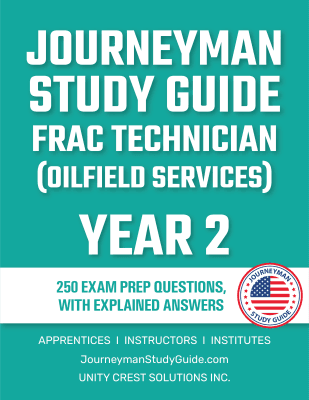
      • year-2

        Year 2

        250+ Exam Prep Questions
        $39
        Order Now Download Sample Book
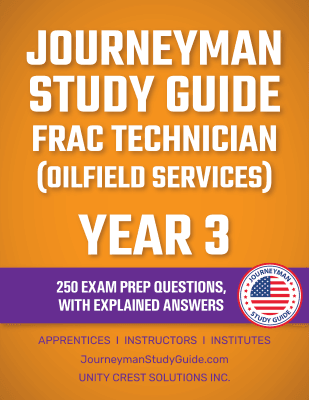
      • year-3

        Year 3

        250+ Exam Prep Questions
        $39
        Order Now Download Sample Book
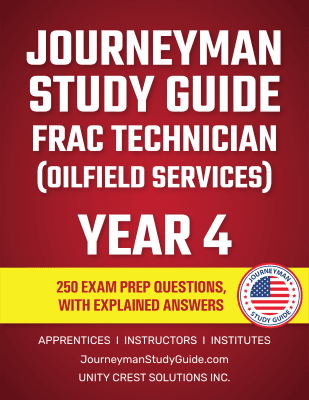
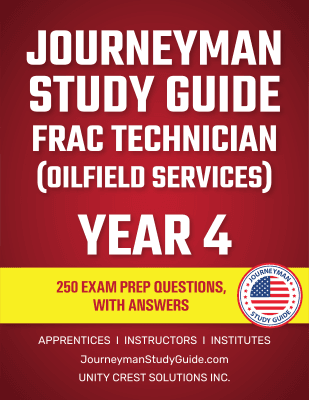
      • year-4

        Year 4

        250+ Exam Prep Questions
        $39
        Order Now Download Sample Book
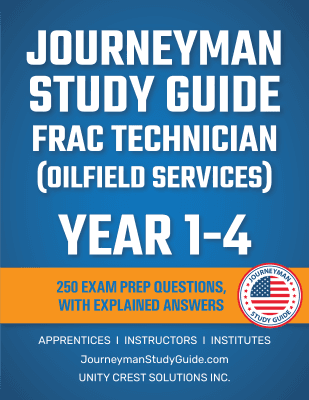
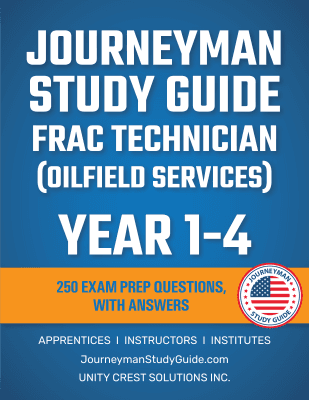
      • all-years-explained-answers

        All years - Explained Answers

        1000 Exam Prep Questions
        $139
      Questions & Answers

      Quick and easy practice to test your knowledge anytime, anywhere—ideal for simple, on-the-go preparation.

      • year-1-1

        Year 1

        250+ Exam Prep Questions
        $19
        Order Now Download Sample Book
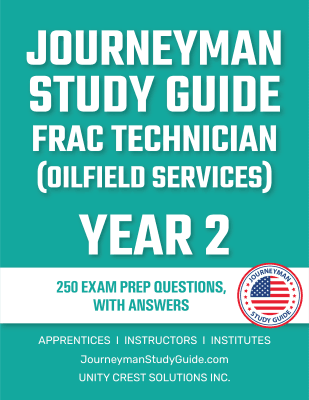
      • year-2-1

        Year 2

        250+ Exam Prep Questions
        19

      Evaluate Your Experience
      Test Access Here

      Take Online Test
      $
      Order Now Download Sample Book
    • year-3-1

      Year 3

      250+ Exam Prep Questions
      $19
      Order Now Download Sample Book
    • year-4-1

      Year 4

      250+ Exam Prep Questions
      $19
      Order Now Download Sample Book
    • all-years-1

      All years

      250+ Exam Prep Questions
      $59